
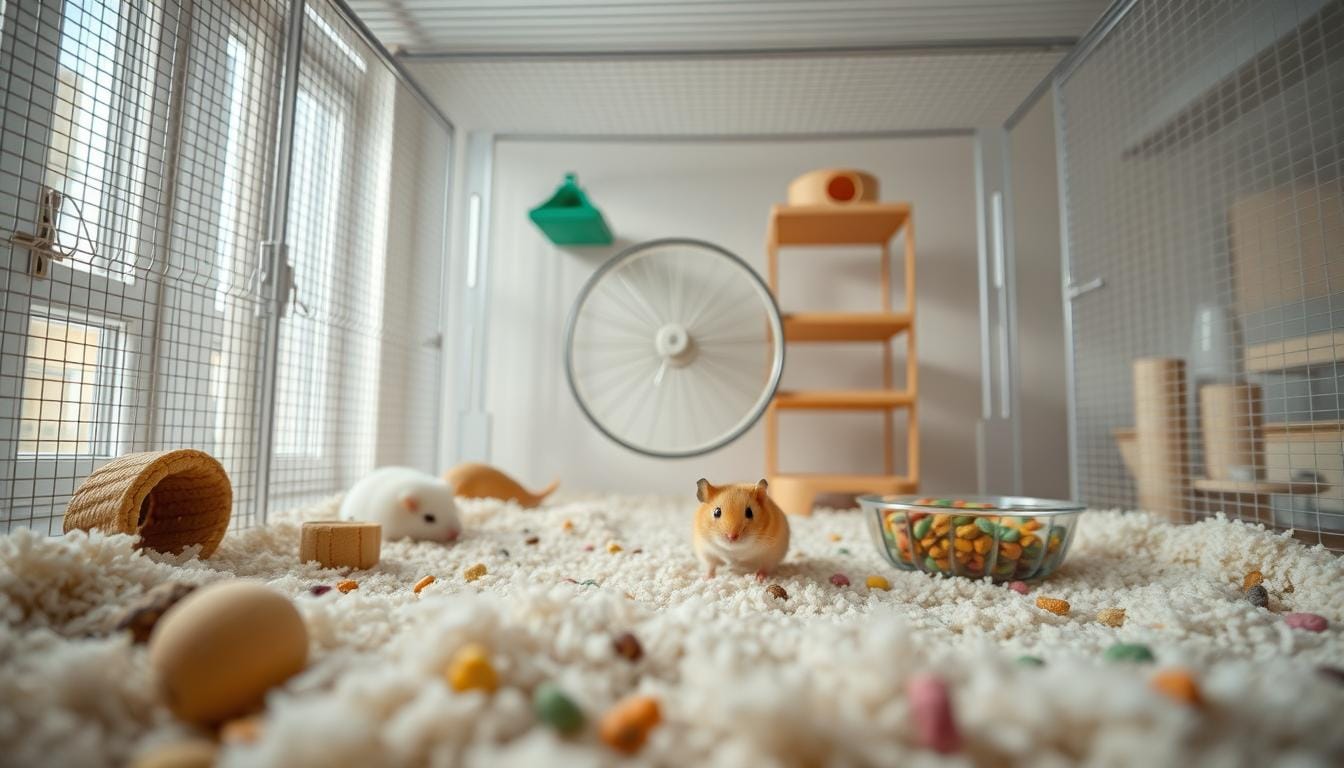
Ever think if your small furry friend is truly happy? A good home is key for a healthy and stress-free life for your pet.
A proper Hamster Cage Setup is more than a bed. It’s a space for comfort, safety, and fun every day.
Setting up a hamster cage right means your pet will do well. This guide helps you create a perfect home for your pet.
Table of Contents
Understanding Your Hamster’s Needs
Creating the perfect environment for your hamster starts with knowing what they need to thrive. When picking the right hamster cage, think about your pet’s natural instincts. A well-thought-out Hamster Cage Setup is key to a stress-free life.
“The greatness of a nation and its moral progress can be judged by the way its animals are treated.”
Determining the Right Cage Size
Hamsters are active and need lots of space to run, explore, and burrow. Many cages are too small for them. Aim for a cage with at least 450 to 600 square inches of floor space.
Deep bedding helps your hamster create tunnels. Providing ample room stops problems like bar-biting or lethargy. Remember, hamsters prefer horizontal space over vertical height.
Choosing the Appropriate Cage Material
Choosing the best hamster cage depends on the material. Wire cages are good for air but hard to clean if shallow. Glass tanks or large plastic bins offer a clear view and deep bedding, but watch for airflow.
Here’s a comparison to help you decide:
| Material Type | Ventilation | Bedding Depth |
|---|---|---|
| Wire Cage | Excellent | Limited |
| Glass Tank | Moderate | Excellent |
| Plastic Bin | Low | Good |
Ideal Cage Types for Popular Hamster Breeds
Finding the ideal hamster habitat depends on your hamster’s breed. Syrian hamsters are big and like lots of space. They do well in large glass enclosures with big wheels and accessories.
Dwarf hamsters are small but fast and active. They need multi-chamber hideouts and complex layouts. No matter the breed, consistent space and security are crucial for a healthy home.
Essential Cage Equipment
Your hamster’s happiness depends on the right gear for their home. A well-thought-out Hamster Cage Setup keeps them active, clean, and comfy all day.
Select the Right Bedding Material
Choosing the right hamster cage bedding is key for your pet’s health and comfort. Look for paper-based or aspen wood shavings. These are highly absorbent and safe for burrowing.
Stay away from cedar or pine shavings. They can irritate your hamster’s lungs. A deep layer of bedding lets your pet dig, keeping them mentally sharp.
Picking Appropriate Food and Water Containers
When picking hamster cage accessories, focus on durability and easy cleaning. Heavy ceramic bowls are great because they’re hard for hamsters to tip over, avoiding spills.
For water, a drip-proof bottle is better than an open dish. It keeps water clean and free from debris, ensuring your pet always has fresh hydration.
Adding a Suitable Exercise Wheel
An exercise wheel is a crucial hamster cage essential. Without it, hamsters might get bored or develop health problems like obesity.
Make sure the wheel has a solid surface to protect your hamster’s feet. A silent, smooth wheel lets your pet run at night without waking you.
Creating a Stimulating Environment
Turning a simple cage into a fun playground is key for a happy, active pet. By picking the right hamster cage accessories, you can stop your pet from getting lazy. It encourages them to forage, climb, and burrow. A good setup keeps your pet fit and sharp in mind and body.
Incorporating Hideouts and Tunnels
Hamsters love to hide because they are prey animals. Giving them many hideouts makes them feel safe and comfortable. You can find creative cage setups online to see how different designs meet their needs.
“A hamster that feels safe in its environment is a hamster that will explore with confidence and joy.”
Tunnels are great because they remind hamsters of their natural burrows. Using wooden, cardboard, or plastic tubes keeps their routine interesting. These essential items make your pet feel safe while they move around the cage.
Choosing Safe Chew Toys
Hamsters’ teeth grow all the time, so they need chew toys to stay healthy. The right toys help them wear down their teeth and stay entertained. Always choose safe, quality materials when picking hamster cage accessories.
- Apple wood sticks: Great for gnawing and completely safe.
- Loofah chews: Excellent for texture variety and dental maintenance.
- Cardboard tubes: Simple, eco-friendly, and highly engaging.
Using Platforms and Levels for Exploration
Using vertical space is smart to make your pet’s home more interesting. Platforms and levels let your hamster climb and see its surroundings. This adds mental stimulation. Adding these hamster cage accessories doubles the space without needing a bigger cage.
Make sure platforms are stable and have non-slip surfaces to avoid falls. Adding ramps or bridges between levels makes the environment fun and multi-dimensional. Consistency in updating these features keeps your pet excited about its home.
Ventilation and Safety Considerations
Creating a safe space is crucial when setting up a hamster cage. Your pet depends on you to keep them safe from harm. Focus on air quality and safe materials to keep your furry friend healthy and happy.
Importance of Proper Airflow
Good airflow is key for your hamster’s health. Hamsters can get sick from ammonia fumes in bad air. Without enough air, these fumes can cause serious lung infections.
Choose a cage that lets air flow well. Stay away from solid containers without mesh tops or vents. A well-ventilated cage is vital for your hamster’s long life.
Avoiding Toxic Materials in the Cage
Not all materials are safe for your pet. Be careful with treated woods and soft plastics that can harm them.
Go for natural, untreated wood or safe plastics made for small animals. If you’re not sure, it’s best to skip it. Keeping your pet safe from harmful substances is a big part of setting up a hamster cage.
Maintaining Cleanliness for Your Hamster’s Health
A clean cage is the best way to fight off bacteria. Clean out soiled bedding and food containers often. This stops mold and keeps things fresh.
Do a quick clean every day to keep things balanced. Consistency is key to keeping your pet healthy. A clean cage is not just pretty; it’s essential for your hamster’s health.
Personalizing Your Hamster’s Space
Creating a custom home for your hamster lets you mix pet care with your style. Tailoring the environment makes it both useful and pretty. Many owners enjoy DIY hamster cage ideas to understand their pet’s behavior and show their creativity.
Choosing Colors and Themes
Choosing a color scheme can make a cage beautiful. You might pick soft greens or earthy browns to look like a wild place. Or, bright colors can make the cage lively and fun.
Think about your hamster’s personality when choosing themes. A nautical theme with blue bedding and driftwood hides can be classy. A garden theme with silk flowers and moss mats brings nature inside. Make sure any paint or dye is non-toxic and pet-safe.
Adding Creative Decorations
Let your imagination run wild with unique items. Use wood, cork logs, or ceramic pots for interesting textures. Many DIY hamster cage ideas use safe household items like cardboard tubes or glass jars for tunnels and lookout points.
Remember, safety is key when choosing items. Avoid sharp edges, small gaps, or splintering materials. Here’s a quick guide to safe materials:
| Material Type | Safety Level | Best Use |
|---|---|---|
| Untreated Wood | High | Chew toys and bridges |
| Ceramic | High | Cooling hides and food bowls |
| Cardboard | Medium | Temporary tunnels and nests |
| Plastic | Low | Only if heavy-duty and chew-proof |
Regularly Updating the Setup
Hamsters love to explore and need variety. The same layout for months can make them bored. Change the layout every time you deep clean to keep them engaged.
Swap toys and hideouts to give a new experience without spending more. Switching a wooden bridge for a cork tunnel keeps your hamster active and happy. This dynamic approach keeps your pet healthy and happy for life.
Understanding the Importance of Space
Many owners don’t realize how much space a hamster needs to be happy. Giving them a big area to live in helps prevent fights and stress. This is the key to a best hamster cage for your pet’s health.
Space Requirements for Different Hamster Breeds
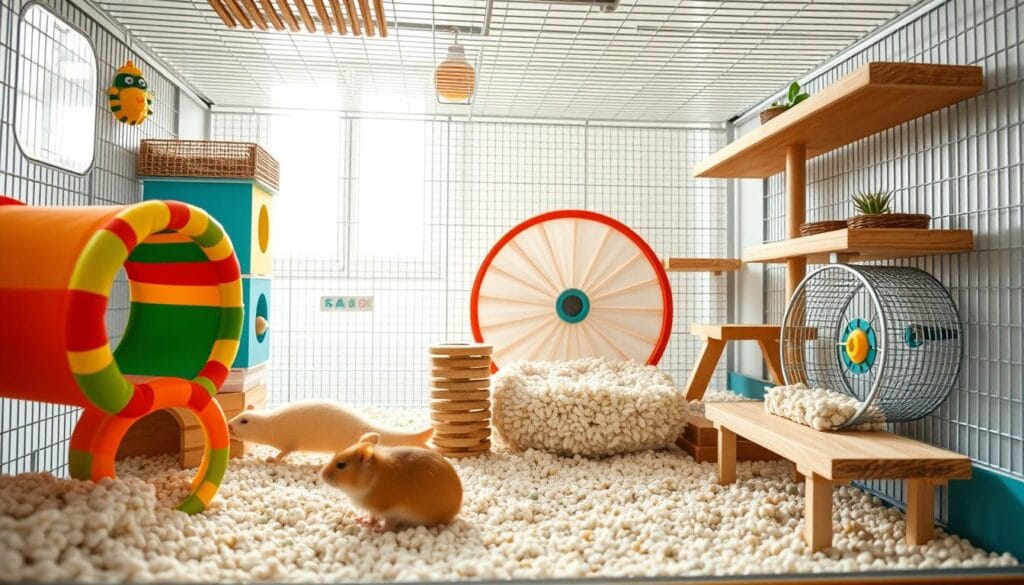
Each hamster breed has its own needs for space and activity. While all hamsters need more room, bigger ones need even more to move and dig.
- Syrian Hamsters: These active creatures need a minimum of 600 to 800 square inches of unbroken floor space.
- Dwarf Hamsters: Though smaller, they are fast and need at least 450 square inches of floor area.
Remember, floor space is more important than height. A wide, single-level cage is better than a tall, narrow one for these animals.
Avoiding Overcrowding with Accessories
It’s tempting to add lots of toys and tunnels, but too many can make the cage too small. If the cage is too full, your hamster can’t run or explore as it should.
To keep your best hamster cage in top shape, follow these tips:
- Leave the center of the cage open for your hamster to run.
- Change out toys and accessories every week instead of keeping them all in there.
- Make sure big items like wheels and sand baths don’t block important paths.
By mixing fun toys with enough space, you create a harmonious home. This balance keeps your hamster active, healthy, and joyful for years to come.
Tips for Cage Maintenance
Keeping your pet’s home clean is key. A good cleaning routine makes their space fresh and stress-free. Focus on hamster cage essentials to keep their environment clean and healthy.
Establishing a Cleaning Schedule
It’s important to clean daily and do a deep clean every two to three weeks. Daily spot cleaning removes soiled areas and uneaten food. This stops odors and bacteria from building up.
Deep cleaning involves removing your hamster and scrubbing the cage with safe cleaners. This is crucial for a clean habitat.
“Cleanliness is the foundation of a thriving pet habitat, ensuring that your small companion remains healthy and active throughout their life.”
Replacing Bedding and Accessories
Changing your hamster cage bedding regularly is essential. Replace the entire bedding during deep cleaning to get rid of waste and allergens.
Check your hamster cage accessories for damage. Replace items with chew marks or weaknesses to avoid injuries.
There are many durable and fun items for your pet. Make sure new items are safe and non-toxic for your hamster.
Monitoring Food and Water Supply
It’s your job to provide fresh food and water every day. Check the water bottle daily to avoid clogs and keep the water clean.
Watch the food supply to prevent spoilage. Remove uneaten fresh foods quickly to avoid mold and keep the cage smelling good.
- Check water levels daily.
- Remove fresh food scraps within 24 hours.
- Inspect dry food bowls for debris.
Socialization and Interaction
Creating a strong bond with your hamster starts with their living space. An ideal hamster habitat builds trust and comfort. This trust lets your pet feel safe to interact with you.
Ensuring Your Hamster Feels Secure
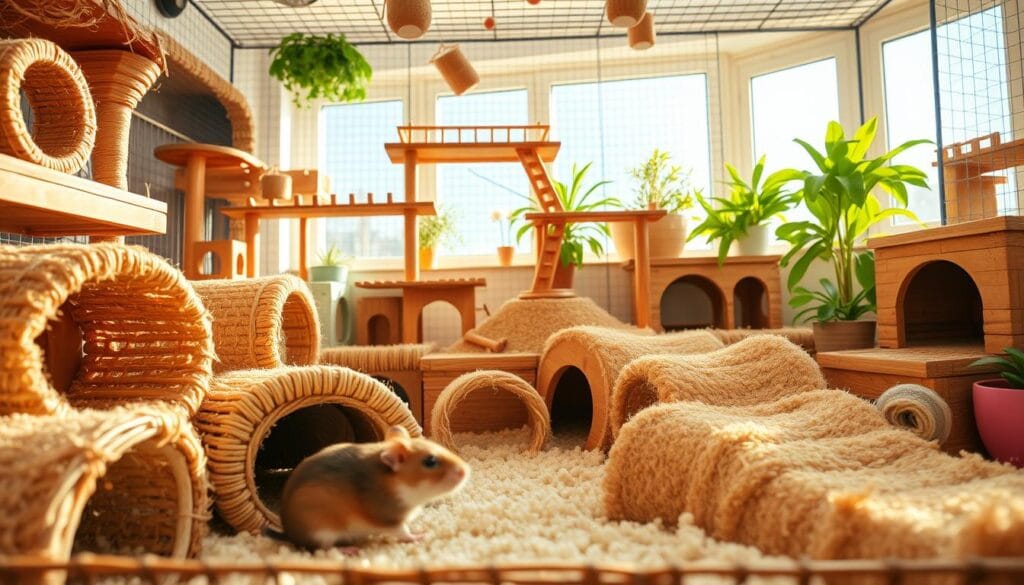
Security is key for a good relationship with your hamster. If they don’t feel safe, they might hide or act scared. Give them dark, cozy hideouts to feel secure.
Studies show that a stable environment lowers stress in animals. This is important for your hamster’s happiness.
Ways to Encourage Play and Exploration
When your hamster feels safe, it’s time to encourage play. Add tunnels, bridges, and climbing spots to make their home fun. This turns their space into a playground.
Just like in a well-designed small animal enclosure, variety is key. Change toys often to keep your hamster curious and active.
Importance of Daily Interaction
Daily time with your hamster is crucial for a strong bond. Spend a few minutes each day talking to them or giving treats. This makes them look forward to your visits.
Consistency is the secret ingredient for trust. Use these moments to check on their health and happiness.
| Interaction Method | Frequency | Primary Benefit |
|---|---|---|
| Hand Feeding | Daily | Builds trust and confidence |
| Soft Talking | Every Evening | Reduces fear of human voice |
| Supervised Play | 3-4 Times Weekly | Encourages physical exercise |
| Health Check | Weekly | Early detection of illness |
Seasonal Adjustments to the Cage Setup
Your hamster’s home needs changes with the seasons. Whether it’s a standard cage or a DIY hamster cage idea, keeping it cool is key. Watch the room temperature to keep your pet comfy, no matter the weather.
Preparing for Winter: Warmth and Comfort
As it gets colder, your hamster might need more warmth. Add more bedding for burrowing, which keeps them warm. Give them extra nesting material, like plain paper or soft hay, for a cozy spot to sleep.
- Place the cage away from drafty windows or cold exterior walls.
- Ensure the enclosure is kept in a room with a consistent, moderate temperature.
- Check that your DIY hamster cage ideas do not have gaps that allow cold air to enter.
Summer Care: Keeping it Cool
Hamsters can get heatstroke in hot weather. In summer, focus on keeping the cage cool and well-ventilated. Make sure your DIY hamster cage ideas have good airflow, not blocked by decorations.
To keep your pet cool, add a clean, cool ceramic tile or stone to the cage. These materials stay cool and offer a nice place for your hamster to rest. Never put the cage in direct sunlight, as it can make the cage too hot.
Common Mistakes to Avoid
Starting your journey with a hamster should be fun, but some mistakes can stress them out. Many new owners make choices that harm their pet’s happiness. Knowing these mistakes can make your time with your hamster much better for both of you.
Not Providing Enough Enrichment
Not giving your hamster enough to do can lead to bad behavior. They might chew bars or pace a lot. Give them toys, tunnels, and places to hide to keep them happy and active.
Skimping on Space and Comfort
Not giving your hamster enough room is a big mistake. When picking a hamster cage, choose one that’s big enough for them to move around. A small cage can make them unhappy and unhealthy.
Choosing the right cage is important for your hamster’s health. Don’t pick a cage that’s too small. It needs to be big enough for them to burrow and feel safe.
Neglecting Regular Maintenance
Cleaning your hamster’s cage regularly is crucial. Not doing so can make them sick. A dirty cage can have harmful germs and bad smells.
Make cleaning a part of your routine. Clean it every day and do a deep clean when needed. Keeping their cage clean will help your hamster stay healthy and happy.
Conclusion: Bringing It All Together
Creating a home for your small pet is rewarding. It makes their life better. You ensure their safety and happiness by creating the right space.
Final Thoughts on a Happy Home for Your Hamster
Setting up a hamster cage is key to a good bond with your pet. Your hard work in creating a safe, fun, and clean space helps your pet thrive. A well-cared-for pet brings joy to your life for many years.
Encouragement to Customize Further
Feel free to change your setup as you get to know your pet better. Watch how they react to different toys or hiding spots from brands like Niteangel or Kaytee. Making small changes keeps things interesting for your active pet.
Keep improving your hamster cage setup based on what you learn. Your dedication makes your pet feel at home. Enjoy seeing your pet explore and grow in the space you’ve created with care.