
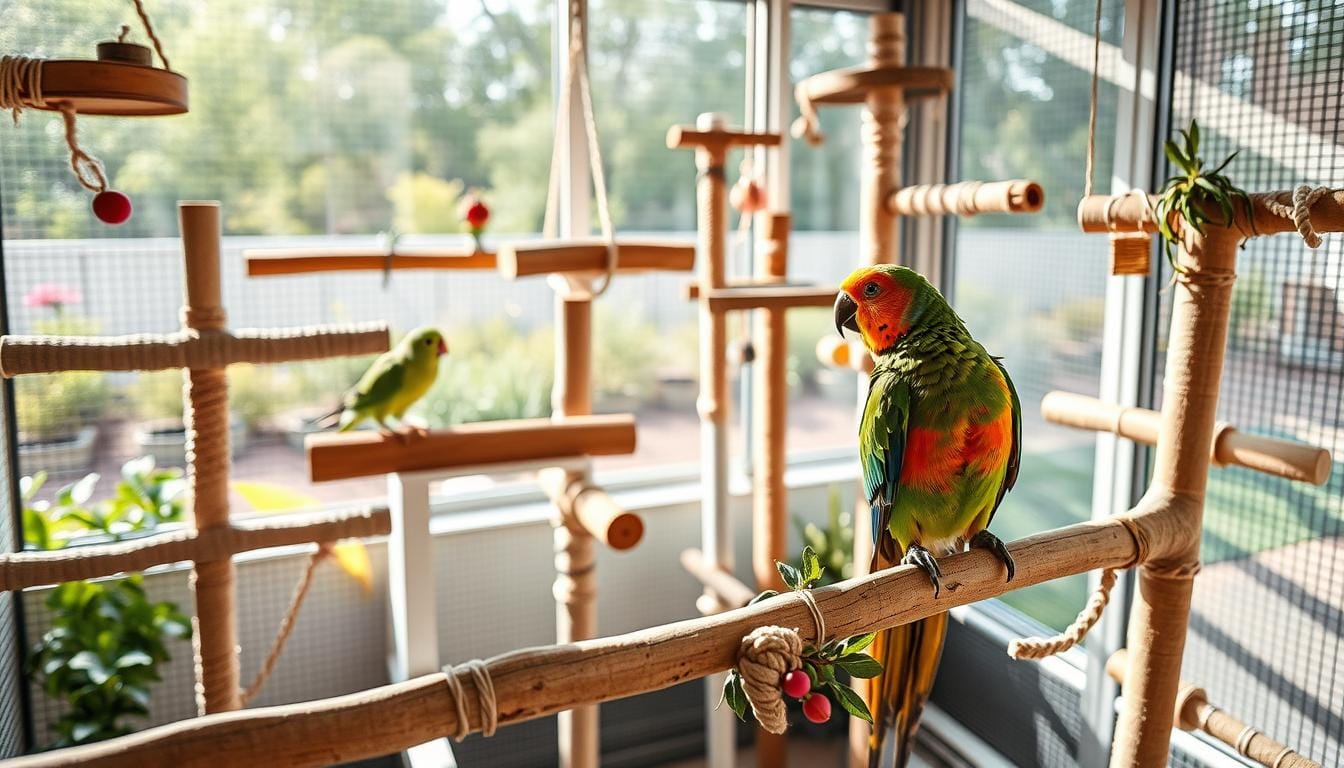
Ever think if your bird is truly happy at home? Many owners give lots of toys and food but forget about the cage’s design. Bird perch placement is key to your bird’s happiness and health.
Where you place the perches affects your bird’s daily life and happiness. Learning about exotic bird cage setup helps create a safe space for natural movement. Making small changes can turn a simple cage into a fun place for your bird.
Key Takeaways
- Proper positioning supports physical health and prevents muscle atrophy.
- Strategic layouts encourage natural behaviors like climbing and stretching.
- Mental stimulation increases when your pet has varied vantage points.
- Safety remains the top priority when securing internal accessories.
- A well-designed habitat reduces stress and promotes long-term happiness.
Understanding Bird Behavior and Needs
Biological instincts guide every move your bird makes at home. By watching how they interact, you learn the value of thoughtful design. Using effective bird perch placement strategies makes your bird feel safe and challenged.
Why Perch Placement Matters
Where you place perches affects your bird’s health. In the wild, birds move to stay strong. Without this variety, they might get foot sores or weak muscles.
Good placement makes your bird move, stretch, and fly. It keeps them healthy by avoiding stagnation. Proper bird perch placement is like medicine for your pet.
Natural Habitats and Climbing
Birds love to climb, just like in their natural habitats. They climb to find food and socialize. You can help by placing perches at different heights and angles.
Offering perches with different textures and sizes is key. It makes climbing fun and keeps your bird strong. This is a big part of effective bird perch placement strategies for a long, happy life.
Social Dynamics Among Birds
If you have more than one bird, their social order is important. Dominant birds take the top spots, while shy ones prefer lower or hidden places. Watching these interactions helps ensure everyone has a safe spot.
Having many good perches lets each bird find a cozy spot. When birds feel safe, they’re less stressed. Always think about bird perch placement that meets each bird’s comfort level.
Types of Bird Perches Available
When setting up the best bird perching spot, think about the different textures and shapes. It’s important to offer various surfaces for your bird’s foot health and comfort. A strategic bird perch arrangement keeps your bird active and prevents pressure sores.
Natural Wood Perches
Natural wood is the top choice for most birds. These perches have varied diameters that help exercise the foot muscles and keep nails in check. Hardwood options like manzanita or java wood are durable and good for healthy feet.
Platform Perches
Platform perches are great for birds to relax or sleep. They offer a flat, stable surface that eases pressure on the feet. These are excellent for older birds or those with mobility issues who find it hard to grip round perches for long.
Rope Perches
Rope perches add flexibility and comfort to your bird’s cage. They can be bent to create custom shapes that encourage movement and climbing. Soft cotton or sisal materials offer a gentle grip, making them a hit with birds that like to rest in different ways.
- Natural Wood: Best for nail maintenance and foot muscle exercise.
- Platform: Ideal for resting and relieving pressure points.
- Rope: Perfect for comfort and creating dynamic, flexible paths.
Mixing these materials creates a strategic bird perch arrangement that mimics the wild. This variety is crucial for the best bird perching spot in your bird’s daily life.
Factors Influencing Perch Placement
Finding the perfect bird perch location is more than just picking a spot. You need to think about how your home affects your bird’s natural behavior. Planning well helps keep your bird happy and active.
Bird Species and Size Considerations
The size and type of your bird affect what kind of perch it needs. Big birds like macaws need sturdy, thick perches for support. Smaller birds, like finches, prefer thinner perches that fit their feet snugly.
It’s also important to space perches right. They should be far enough apart for your bird to move easily. But not so far that it doesn’t feel like it’s hopping. Make sure the perch is the right size for your bird’s feet to avoid health problems.
Environmental Factors in Your Home
The climate in your home is key to finding the perfect bird perch location. Birds don’t like cold drafts or sudden changes in temperature. So, avoid placing perches near air conditioning vents or drafty windows.
Light is good, but so is shade. A perch that gets morning sun is great, as long as there’s a cool spot for your bird to go when it’s too hot. Keeping the environment steady helps your bird stay healthy and full of energy.
Flow of Household Activities
The daily life in your home affects where to put your bird’s perch. Busy areas might stress out shy birds, while social birds might enjoy the action. Watch how your bird acts to see if it feels safe or scared in certain rooms.
Here’s a table to help pick the best spot for your bird’s perch:
| Factor | High-Traffic Area | Quiet Corner |
|---|---|---|
| Bird Comfort | Low (for shy birds) | High (for resting) |
| Socialization | High | Low |
| Stress Levels | Increased | Minimal |
| Best For | Social Species | Nervous Birds |
Optimal Locations for Bird Perches
Putting perches in the right spots can turn your home into a fun place for your bird. By changing where your bird goes, you help them move naturally and keep their mind sharp. When you create the perfect habitat for your exotic, think about how different areas meet their needs.
Near the Cage vs. Away from the Cage
Perches inside or attached to the cage make your bird feel safe. These spots are perfect for eating or getting groomed. But, optimal bird perch positioning also means having perches in other rooms.
Having perches in different rooms makes your bird feel like part of the family. This variety keeps them active and curious. Variety is the key to a happy, healthy bird.
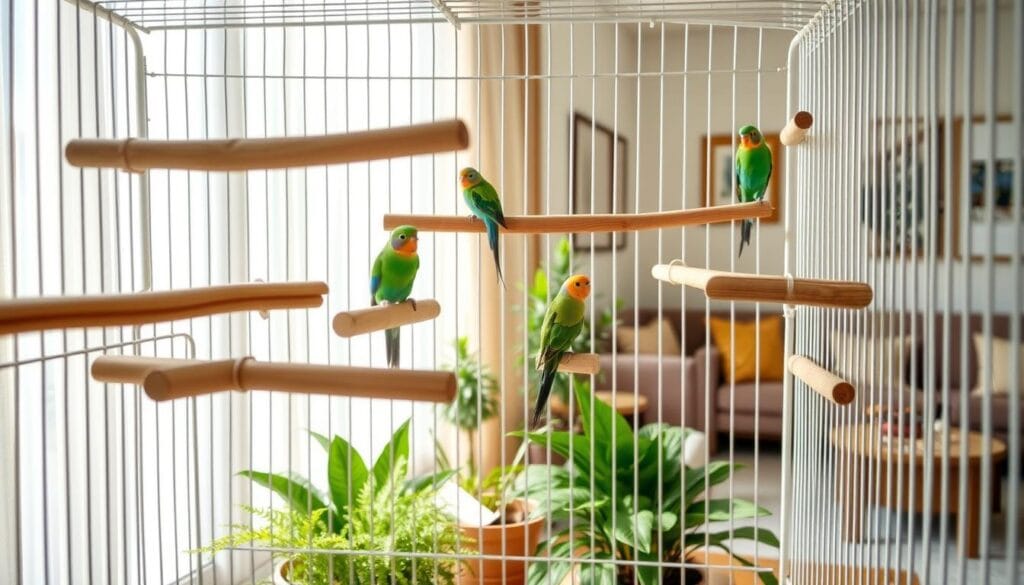
Quiet Areas vs. High-Traffic Zones
Birds love being part of the family action. A perch in a busy area, like the living room, lets them watch family life. This is good for their mood and social skills.
But, they also need quiet places for rest and sleep. Too much noise can stress or tire them out. Finding the ideal bird perch placement means having both lively spots and quiet corners.
Access to Natural Light and Fresh Air
Natural light is key for your bird’s health, helping them make vitamin D. A perch near a window gives a great view and sunlight. Make sure the window is safe and draft-free.
Fresh air is also good, as long as it’s not too cold or windy. When you get the ideal bird perch placement right, you create a lively space like the wild. Always watch how your bird reacts to new places to make sure they’re happy and safe.
Creating a Multi-Perch Environment
Make your bird’s life better by setting up multiple perches in their home. A static setup can lead to boredom and weak muscles in birds. Adding different levels encourages natural movement and keeps your bird active.
Varying Heights for Enrichment
Birds love to climb and explore different heights. Place perches at various levels to keep your bird active and interested. Consistent movement between levels strengthens their leg muscles and improves balance.
By placing perches at different heights, you create a bird-friendly environment. This setup helps your bird stay healthy by exercising their joints and muscles.
Arranging Perches for Socialization
Your bird is a social creature that feels safe when they can watch their surroundings. Use bird perches for maximum visibility to let your bird observe without feeling trapped. This reduces anxiety and makes your bird feel part of the family.
Make sure one high perch lets your bird see you clearly. This visual connection builds trust and strengthens your bond with your bird.
Incorporating Toys and Other Accessories
To get the most out of your setup, add toys and accessories to your perches. Use bird perches for maximum visibility as a base for toys or swings. This turns your perches into a place for both rest and play.
| Perch Type | Primary Benefit | Recommended Placement |
|---|---|---|
| Natural Wood | Foot health and grip | Mid-level for daily use |
| Platform | Resting and comfort | High-level for observation |
| Rope | Flexibility and exercise | Corner to corner for climbing |
| Swing | Balance and stimulation | Top area for active play |
Safety Considerations in Perch Placement
When setting up your bird’s habitat, safety is key. A safe environment prevents accidents and keeps your pet secure. Follow the tips in bird perches 101 to create a safe and comfortable space.
Avoiding Hazardous Areas
Before setting up, check the room for dangers. Stay away from drafty windows, ceiling fans, and open kitchens. Keeping your bird away from these zones is crucial for its health.
Also, keep perches away from toxic items and electrical cords. Birds might chew on dangerous things if they can reach them. Always have a safe area between the cage and hazards.
Ensuring Stability and Security
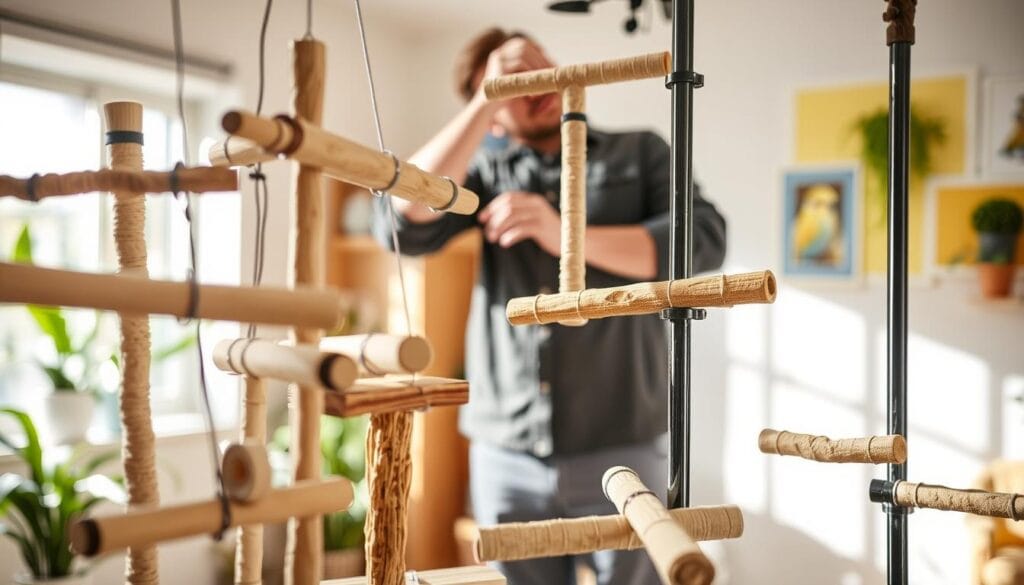
The setup’s stability is as important as its location. Make sure every piece of equipment is securely attached. Loose perches can cause your bird to fall, leading to stress or injury.
Regularly check the hardware to keep screws and fasteners tight. If a perch is unstable, take it down and fix or replace it before your bird uses it again. Stability is the foundation of a safe and happy bird environment.
Monitoring for Potential Risks
Even with a great setup, watch your bird closely. Look for signs of wear on wooden surfaces, as splintered wood can harm your bird’s feet. Arrange perches for easy visibility so you can watch your pet from afar.
Here are some tips to keep your environment safe:
- Check all perches weekly for loose parts or damage.
- Watch how your bird moves to make sure it’s easy to navigate.
- Change the layout if your bird seems to avoid certain areas.
Regular Maintenance and Adjustment
Creating the perfect home for your pet bird is a continuous task. Proper bird perch installation is a good start, but your home’s environment changes. You need to stay active to keep your bird healthy and happy.
When to Move or Replace Perches
Perches wear out from constant use. Look for deep cracks, splintering wood, or loose parts. If you see these signs, replace them right away to avoid harm. Safety is always the most important thing when caring for your bird’s space.
Also, move perches if your bird’s activity changes or if they seem to stay away from certain spots. Switching things up keeps your pet’s mind and body active. Regular checks ensure your ideal bird perch placement stays right as your bird grows or ages.
Cleaning and Hygiene Best Practices
Keeping things clean is key to stopping bacteria and keeping your bird healthy. Clean perches weekly with safe cleaners to get rid of droppings and food. Being consistent is crucial to avoid hygiene problems.
Make sure all surfaces are dry before putting them back in the cage. Wet wood can grow mold, which is bad for your bird’s breathing. Keeping things clean boosts the benefits of your proper bird perch installation.
Observing Bird Behavior for Placement Changes
Your bird will show you if they’re not happy with their setup through their body language. If they avoid a perch, it might be in a drafty spot or feel unsafe. Noticing these signs lets you make small changes.
Try different heights and angles to find the ideal bird perch placement your pet loves. Watch where your bird likes to sleep or preen, as these are their favorite spots. Adjusting to these preferences makes your bird’s life better and less stressful.
Enhancing Your Bird’s Comfort
Finding the perfect bird perch location means knowing what your bird needs. You create a space that’s good for their body and mind. Even small changes can make a big difference in how your bird feels at home.
Use of Different Materials and Textures
Birds use their feet to explore and play. Offering different textures, like wood, sisal rope, or mineral perches, helps prevent foot fatigue. It also keeps their grip strong. Switching these materials helps avoid pressure sores.
Natural branches are great because they challenge the foot muscles. Adding them to a strategic bird perch arrangement makes your bird’s home feel like the wild. This variety keeps your bird active and engaged all day.
Temperature and Draft Considerations
Your bird is very sensitive to temperature changes. Make sure perches are not near cold windows or air vents. Consistent temperatures help keep your bird’s immune system strong and comfortable.
If your bird fluffs their feathers or shivers, it might be cold. Always check the air around their cage. A comfortable bird is a happy bird. Keeping them safe from sudden temperature changes is important.
Providing Ideal Resting Areas
Every bird needs a quiet, safe place to rest when tired or stressed. By arranging perches wisely, you can create special rest zones. These should be high up and away from busy areas.
Soft, flat perches are perfect for resting, letting your bird relax their feet. Place these in a calm corner of the room. This helps your bird feel safe and secure. Taking care of these resting spots is key to your bird’s long-term health and happiness.
Final Thoughts on Bird Perch Placement
Creating a great home for your pet bird needs both watching and creativity. You can turn a simple cage into a lively space. This space helps your bird’s body and mind stay healthy.
Summary of Essential Principles
Meet your bird’s core needs by mixing safety with fun activities. Make sure your bird has stable spots and different materials to keep them interested. Look at your home from your bird’s view to find the best perching spots.
Adapting to Your Pet
Your bird will grow and change. You need to change things too, to keep up with their new needs. Try out different setups to see what makes your bird feel safest.
Commitment to Long-Term Wellness
Good bird perch placement is key to a happy life. Paying attention to these details keeps your bird from getting bored or hurt. Your hard work means your bird will have a happy and interesting home for a long time.