
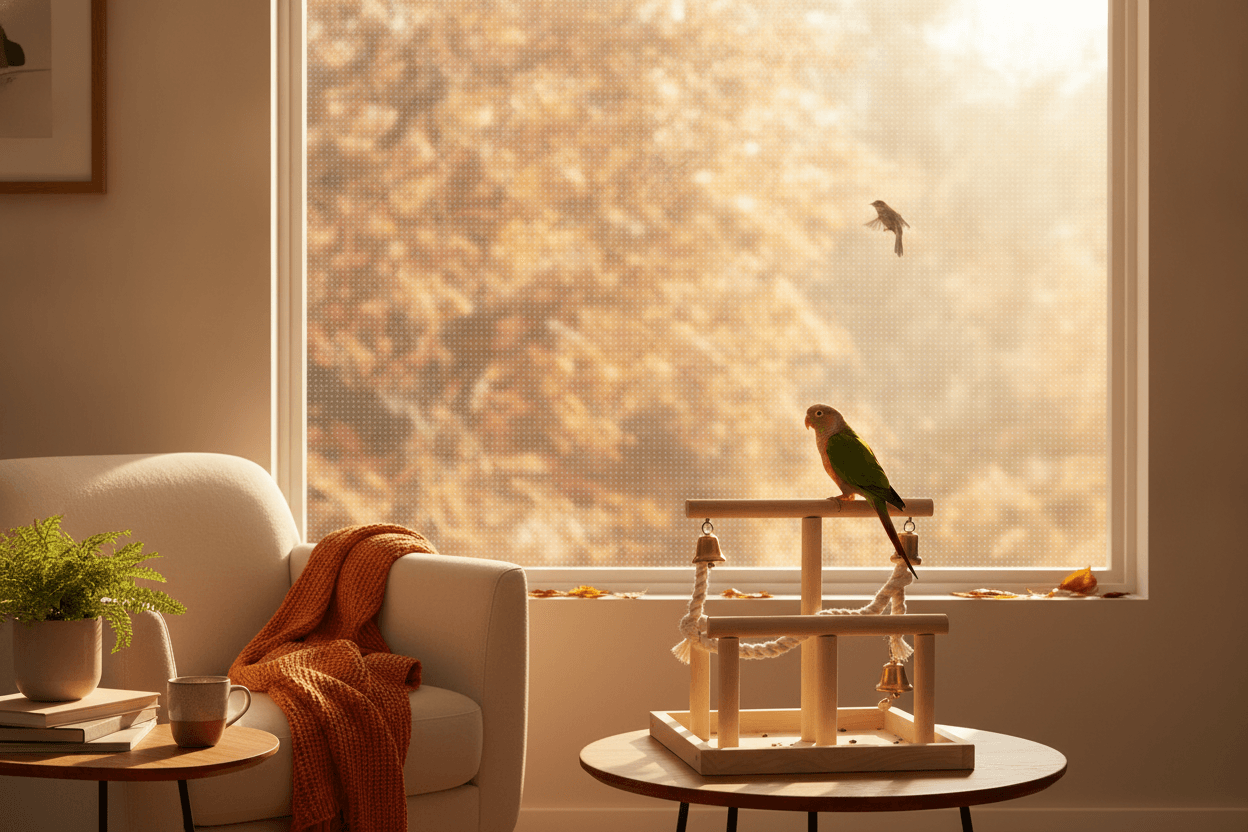
Autumn migration brings more wild birds past homes just as changing light, leafy reflections, and bright windows can make glass hard to recognize. The same panes can also be a serious hazard for a companion bird flying indoors. A few thoughtful changes can help protect both: make glass visible, manage indoor flight safely, and reduce unnecessary nighttime lighting.
This guide separates the two jobs—bird-proofing your home for a pet bird and making windows easier for wild birds to see—so you can take the right steps without assuming one solution fits every bird or window.
Why windows are risky for birds
Birds do not necessarily perceive clear glass as a barrier. Reflections of sky or trees can look like open flight space, while transparent panes may appear to offer a route through a room. The Smithsonian’s National Zoo explains that patterns and screens help make windows more visible; it notes that migration and nighttime lighting can add to collision risk for wild birds.
For a pet bird, the issue is immediate and indoors: a startled or excited bird may fly toward a reflective window or mirror. VCA Animal Hospitals lists windows and mirrors among household hazards and recommends making these surfaces visibly distinct. Autumn is a useful time to revisit both sides of the problem, but window safety is a year-round habit.
Make rooms safer for a companion bird
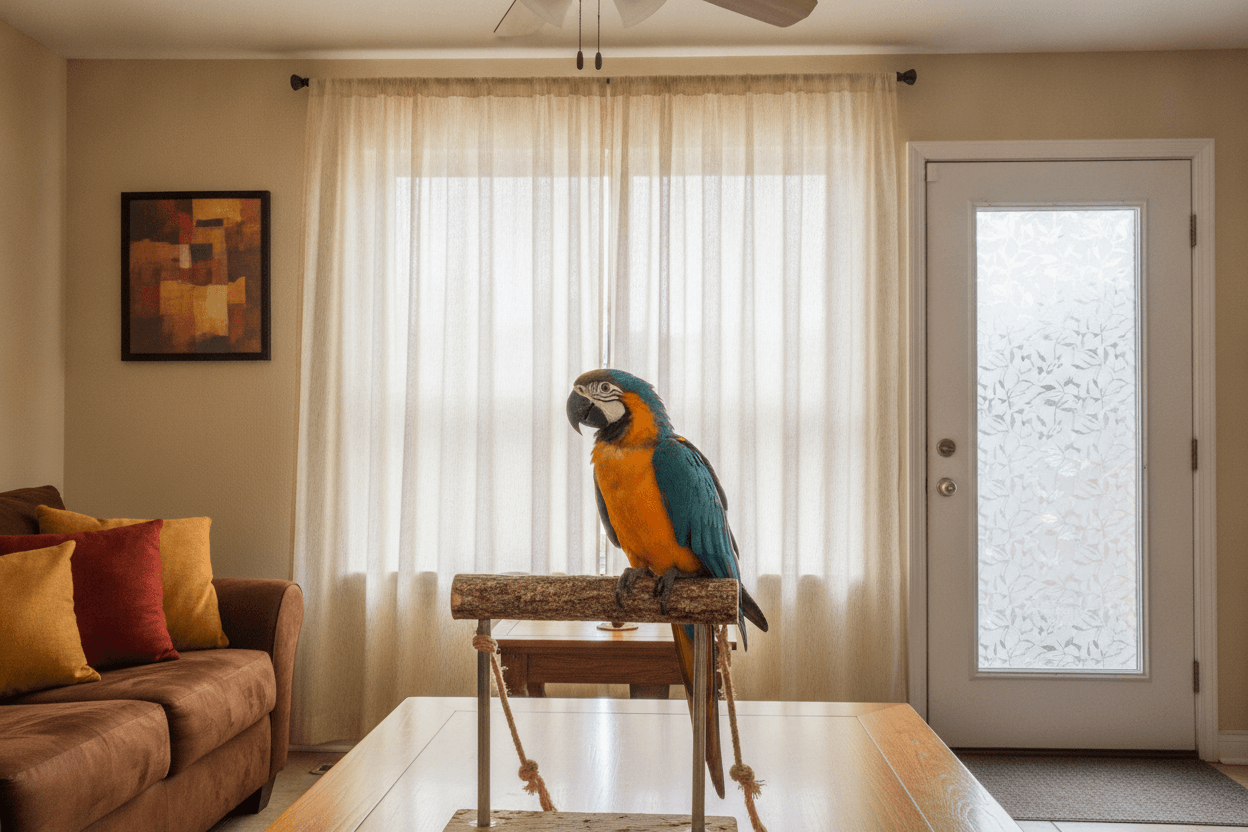
Before letting a pet bird out of its enclosure, prepare a supervised, bird-safe room. Keep exterior windows and doors closed, draw curtains or blinds, and use window clings or another visible treatment on glass and mirrors. A couple of decorative stickers on a large pane may leave most of the reflective surface looking like open sky; use a treatment that makes the whole hazard apparent to your bird.
Switch off ceiling and portable fans before any flight time, and keep other pets out of the room. Check for open water, hot cookware, exposed cords, and other household risks. Never rely on wing clipping as a substitute for a safe room or supervision: ask an avian veterinarian about individual flight and safety questions. VCA’s bird household-safety guidance covers windows, mirrors, fans, open doors, and other hazards.
Give your bird time to adjust to a changed room. If you move furniture or change window coverings, keep the bird secure while you make the changes and observe how it responds before resuming normal supervised activity. Do not assume a bird that has flown safely in the past will recognize every new reflection or room arrangement.
Make home windows visible to wild birds
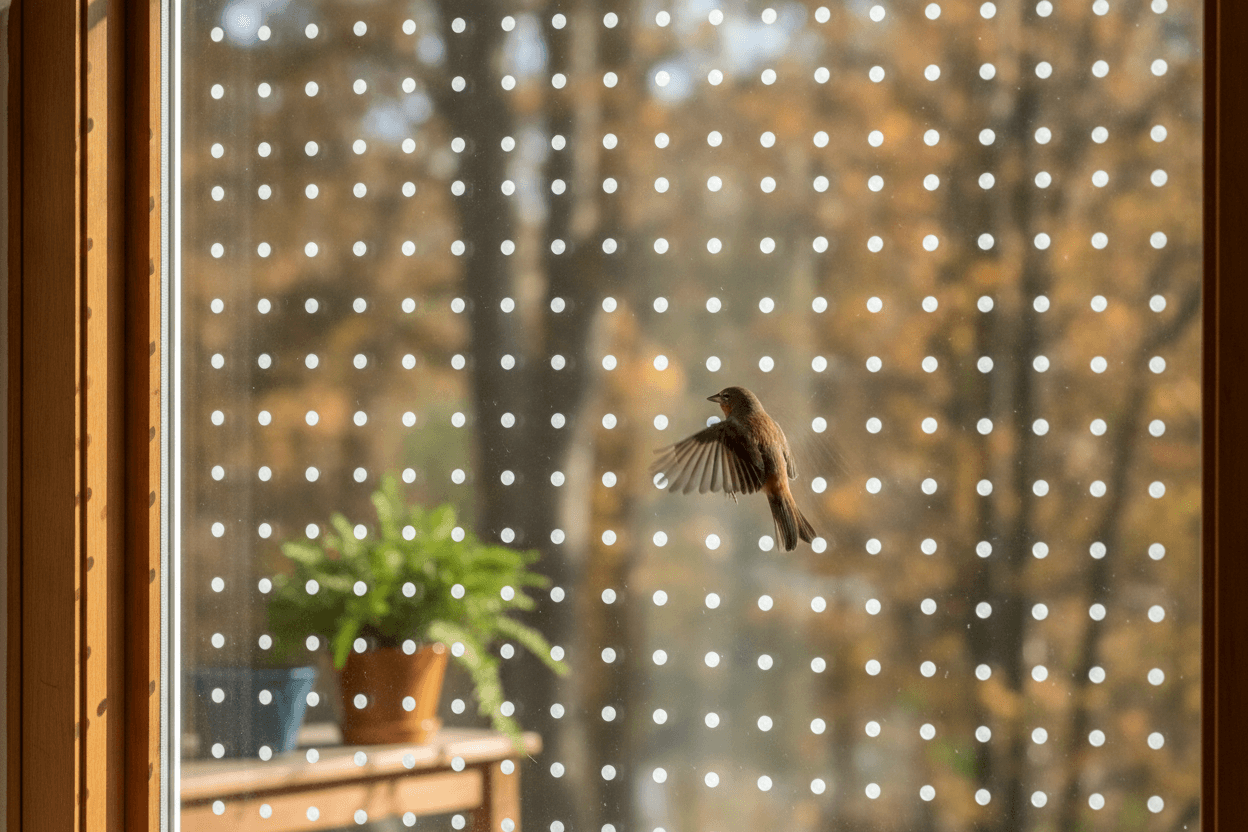
To reduce collisions from outside, interrupt reflections or transparency on the exterior-facing surface where possible. Options include a properly fitted exterior insect screen, a purpose-made bird-safe film or marker pattern, or vertical cords designed for this use. The American Bird Conservancy’s home solutions page describes screens and other approaches; if choosing a commercial product, consult its specifications and the organization’s guidance rather than assuming every decorative film has been tested for bird safety.
Coverage and spacing matter. The Smithsonian recommends keeping pattern marks close together—no more than about two inches apart in both directions—so birds are less likely to perceive open gaps. Apply markers across the problem pane, especially where it reflects vegetation or sky. A lone hawk silhouette or a few widely spaced stickers may not change the appearance of most of the glass.
Walk around the outside of your home in daylight and look for strong reflections, clear passages through opposite windows, large glass doors, and panes near vegetation. Prioritize the windows where a bird could approach at speed, then check the treatment from several angles. Reinspect periodically: screens can come loose and films or markings can fade or peel.
Reduce unnecessary nighttime light
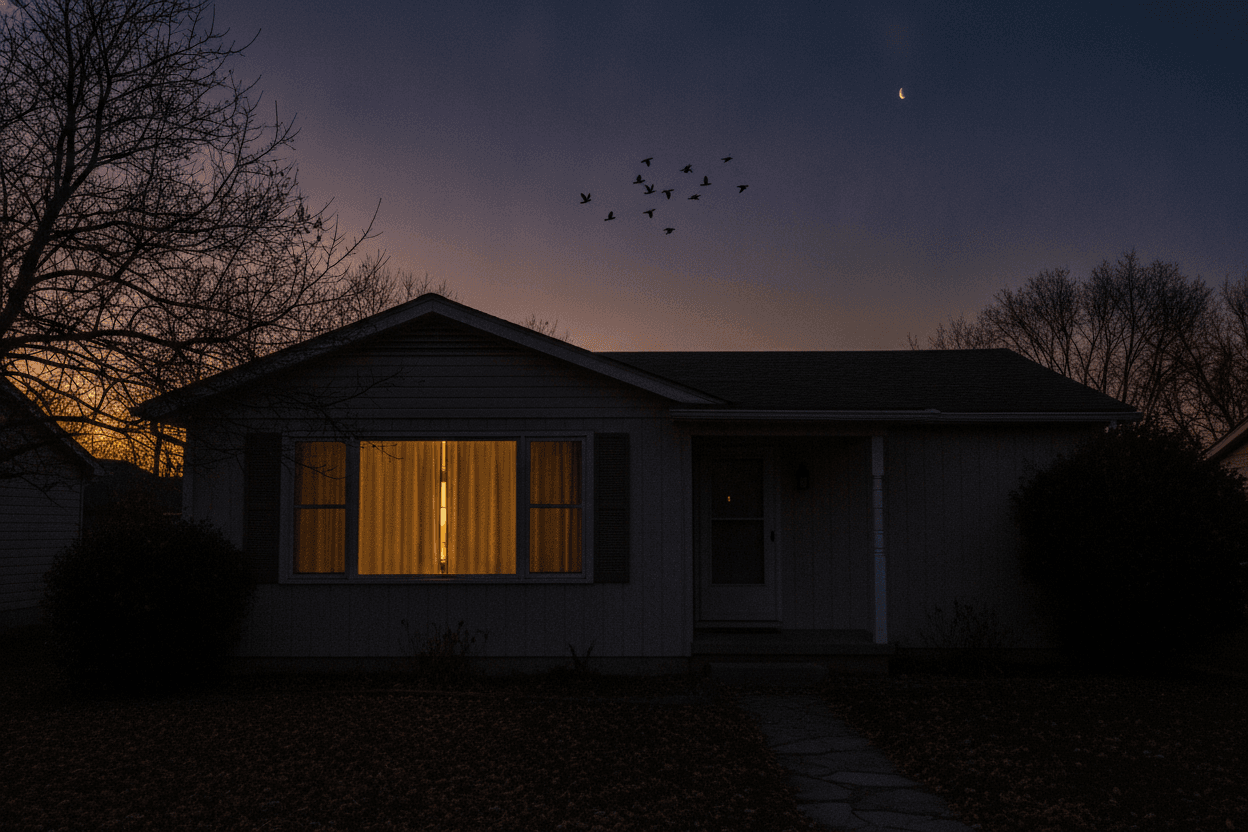
Many migratory birds travel after dark. Bright, unnecessary outdoor and indoor lights can contribute to disorientation, particularly when light spills out around windows. Close curtains or blinds at night and turn off lights that are not needed, especially in rooms with large windows. Where lighting is necessary for people’s safety, use only what is needed, direct it downward, and consider a timer or motion control.
These steps complement—not replace—visible window treatments. A dark window can still reflect daylight the next morning, and a patterned window remains useful even when the lights are off. The Smithsonian’s guidance describes reducing nighttime light as one practical part of a broader bird-friendly approach.
A practical autumn checklist
- For your pet bird: close windows and exterior doors; cover or mark windows and mirrors; turn off fans; supervise out-of-enclosure time in a prepared room.
- For wild birds: identify reflective or transparent panes from outdoors; use a suitable exterior screen or a dense, full-pane pattern; check that markers remain visible and well spaced.
- After dark: close curtains or blinds and switch off unnecessary indoor and outdoor lights; direct needed outdoor lighting downward.
- If a collision occurs: keep people and pets away from an injured wild bird and contact a licensed wildlife rehabilitator or local wildlife authority for instructions. Do not assume a bird is unharmed because it is quiet or briefly moves.
Window treatments can help, but they are only one part of responsible care. A companion bird still needs a safe, supervised environment, and any bird that appears injured needs qualified help. If you are unsure which treatment is appropriate for a particular window or bird, consult an avian veterinarian or a recognized bird-conservation organization.
Sources and further reading
- Smithsonian’s National Zoo: How to Make Your Windows Safer for Birds
- American Bird Conservancy: Preventing Glass Collisions
- American Bird Conservancy: Solutions for Homes
- VCA Animal Hospitals: Household Hazards and Dangers to Birds
Care note: This general safety information is not a substitute for advice from an avian veterinarian or a licensed wildlife rehabilitator. Species, housing, and local wildlife-response guidance vary.