
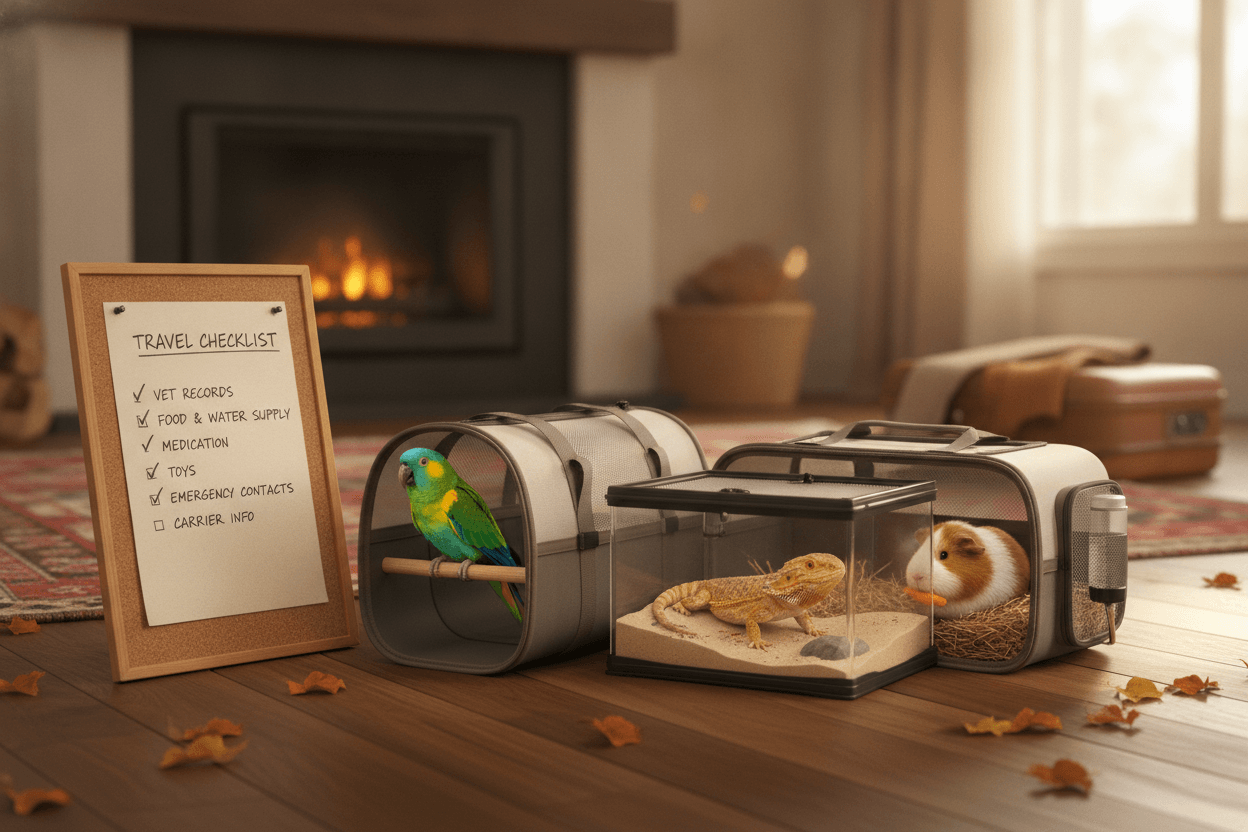
Holiday travel can be exciting for people but disruptive for birds, reptiles, and small mammals. A calm plan helps a caregiver reproduce the routines your exotic pet already knows without guessing about food, housing, or environmental needs.
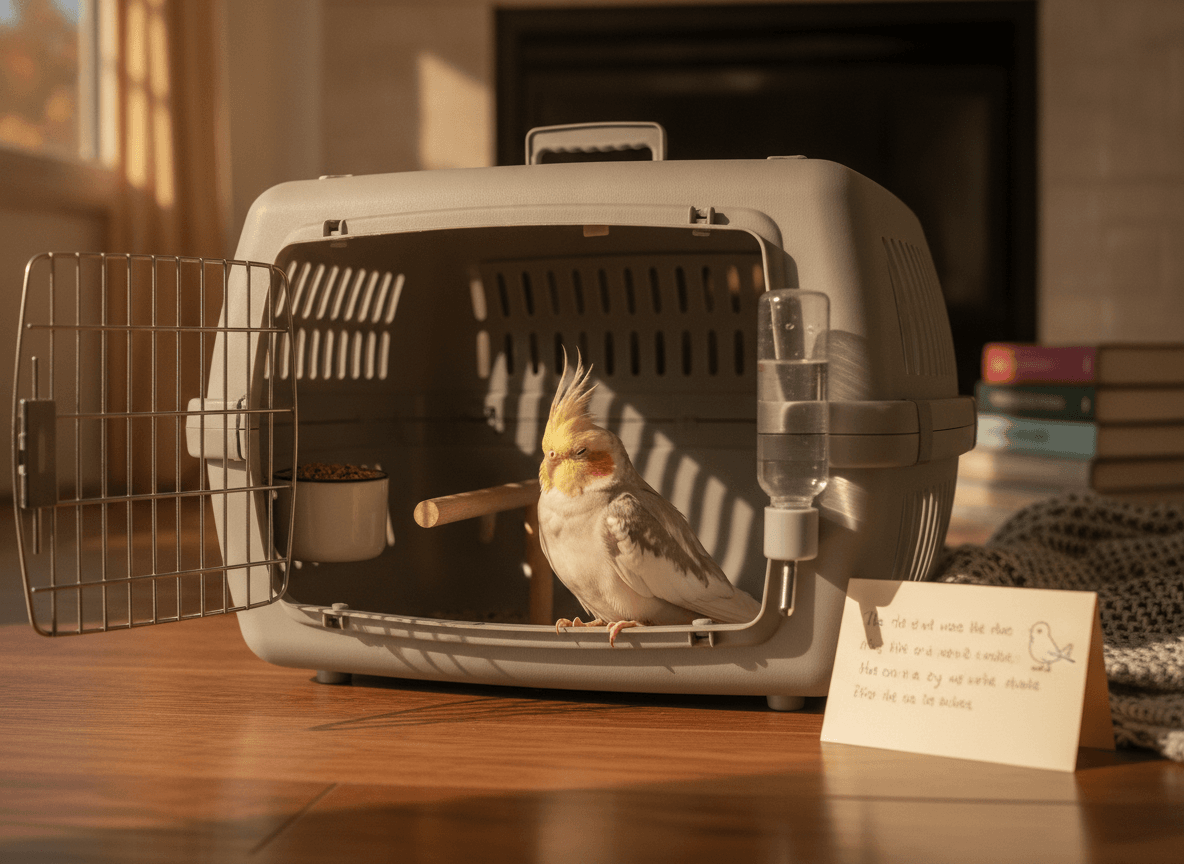
Choose the least stressful care arrangement
Start by comparing care at home, a trusted in-home sitter, a qualified boarding facility, or transport to a knowledgeable caregiver. There is no single best option for every species. Ask whether the person or facility has experience with your pet’s species, can follow written instructions, has a quiet space, and has a plan for contacting you and an exotic-animal veterinarian if something seems wrong.
For boarding, ask how new arrivals are separated, how cleaning and hand hygiene are handled, and whether the facility can maintain your pet’s normal light, temperature, humidity, diet, and medication routine when applicable. The Veterinary Center for Birds and Exotics emphasizes reducing exposure and stress during boarding; its guidance is a useful starting point for questions to ask a facility: where do exotic pets go when you go on vacation?
Build a species-specific care handoff
Write instructions that another person can follow without interpreting them. Include your pet’s normal schedule, acceptable foods and measured portions, water routine, enclosure-cleaning instructions, handling boundaries, emergency contacts, and the name and phone number of your veterinarian. Include a recent photo and a short description of normal behavior, appetite, droppings, and activity so a caregiver knows what is usual for this individual.
- Pack the usual food, safe treats, bedding, hides, toys, and cleaning supplies rather than changing everything at once.
- Label containers with the pet’s name, feeding amount, and date when appropriate.
- Write down what the caregiver should not offer, handle, move, or spray near the enclosure.
- Leave written permission and a realistic plan for veterinary communication, including who can authorize care.
Birds: protect routine and air quality
Birds may be sensitive to unfamiliar noise, handling, and airborne irritants. Keep the carrier secure and away from drafts, smoke, aerosols, scented products, and kitchen fumes. Bring familiar perches and food, but do not overcrowd the carrier. Ask the caregiver to follow your bird’s established sleep, feeding, and social routine and to avoid introducing new foods or toys while you are away.
For transport, confirm ventilation and temperature before leaving. Never leave a bird unattended in a parked vehicle. If the bird shows a concerning change in breathing, balance, responsiveness, or eating, the caregiver should contact an avian veterinarian promptly rather than relying on online advice.
Reptiles: document the habitat, not just the destination
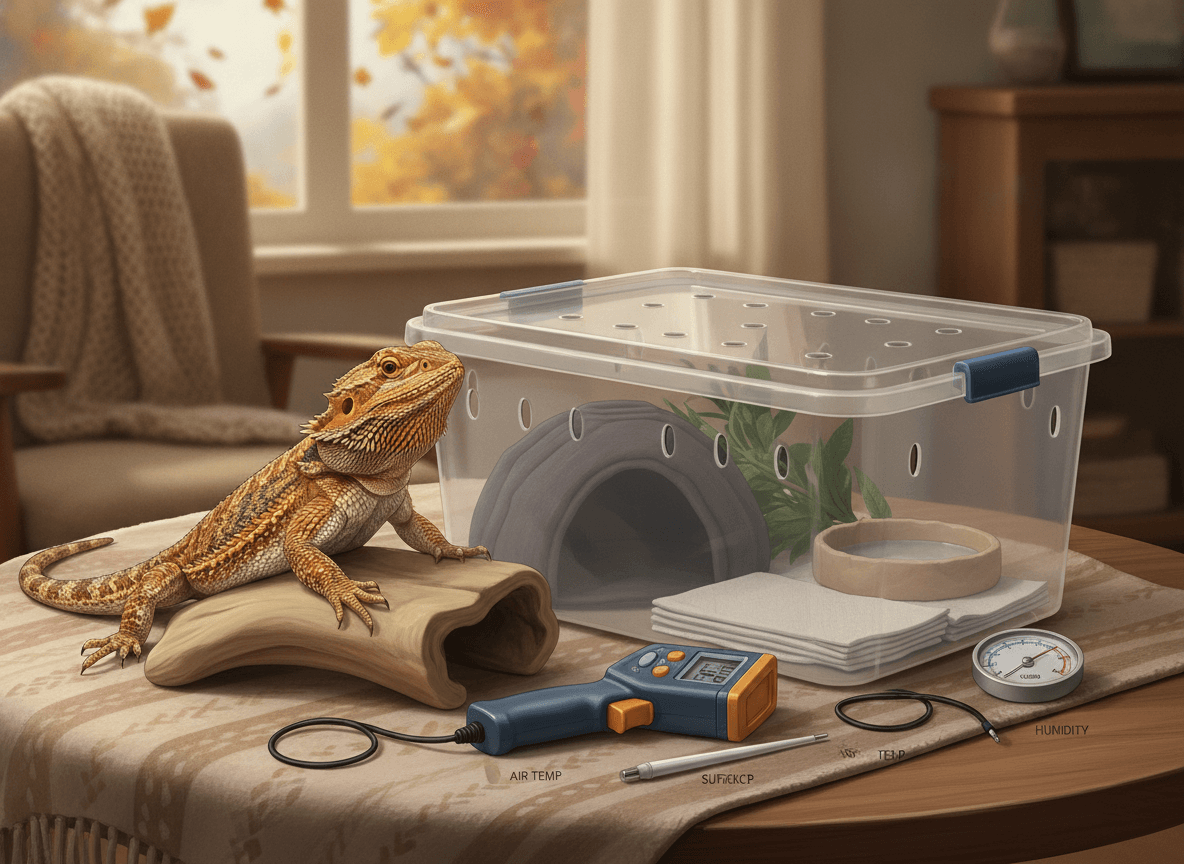
Reptile care depends on species, life stage, enclosure design, lighting, temperature gradients, humidity, diet, and hydration practices. Do not ask a caregiver to improvise these settings. Provide the equipment and written targets you already use, explain where thermometers and hygrometers are placed, and show how to check equipment safely. A transport container should be secure, ventilated, and appropriate for the species; keep travel time and temperature changes as controlled as possible.
Merck Veterinary Manual’s exotic and laboratory animal resources provide veterinary reference material, but species-specific advice from your own exotic-animal veterinarian should take priority. Avoid making major habitat, diet, or lighting changes immediately before travel unless a qualified professional directs you to do so.
Small mammals: send familiar food and comfort items
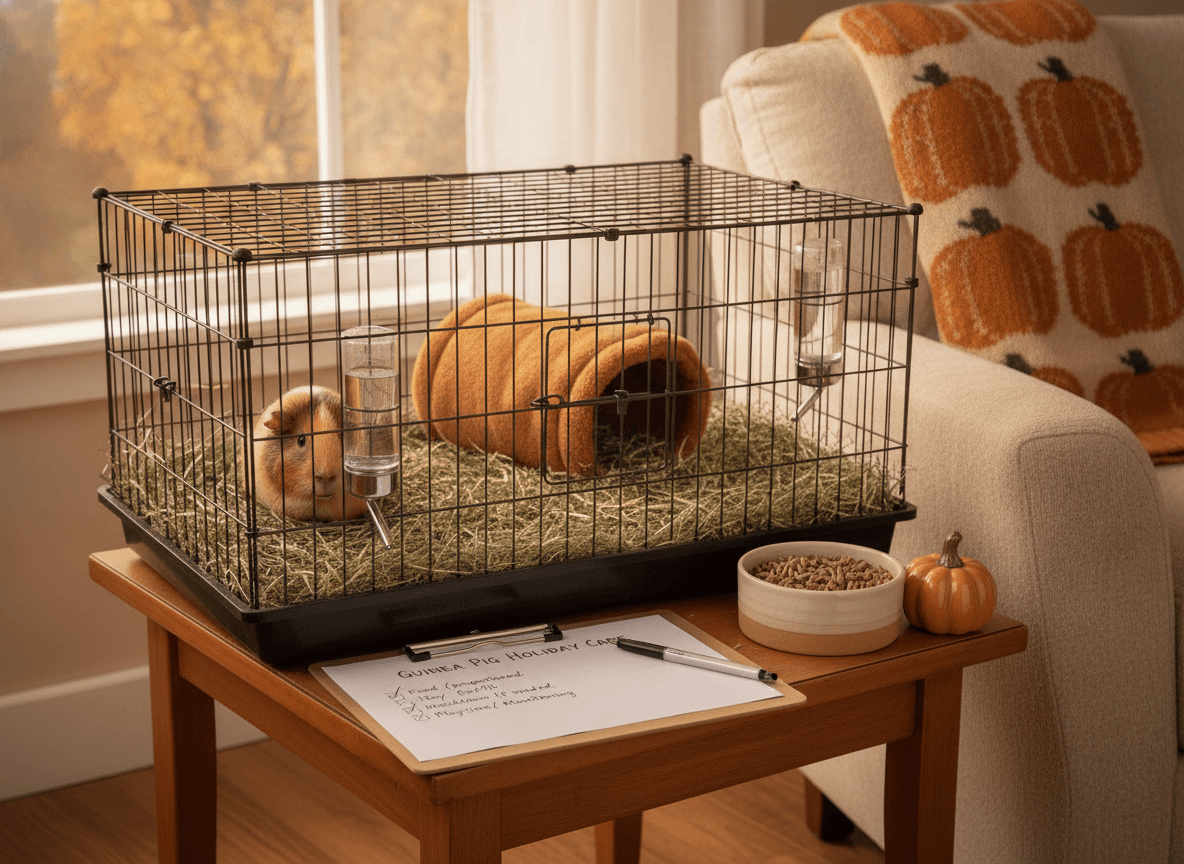
Rabbits, guinea pigs, chinchillas, rats, hamsters, and other small mammals do not all have the same needs. Send the normal diet and enough of the usual hay, pellets, produce, bedding, and enrichment for the entire stay, plus a little extra if travel plans change. Explain how much food is normal for your individual pet and which foods are off limits. Keep the enclosure secure and provide a familiar hide or bedding item when safe to do so.
Ask the caregiver to observe eating, drinking, activity, and droppings at the normal times. A noticeable change can be important in small mammals; the caregiver should contact your veterinarian for guidance rather than waiting for the trip to end.
Use a simple arrival and departure checklist
- Confirm the caregiver has the written plan, supplies, contacts, and authorization details.
- Show the normal setup and ask the caregiver to repeat the key steps back to you.
- Record the pet’s normal food, water, behavior, and enclosure readings on arrival.
- Keep the first day quiet and avoid unnecessary handling or introductions.
- Request brief updates at an agreed frequency, with photos only if they do not disturb the pet.
- On return, restore the familiar routine gradually and watch for changes that warrant veterinary advice.
When to call an exotic-animal veterinarian
This guide is for planning and does not diagnose illness. Before travel, ask your veterinarian which individual warning signs matter for your pet. During care, urgent concerns may include a major change in breathing, responsiveness, appetite, mobility, or normal elimination. The caregiver should contact a qualified exotic-animal veterinarian promptly when something is clearly outside the pet’s normal pattern.
Final takeaway
The safest holiday care handoff is specific, familiar, and species-aware. Choose a caregiver who can follow the established routine, prepare supplies and written instructions in advance, keep the environment calm, and communicate quickly if your pet’s normal behavior changes.
Safety note: Exotic pets have highly individual husbandry needs. Confirm transport, diet, habitat, and medical decisions with a qualified veterinarian familiar with your species and your pet.