
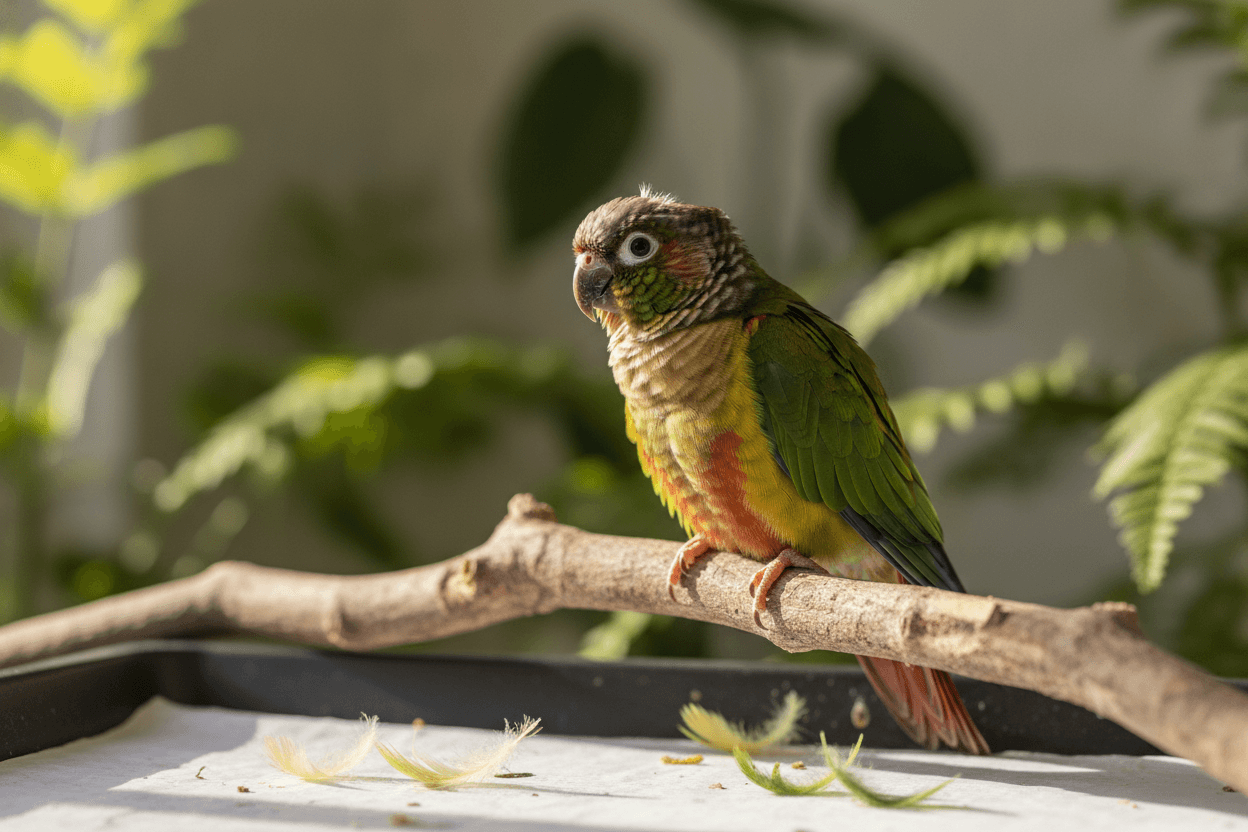
Finding feathers around the cage can be unsettling, especially when the days begin to change. For many birds, molting—the gradual replacement of feathers—is a normal part of feather maintenance. But feather loss can also have causes that need veterinary attention. This practical guide explains what to observe, how to support your bird without overhandling, and when to contact an avian veterinarian.
Important: A web guide cannot diagnose feather loss. Birds often hide illness, so changes in appetite, droppings, breathing, activity, or body condition deserve prompt professional advice.
What a normal molt may look like
During a molt, you may notice loose feathers in the cage, gradual feather replacement, and new “pin feathers” emerging in feather sheaths. The pattern and timing vary by species and individual; indoor light and routine can influence patterns, too. A normal molt should not be assumed solely because it is autumn.
New pin feathers can be sensitive. Avoid pulling or manipulating them. A bird may spend more time preening, but persistent distress or a dramatic behavior change is not something to dismiss as ordinary molt.
How to observe feather changes calmly
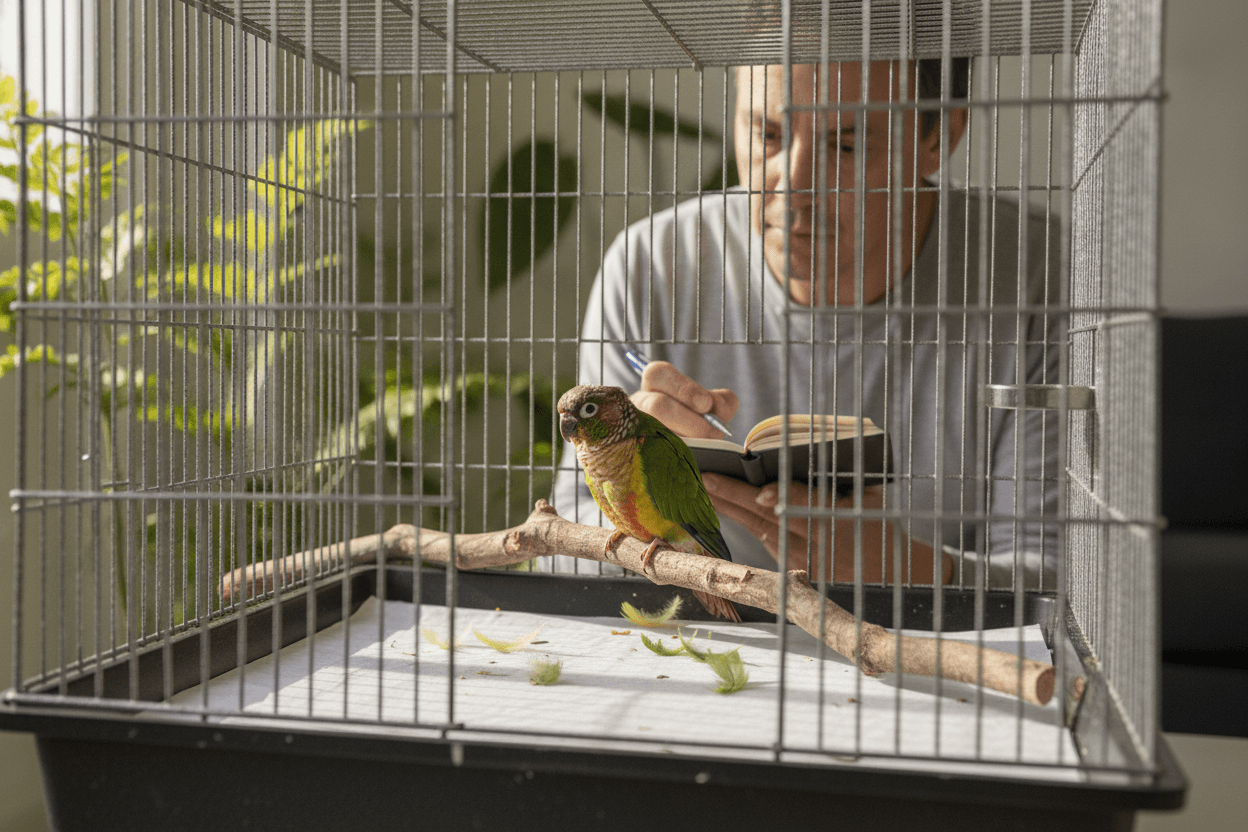
Once a day, take a quick look without chasing or restraining your bird. Note the date, where feathers are appearing, whether the skin looks intact, and any changes in eating, droppings, energy, or usual behavior. If practical, take a clear photo from a comfortable distance. This record can help a veterinarian assess the pattern.
- Look for gradual replacement versus sudden, extensive loss.
- Notice whether feathers are intact or broken, and whether there are bare areas or irritated skin.
- Record appetite, activity, droppings, and any change in vocalizing or perching.
- Keep handling and inspection gentle; do not pluck feathers or apply human products.
Low-risk ways to support comfort
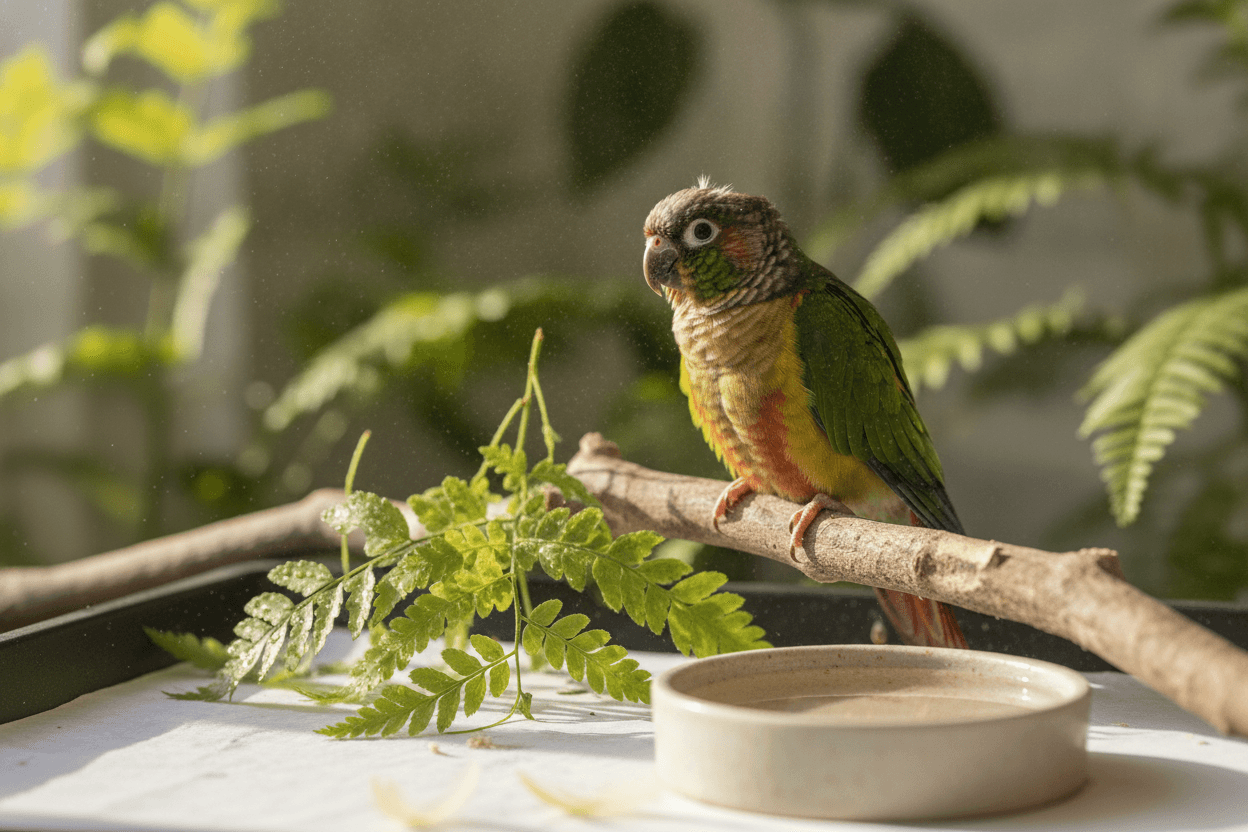
Keep the usual routine steady, offer fresh water, and maintain the bird’s established balanced diet. If your bird already enjoys bathing, make a clean, familiar bathing option available and allow it to opt in; do not force a bath or misting. Keep the environment comfortable and avoid introducing new supplements, oils, sprays, or dietary changes without advice from an avian veterinarian.
Continue normal enrichment and social interaction at your bird’s pace. If pin feathers seem uncomfortable, do not try to open or remove their sheaths yourself. Ask an avian veterinarian for species- and bird-specific guidance.
When feather loss needs veterinary attention
Contact an avian veterinarian if you see extensive or sudden feather loss, bald areas, repeated broken or damaged feathers, bleeding, sores, inflamed skin, or a molt that seems abnormal for your bird. Seek prompt advice if feather changes occur with reduced appetite, weight change, unusual droppings, lethargy, breathing difficulty, or a marked behavior change. Breathing difficulty, active bleeding, or collapse warrants urgent veterinary care.
Feather picking and abnormal feather growth can have multiple possible causes, including health, environmental, and behavioral factors. Avoid guessing at the cause or trying home treatments; a veterinary examination is the safer route.
A simple, steady care routine
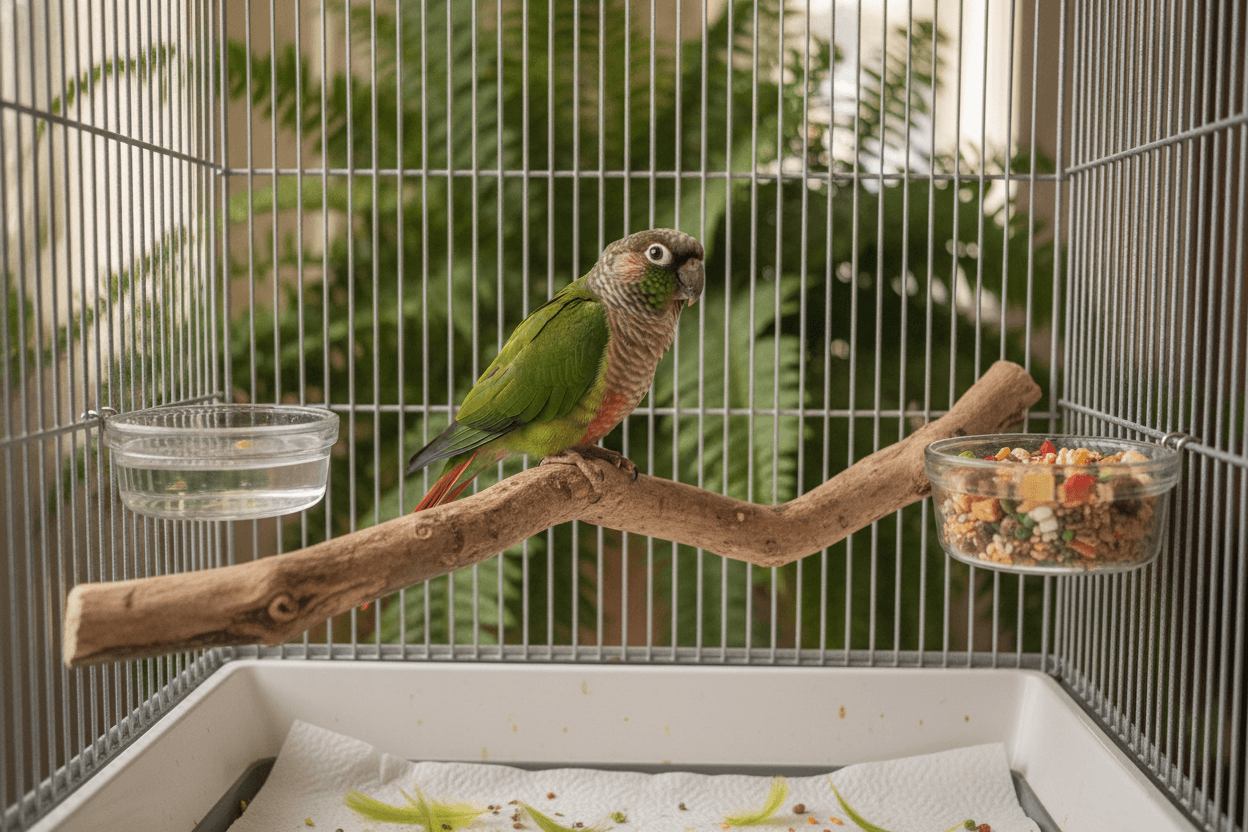
- Keep fresh water and the bird’s regular, veterinarian-guided diet available.
- Maintain a predictable sleep, light, and interaction routine appropriate for your bird.
- Clean the cage and replace liners routinely so you can notice changes without disrupting the bird.
- Keep a short record of feathers and general behavior; contact your avian veterinarian if anything concerns you.
Reliable reading and next steps
For further background, see VCA Animal Hospitals’ overview of molting in birds and All Critters Veterinary Hospital’s guide to what to expect and when to worry. These resources do not replace advice for your individual bird. If feather loss is sudden, extensive, or accompanied by other changes, contact an avian veterinarian rather than waiting for the molt to pass.
Care guidance varies by species and individual. When in doubt, consult a qualified avian veterinarian who knows your bird.