
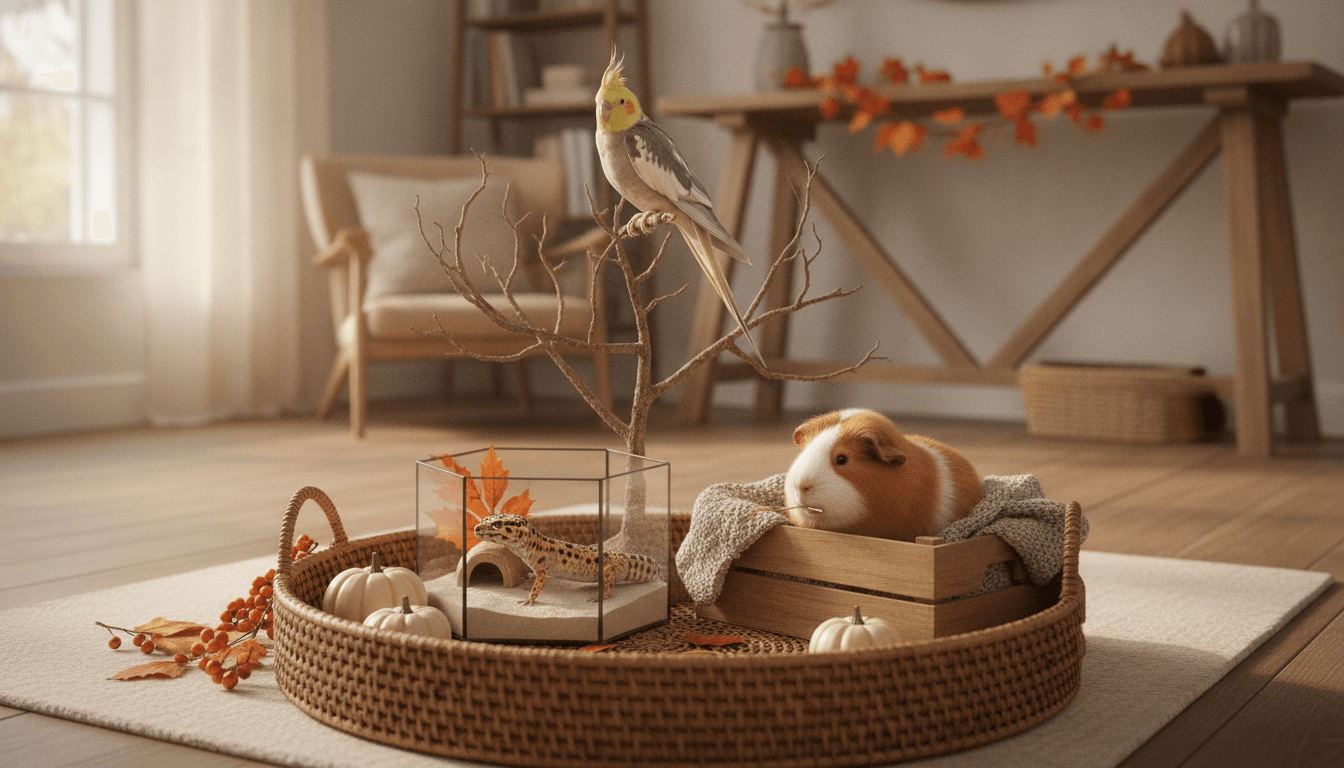
Halloween can be fun for people and stressful for animals. For birds, reptiles, small mammals, and fish, the biggest concerns are usually unfamiliar noise, open doors, tempting food, unsafe decorations, and sudden changes around the habitat. A little planning lets your household celebrate without turning the evening into an emergency.
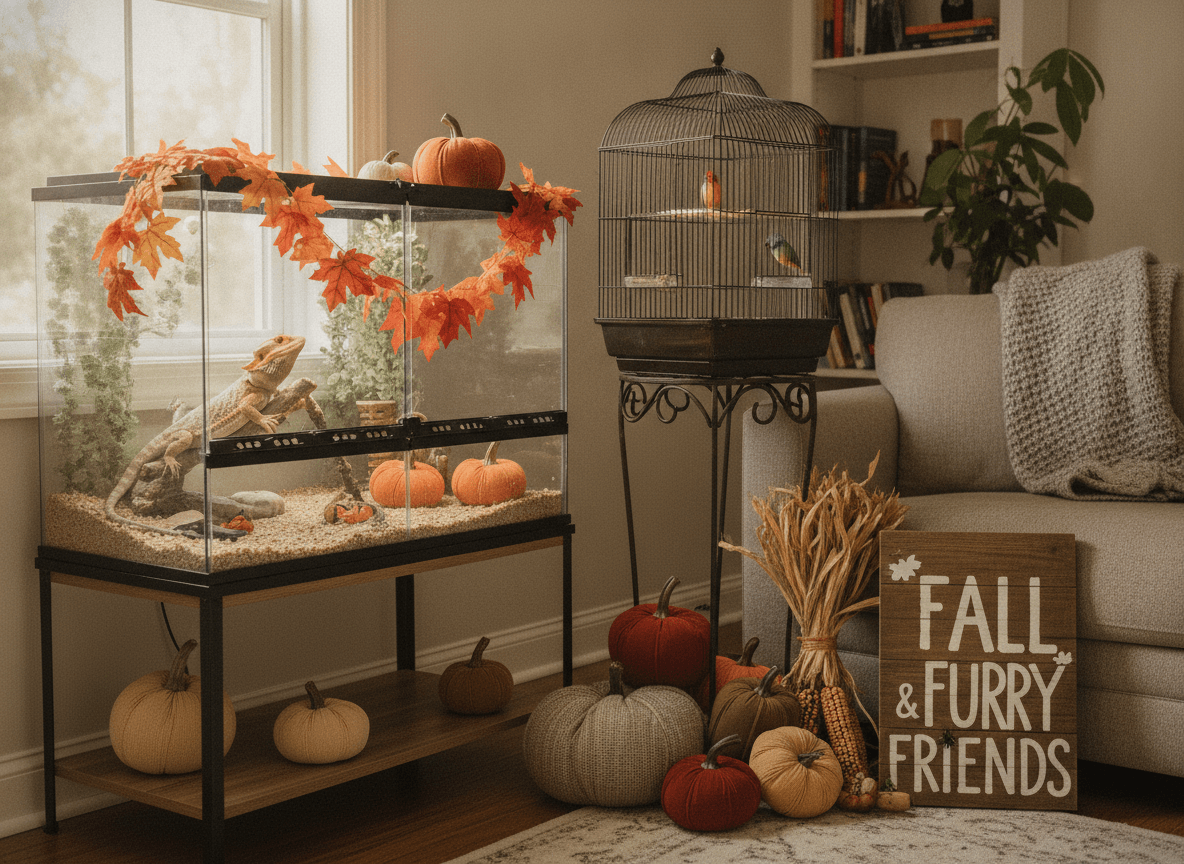
Start with a species-aware safety plan
“Exotic pet” covers animals with very different needs. A bird may be vulnerable to fumes and open doors; a reptile depends on a stable enclosure environment; a guinea pig or other small mammal may need a quiet hiding place; and fish need a calm, secure aquarium rather than party traffic. Do not assume that a product or activity safe for one species is safe for another.
- Write down your pet’s normal feeding, lighting, heating, and misting routine.
- Choose a low-traffic room where the habitat can remain secure.
- Keep your regular exotic-animal veterinarian’s number and an emergency contact easy to find.
- Ask your veterinarian before changing diet, lighting, temperature, or handling routines.
Make decorations habitat-safe
Place decorations well away from enclosures and play areas. Avoid loose strings, fake spiderwebs, dangling pieces, sharp edges, unstable props, and anything that can be chewed or swallowed. Keep electrical cords covered or inaccessible. Never place an open flame near an enclosure, and remember that smoke, fragrance, and aerosol products can be especially inappropriate around birds and other sensitive animals.
Inspect decorations before bringing them indoors and again after the holiday. Remove anything that becomes damaged, wet, or accessible to your pet. Virginia Tech’s Veterinary Teaching Hospital and PAWS both recommend avoiding small, breakable, or entangling decorations and reducing startling sound and light effects.
Protect pets from candy and party food
Keep candy, chocolate, raisins, sugar-free sweets, alcohol, and leftovers in closed containers. Do not offer Halloween treats unless they are part of your pet’s established, species-appropriate diet. The American Veterinary Medical Association warns that chocolate, xylitol-containing products, and raisins can be dangerous to pets. Exotic species can have highly specialized diets, so do not improvise a “safe” substitute from the snack bowl.
If your pet may have eaten something unsafe, contact an exotic-animal veterinarian or an appropriate animal poison service promptly. Do not induce vomiting or give home remedies unless a veterinary professional specifically directs you to do so.
Plan for doors, guests, noise, and light
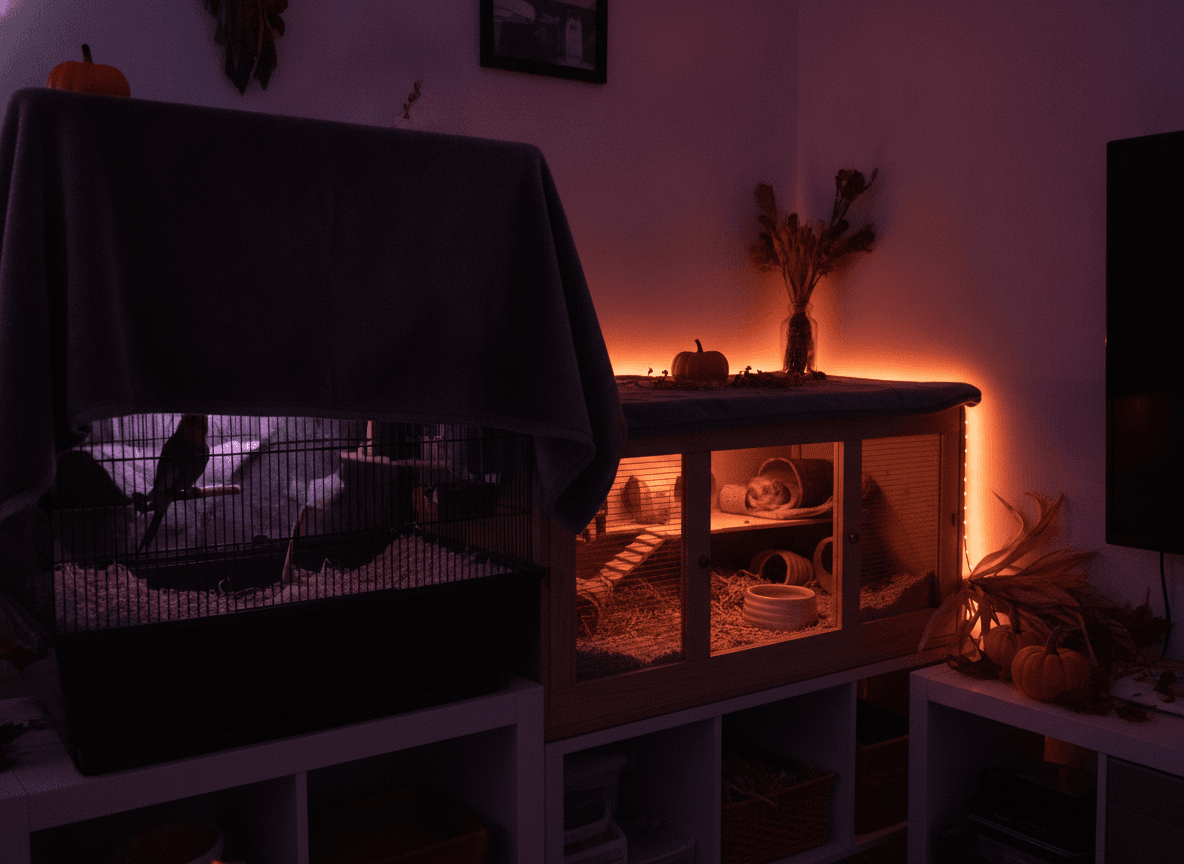
Repeated door opening is an escape risk. Before guests arrive, confirm that enclosure latches are secure and move the habitat away from the entryway. Keep birds and other animals that might bolt in a closed, calm room. Tell visitors not to tap on glass, open doors, feed the animals, use flash photography, or reach into a habitat.
- Turn off motion-activated sounds and avoid sudden strobe or flashing effects near habitats.
- Use a closed door, familiar cover, or other normal retreat arrangement rather than forcing interaction.
- Keep the usual day-night schedule and habitat temperature range; do not “warm up” or cool down an enclosure for the holiday.
- Watch for changes from your pet’s normal behavior, including persistent hiding, frantic movement, breathing changes, or refusal to eat.
Behavior changes are not a diagnosis. If you are concerned, contact a veterinarian familiar with your species, especially if signs are sudden, severe, or accompanied by injury or possible toxin exposure.
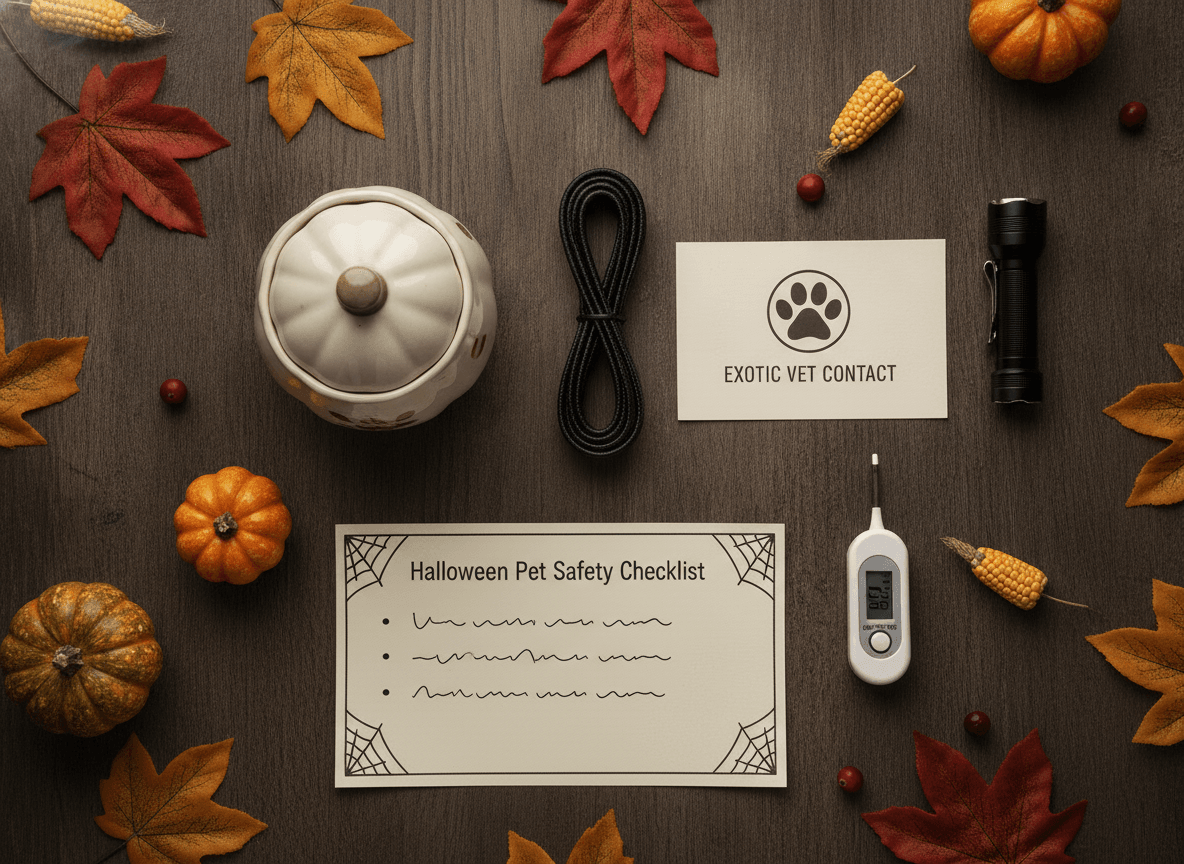
A five-minute Halloween check
- Secure every habitat latch, lid, gate, and door.
- Move candy, drinks, cords, flames, and small decorations out of reach.
- Set up a quiet room or familiar retreat before the first visitor arrives.
- Tell every guest the no-feeding and no-handling rules.
- Save your veterinarian’s contact information and check the habitat once the evening is over.
Authoritative sources
For general holiday hazard information, see the American Veterinary Medical Association’s Halloween pet safety guidance, Virginia Tech Veterinary Teaching Hospital’s Halloween tips, and PAWS’ safety guidance for pets and wildlife. These resources are general education, not a substitute for advice from a veterinarian who knows your animal.
With secure habitats, familiar routines, and a quieter retreat, your exotic pet can stay comfortable while your household enjoys the holiday responsibly.