
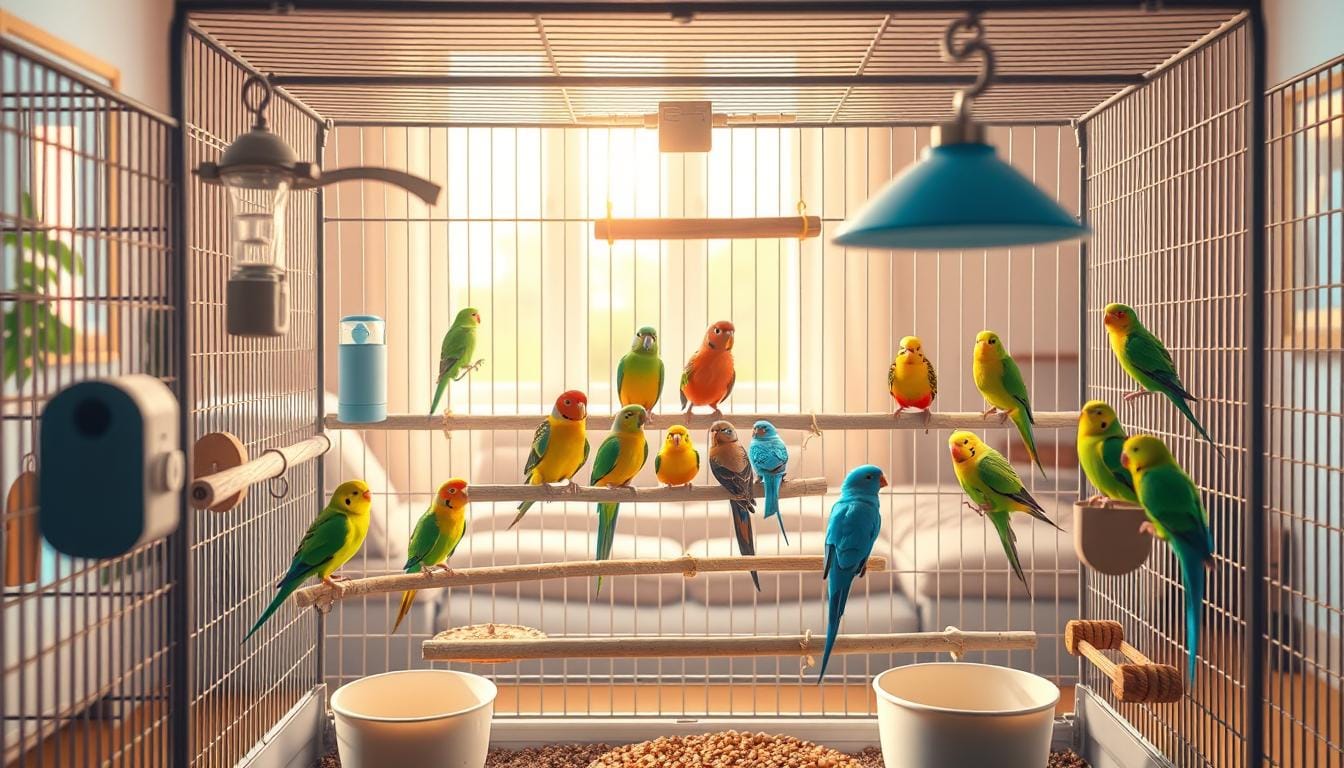
Ever thought about if your bird’s home really helps it thrive? Setting up a healthy space is the vital task for new owners. Many overlook how much their pet’s surroundings affect its mood and health.
A well-thought-out environment is key to your bird’s well-being. It helps avoid stress and behavioral issues. By following this guide, you create a safe and comfortable home for your parakeet.
Your bird will feel secure and joyful for years. Taking these early steps ensures a great start for your new friend.
Table of Contents
Choosing the Right Cage for Your Parakeet
Finding the perfect cage is key. It’s about space, safety, and function for your bird. The right choice makes your pet feel secure and active. Learn more about creating the perfect habitat for your exotic bird by focusing on these elements.
Cage Size and Dimensions
When shopping, remember that horizontal space is more important than height. Parakeets love to fly side-to-side, not just up and down. Your cage should let your bird spread its wings fully without hitting the sides.
For a single bird, aim for a cage that’s at least 24 inches wide. For a pair, you’ll need much more space to avoid fights. Always choose width over height to ensure your bird gets enough exercise.
Cage Material Considerations
The cage material is crucial for your bird’s health. Avoid cheap metals that can be toxic. Powder-coated steel is a good choice because it’s durable and easy to clean.
Stainless steel is also safe and long-lasting, but it’s pricier. It doesn’t rust or scratch easily. Think about these points when setting up your best parakeet cage setup:
- Non-toxic finishes: Make sure the paint is safe for birds and doesn’t chip.
- Bar spacing: Keep gaps between 1/2 inch and 5/8 inch to prevent escape or injury.
- Ease of cleaning: Look for cages with removable trays and large doors.
Style and Design Options
The cage’s design should fit your home and your bird’s personality. A dome-top cage is classic and offers extra height for toys. A play-top cage has an open roof for safe out-of-cage time.
Consider how you’ll clean the cage. Doors that swing outward or drop down make cleaning easier. The right style keeps your living space organized and functional.
Essential Cage Accessories for Comfort
A well-equipped cage is key to your pet’s happiness and health. A bare cage is not enough for a bird’s needs. By choosing the right parakeet cage essentials, you keep your bird active and happy.
Perches: Types and Placement
Your bird stands most of the time, so the right perches are crucial. Offer different textures and sizes to keep their feet healthy. Natural wood branches are great because they feel like the wild.
Don’t use only smooth dowels, as they can cause foot problems. Place perches at various heights and spots to encourage movement. For more tips, check out this birdcage setup guide to make sure your setup is perfect.
Food and Water Dishes
Choosing the right feeding equipment is important for parakeet cage accessories. You need dishes that are easy to clean and won’t spill. Stainless steel or ceramic bowls are best because they don’t harbor bacteria like plastic can.
Put dishes away from perches to avoid spills. This keeps your bird’s area clean and reduces mess. Make sure the dishes are easy to reach but securely attached to the cage bars.
Toys for Mental Stimulation
Parakeets are smart and need constant activity to be happy. Offering a variety of toys is crucial. These toys keep your bird’s mind active all day.
Choose toys that mimic natural behaviors like shredding or climbing. Variety is the spice of life for your pet. Swap out toys often to keep things interesting. A stimulated bird is a healthy bird, and the right toys make a big difference.
Ideal Cage Location in Your Home
Where you put your parakeet’s cage affects its stress and health. Good parakeet cage placement tips make your bird feel safe and happy. Choosing the right spot is key to a happy pet.
Light and Temperature Considerations
Don’t place the cage where temperatures change a lot. Drafty spots or direct sunlight can make your bird sick. Look for a spot with steady, comfortable temperatures all day.
Natural light is good, but not too much. Make sure your bird has a shaded area in the cage. This helps keep their natural day-night cycle.
Noise Levels and Safety
Keep the cage away from loud places or appliances. Sudden noises can scare your parakeet. Quiet corners are best for less stress.
Also, avoid areas with harmful fumes or dangers. Don’t put the cage in the kitchen, where smoke or chemicals can harm. A calm place is best for your bird’s health.
Proximity to Family Activities
Your bird needs quiet but also likes to be around people. Place the cage in a room where your family hangs out, but not in the middle of it. This lets your parakeet feel part of the family without getting too stressed.
Consistent social interaction builds trust with your bird. By following these tips, you create a great space for rest and play. A well-placed cage is a big gift for your bird’s happiness and health.
Preparing the Cage Before Bringing Your Parakeet Home
Preparing the cage before your parakeet arrives can reduce stress. A step-by-step parakeet cage setup routine helps. It makes the transition to your home calm and welcoming.
Cleaning and Sanitizing the Cage
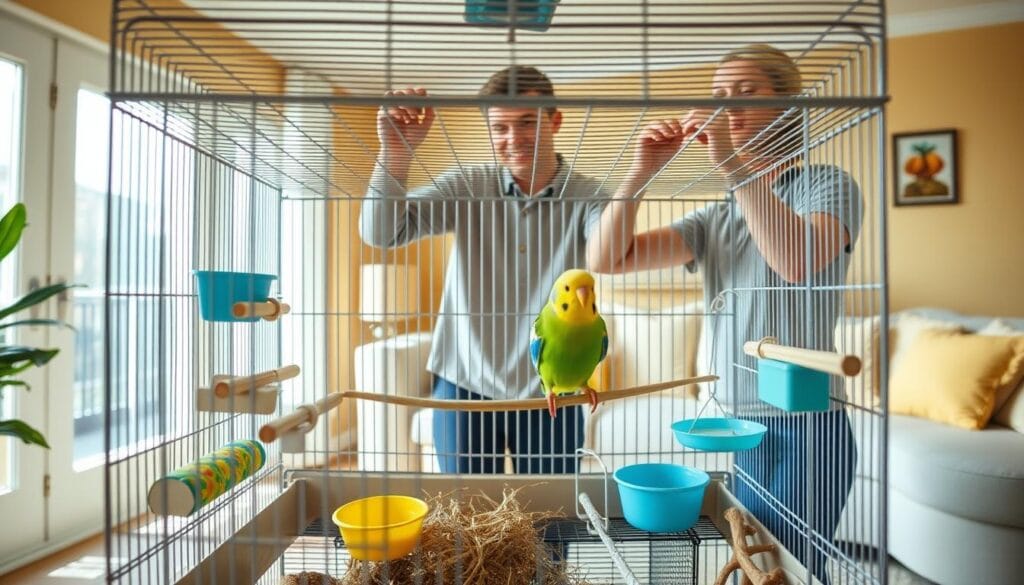
Even new cages need a good clean. Use a bird-safe disinfectant or a mix of mild dish soap and warm water. This removes dust and residues.
Rinse every surface well to get rid of chemicals. Proper hygiene is key for your parakeet’s health. So, never skip this important step.
Organizing Accessories and Layout
Start your step-by-step parakeet cage setup by arranging perches and toys. Aim for a layout that encourages natural movement and flight.
Use perches at various heights for variety. But keep the cage’s center open. Strategic placement helps prevent your bird from feeling cramped or hitting its wings.
Fitting the Cage for Easy Access
Organize the cage’s interior for easy maintenance. Place food and water dishes near the main doors. This makes daily refills quick and simple.
Think about where to put removable trays for easy cleaning. By planning your step-by-step parakeet cage setup with ease in mind, you keep the habitat clean without stress.
Introducing Your Parakeet to Its New Home
Welcoming a budgerigar (budgie) into your home is exciting. It’s the start of a great friendship. The first few days are vital for your bird to feel safe and comfortable.
Creating a calm environment helps your pet adjust without stress. This makes the transition smoother.
Initial Steps After Arrival
First, place the cage in a quiet spot. Let your parakeet watch the room from its cage for a few hours. Avoid loud noises and sudden movements to avoid startling it.
Keep the lights soft and steady. This helps your bird feel secure. Don’t invite guests right away. Your bird needs time to adjust.
Patience in the first day is crucial. It sets the stage for a good relationship.
Handling Techniques for New Birds
Don’t try to hold or touch your parakeet at first. Sit near the cage and talk softly. This helps your bird feel safe around you. Building trust takes time and respect for the bird’s space.
When your bird seems calm, offer a treat through the bars. This positive action encourages it to come closer. Move your hands slowly and don’t reach over it to avoid scaring it.
Monitoring Your Parakeet’s Behavior
Watching your bird’s body language is key. A relaxed parakeet will preen, chirp softly, or explore its cage. But, if it shows signs of stress or illness, act fast.
| Behavioral Sign | Meaning | Recommended Action |
|---|---|---|
| Fluffed feathers | Cold or feeling unwell | Check room temperature |
| Rapid breathing | Stress or overheating | Reduce activity/noise |
| Pacing the cage | Anxiety or boredom | Provide new enrichment |
| Quiet and still | Adjustment period | Give more space |
If your bird is lethargic or won’t eat for a day, see a vet. Consistent monitoring helps catch health problems early. These early steps are key to a happy, healthy life together.
Daily Care and Maintenance of the Cage
Keeping your parakeet’s cage clean is more than just a quick clean. It’s about keeping your bird healthy and happy. By taking care of your parakeet cage accessories, you make a safe home for your bird.
Cleaning Schedule and Supplies
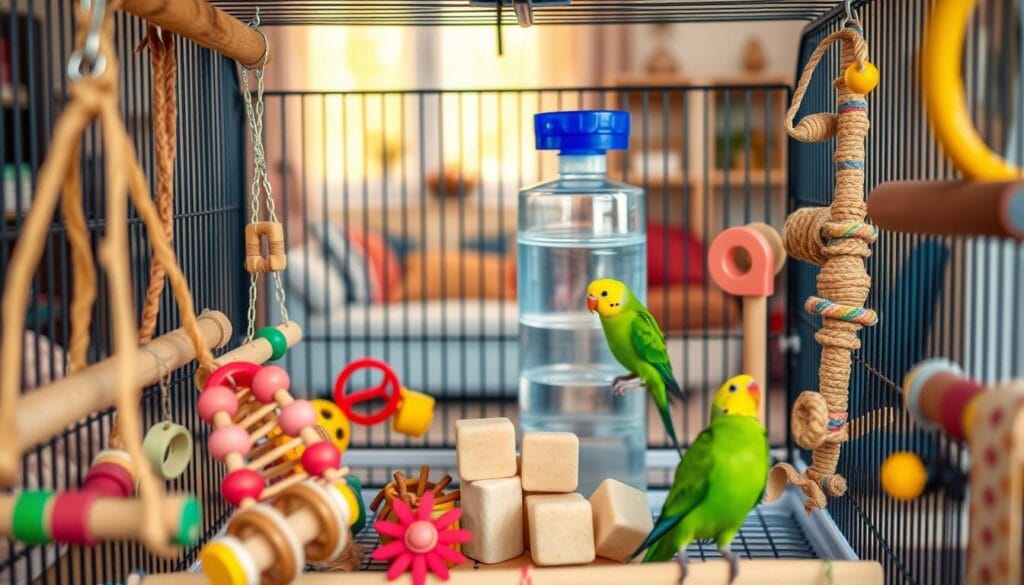
Having a cleaning schedule helps you keep the cage clean without stress. Clean the cage every day to remove droppings and food. This keeps the cage fresh.
- Daily: Wipe down perches and change the cage liner.
- Weekly: Scrub the entire cage with bird-safe disinfectant.
- Monthly: Deep clean all removable components and bars.
Use safe cleaning products to protect your bird’s health. Cleaning well stops harmful bacteria from growing.
Inspecting for Wear and Tear
Checking the cage regularly is key to keeping your bird safe. Look at the cage and parakeet cage accessories during weekly cleaning.
“A safe cage is the foundation of a happy bird’s life; never overlook the small details like loose wires or sharp edges.”
Watch for frayed ropes, loose bars, or broken plastic. Fix or replace anything broken right away to keep your bird safe.
Refreshing Toys and Accessories
Your bird needs a fun and engaging environment. Change toys regularly to keep your bird interested and active.
When you update your parakeet cage accessories, see which toys your bird likes best. Offer different textures and shapes to keep your parakeet curious and active.
Creating a Stimulating Environment
A thriving parakeet needs a home that changes and grows with its curious personality. These birds are very smart and need constant mental challenges. A dynamic space keeps your feathered friend happy and active.
Adding Natural Elements
You can make your bird’s home feel like the wild by adding safe, natural materials. Natural wood branches of different sizes are great for their feet. They help keep claws trimmed and muscles strong.
Make sure any branches you use are free from harmful chemicals. Safe options like apple, pear, or willow wood give a better sensory experience than plastic perches.
Rotating Toys and Perches
Change your parakeet’s accessories every week to keep things fresh. If the cage stays the same, your bird might get bored and feel tired.
Try using puzzle toys for exotic birds to challenge your pet’s mind. Regular rotation makes every day exciting, keeping your bird’s mind sharp.
Social Interactions to Consider
Your parakeet also needs social interaction. You are a big part of their flock. Spending time talking or playing near the cage strengthens your bond.
But, it’s also key to let your bird have quiet time. Give them a calm period during the day or evening. This lets them rest after playing.
Understanding Your Parakeet’s Needs
Your parakeet needs more than just a cage. It needs your understanding of its needs to live well. Daily interaction and watching your bird closely are key to a happy life.
Importance of Feeding and Nutrition
A balanced diet is vital for your bird’s health. It boosts the immune system and keeps feathers bright and healthy all year.
Focus on giving high-quality pellets, fresh veggies, and some seeds. For more tips, check out this parakeet care sheet. It helps ensure your bird gets all the nutrients it needs.
Health and Wellness Checks
Regular health checks are crucial. They help spot problems early. Watch your bird daily for any subtle changes in behavior, appetite, or looks.
Look at the eyes, beak, and feet for any unusual signs. Consistency is key. Knowing what’s normal for your bird helps you spot issues quickly.
Recognizing Signs of Stress
Birds can get stressed, even in a great home. It’s important to know the signs, like feather plucking, being very tired, or sudden changes in sound.
If you see these signs, try to make the cage or your interaction more comforting. Patience and observation are your best friends in helping your parakeet feel safe and supported.
Tips for Long-Term Cage Setup Success
Creating a thriving habitat for your bird is an ongoing task. This Parakeet Cage Setup Guide is just the start. Your bird will grow and change over time.
Adapting to Changing Needs
Your bird needs variety to stay happy. Change out perches and toys often to keep things fresh. Watch for signs of boredom or physical changes that might need a different cage layout.
Building a Strong Bond
Regular interaction is key to keeping your parakeet healthy. Spend time talking or playing near the cage every day. This builds trust and lets you notice changes in your bird’s personality.
Connecting with Experts
Joining groups like the American Federation of Aviculture can be very helpful. These communities offer support and advice for every stage of bird ownership. Use this Parakeet Cage Setup Guide and get feedback from others to ensure the best care. Reach out to local avian vets or hobbyist forums to learn more and share your experiences.