
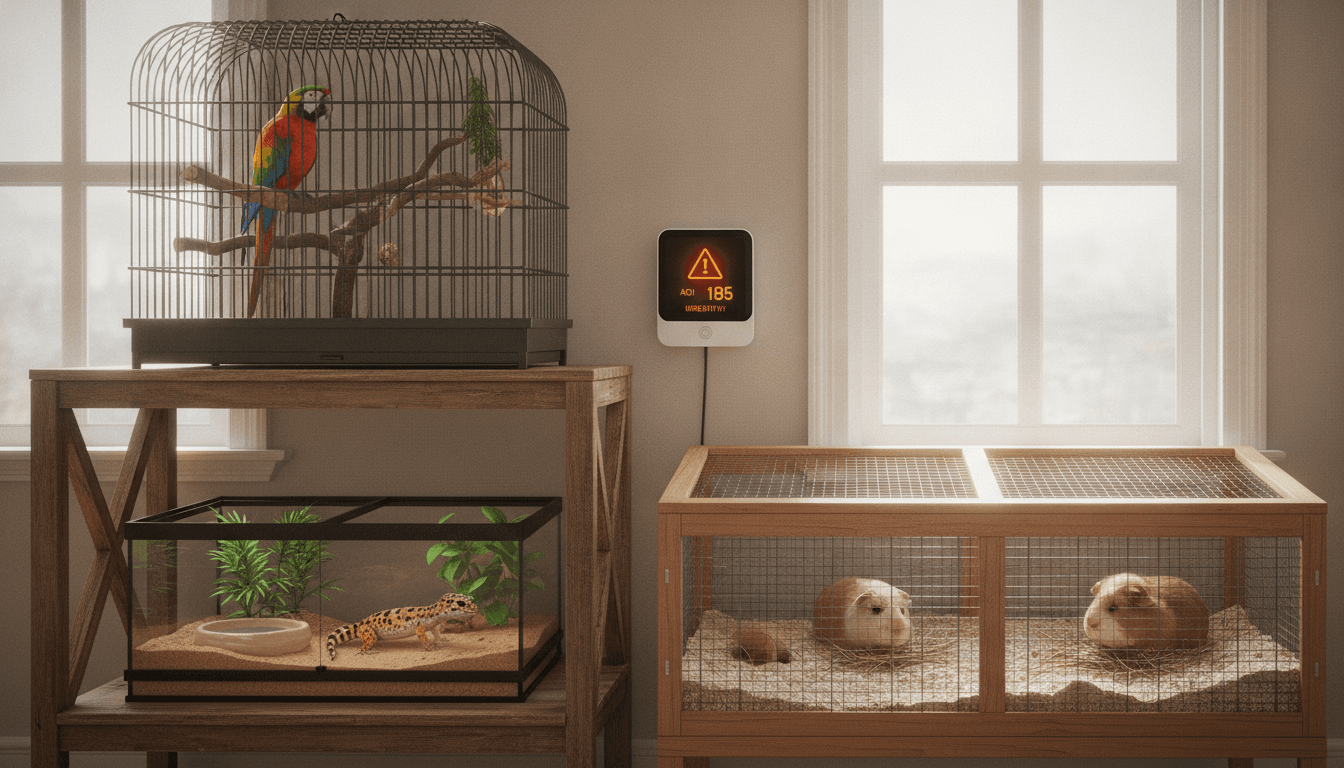
Wildfire smoke and other air-quality alerts can arrive quickly, and an indoor enclosure is not automatically a safe enclosure. Reptiles, birds, and small mammals have different ventilation, temperature, and humidity needs, so a sensible smoke-day plan focuses on reducing exposure without making the habitat unstable.
This guide is a practical preparedness checklist, not a diagnosis. Follow local emergency instructions, monitor your pet closely, and contact an exotic-animal veterinarian promptly if you see concerning changes. Do not try to treat breathing problems with human medicines or improvised remedies.
What poor air quality means for an exotic pet
Smoke contains fine particles and gases that can irritate the eyes and airways. Birds are particularly vulnerable to airborne irritants because of their efficient respiratory system, while small mammals and reptiles can also be affected. The safest response is exposure reduction: keep smoke out, avoid unnecessary transport, and preserve the species-appropriate conditions your pet depends on.
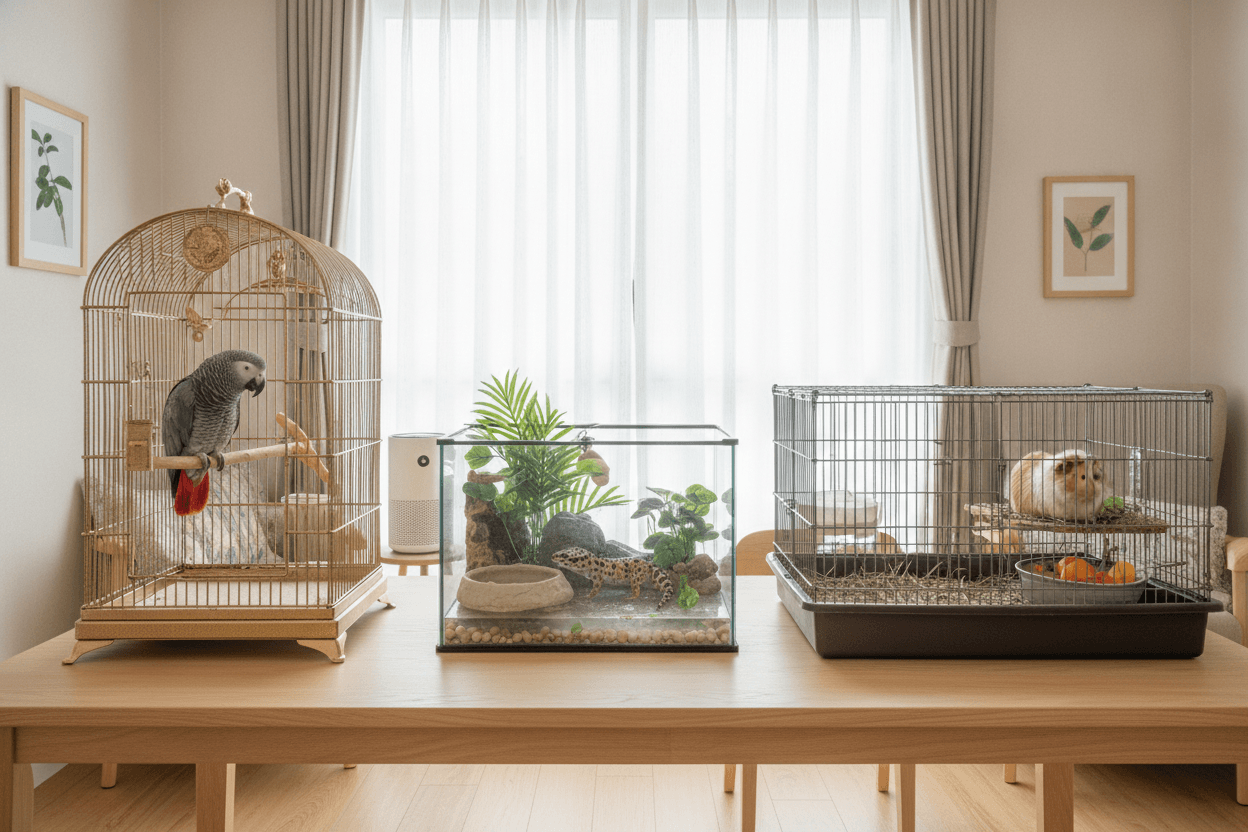
Smoke-day checklist: reduce exposure first
- Check your local air-quality alert and follow official evacuation or shelter guidance.
- Move enclosures away from open windows, exterior doors, fireplaces, candles, aerosols, and cooking fumes.
- Close windows and doors when outdoor air is smoky. If you use an air cleaner, choose one appropriate for the room and operate it according to the manufacturer’s instructions.
- Keep birds, reptiles, and small mammals in a quiet room. Avoid unnecessary handling, bathing, or free-roaming time while conditions are poor.
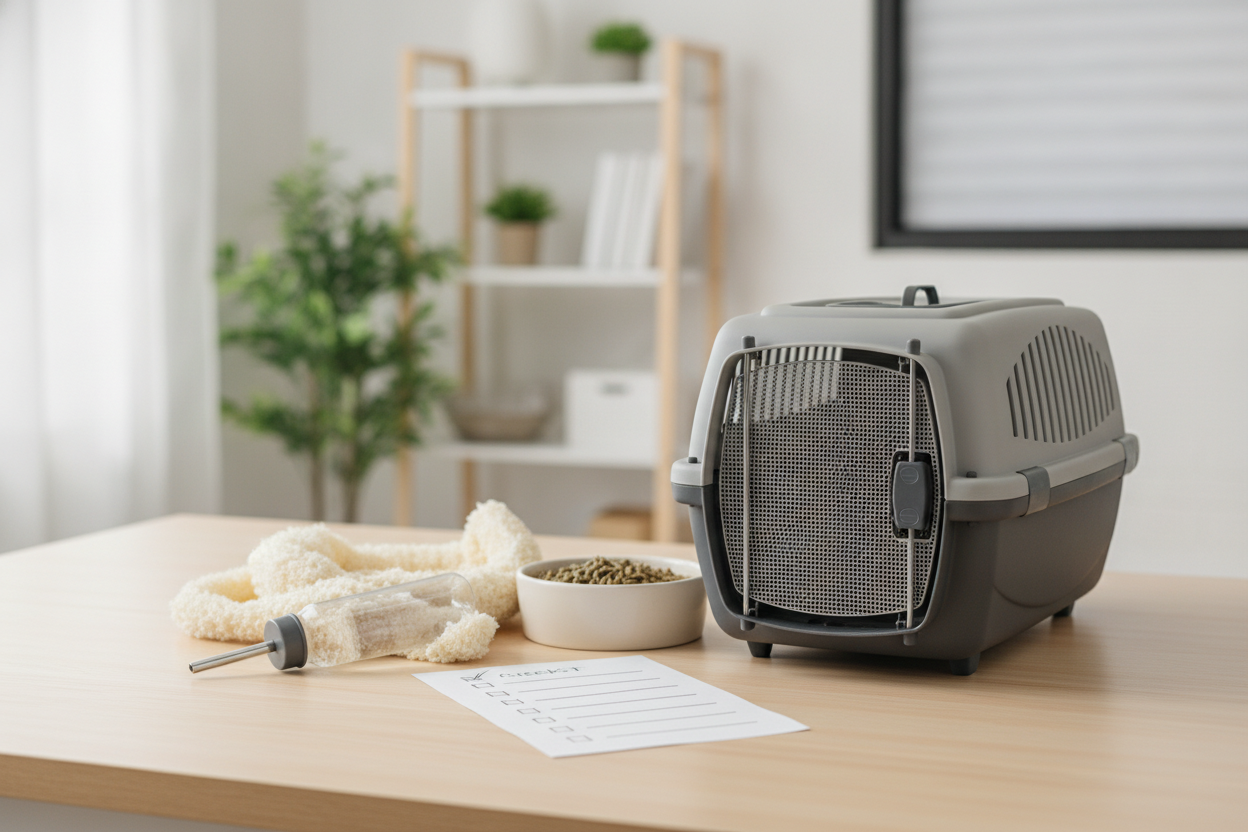
- Prepare clean water, normal food, medications prescribed by your veterinarian, and a secure carrier before an alert worsens.
Keep the habitat stable without sealing it unsafely
Do not cover an enclosure with airtight plastic or stop all ventilation in an attempt to block smoke. That can create overheating, excess humidity, poor oxygen exchange, or dangerous carbon-dioxide buildup. Instead, follow the enclosure’s normal ventilation design, keep heating equipment clear, and use a room-level clean-air strategy. For reptiles, verify temperature and humidity with reliable instruments after moving the habitat. For birds and small mammals, keep bedding dry and the room comfortably within the species’ usual range.
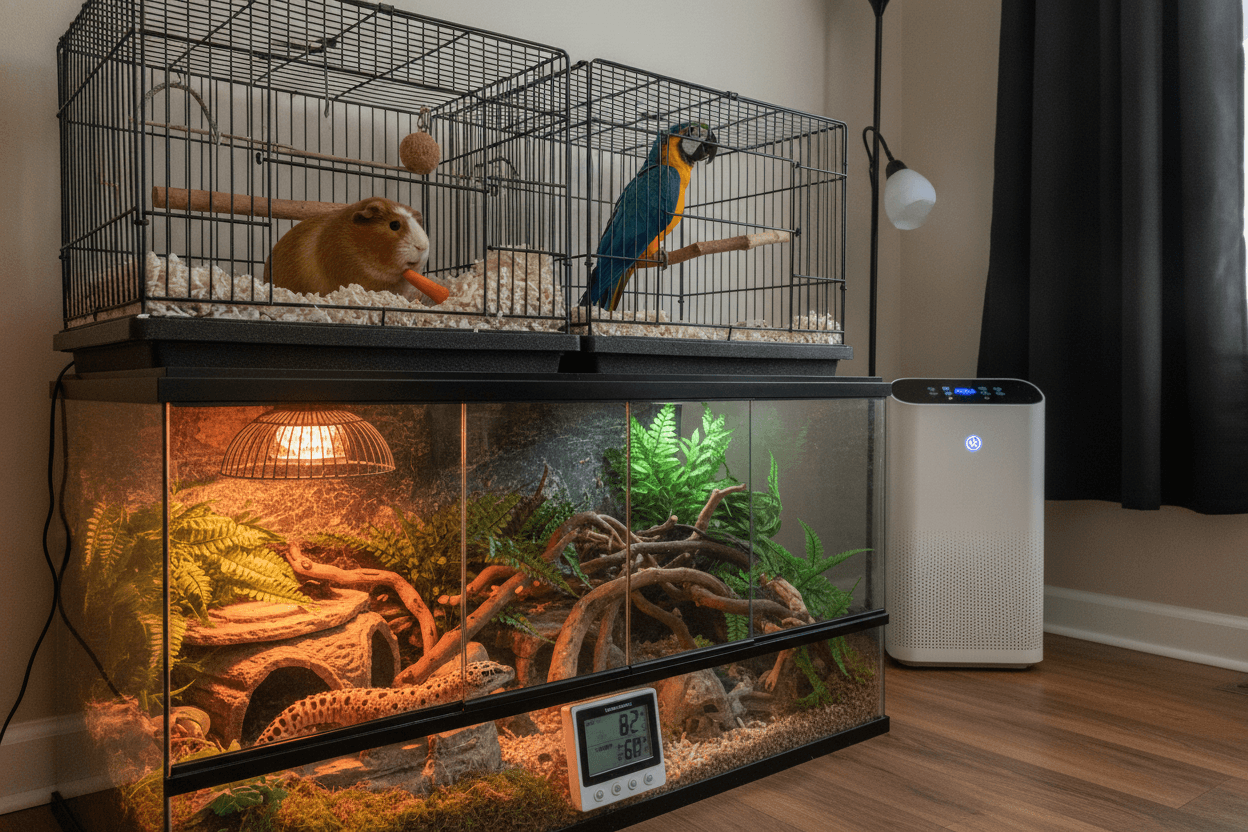
Species-specific precautions
Birds
Keep birds away from smoke, nonstick cookware fumes, scented products, sprays, and dusty cleaning. Make the room calm and avoid stressing a bird that is already breathing abnormally. Smoke exposure can worsen quickly, so arrange veterinary advice rather than waiting for appetite or activity to return.
Reptiles and amphibians
Maintain the normal species-specific heat gradient, humidity, lighting, and ventilation. Do not raise temperatures or humidity as a general “detox” measure. If a power interruption affects heat or lighting, use a prepared backup plan and ask a reptile veterinarian for species-specific guidance.
Small mammals
Use dust-controlled bedding that your pet already tolerates, keep the enclosure clean without generating clouds of dust, and move exercise time indoors. Do not suddenly introduce a new bedding, food, or supplement during an air-quality event.
When to call an exotic-animal veterinarian
Seek urgent veterinary guidance for open-mouth breathing, obvious increased effort, repeated coughing or sneezing, weakness, collapse, unusual voice changes, blue or gray tissues, or any rapid deterioration. Signs can look different among species, and reptiles may show subtle changes. If your pet has a known respiratory condition or is a bird, call early rather than relying on an online checklist. Transport in a secure, appropriately ventilated carrier and tell the clinic about possible smoke exposure.
Build a reusable clean-air plan
- Record your pet’s normal appetite, activity, breathing, and enclosure readings.
- Save the number and address of an exotic-animal veterinarian and identify a backup clinic.
- Keep a carrier, familiar bedding, food, water container, medication list, and basic habitat supplies together.
- Check air-quality alerts before opening windows or planning outdoor transport.
- After the alert ends, ventilate only when outside air is suitable and return the habitat to its normal location gradually.
Reliable resources
For current local conditions, use the U.S. EPA AirNow air-quality information or your local environmental agency. The American Veterinary Medical Association’s wildfire smoke guidance explains exposure reduction for animals. For broader husbandry principles, consult the RSPCA’s exotic-pet welfare resources and your own exotic-animal veterinarian.
Bottom line: reduce smoke exposure, keep the enclosure’s essential conditions stable, watch for changes, and seek species-appropriate veterinary advice early. A calm, prepared room is one of the most useful protections you can provide.