
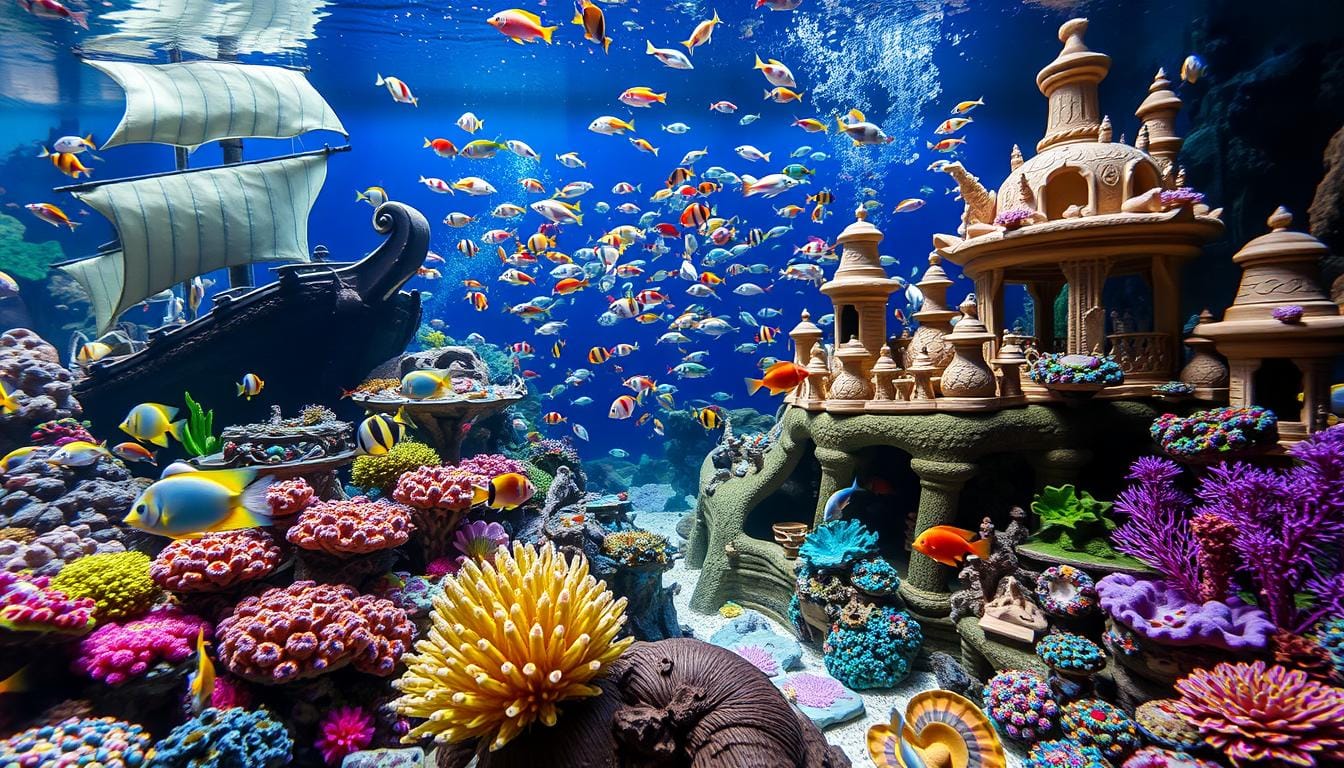
Did you know a stimulating environment can greatly improve your aquarium fish‘s well-being? In the wild, fish hunt, defend their territory, and rest. Creating a similar environment at home is key for their health and happiness.
As an aquarium lover, I know how vital Enrichment Ideas for Aquarium is for your fish. You can enrich their lives by adding various ideas to your aquarium. For example, toys and decorations like caves and floating logs can turn your tank into an underwater jungle gym. For more ideas, check out aquarium enrichment guides.
Table of Contents
Understanding the Importance of Enrichment for Fish
Enrichment is key for fish happiness. It keeps them physically and mentally healthy. Activities and changes in their environment are vital.
What is Fish Enrichment?
Fish enrichment means making their lives more interesting. You can do this by adding new decorations or plants. Or by using feeding toys to challenge them.
It’s like giving them a taste of the wild. This helps prevent boredom and stress. For example, homemade fish food recipes can also enrich their diet and encourage foraging.
Benefits of Enrichment for Aquarium Fish
Enrichment has many advantages for fish. It includes:
- Reduced Stress: A stimulating environment can lower stress levels.
- Improved Health: It promotes exercise and mental activity, leading to better health.
- Enhanced Behavioral Diversity: It encourages natural behaviors, making your aquarium more engaging.
These benefits help create a vibrant aquarium. Your fish can then live happy and healthy lives.
Signs Your Fish Need More Enrichment
Knowing when your fish need more enrichment is crucial. Look out for:
- Excessive swimming against the glass or other repetitive behaviors.
- Lack of interest in food or feeding time.
- Visible signs of stress or lethargy.
Spotting these signs early lets you take action. You can then improve their life quality with the right enrichment.
Incorporating Natural Decor in Your Tank
Creating a natural environment in your aquarium makes it more beautiful and healthy for your fish. Adding elements from nature makes your tank more engaging and safe for your fish.
Live Plants to Enhance Your Aquarium
Live plants are great for aquariums, offering many benefits. They help keep the water clean by absorbing nutrients and adding oxygen. This makes a better home for your fish.
Popular plants like Java Moss, Anubias, and Amazon Swords are good choices. They not only look nice but also give your fish places to hide and eat.
Utilizing Driftwood and Rocks
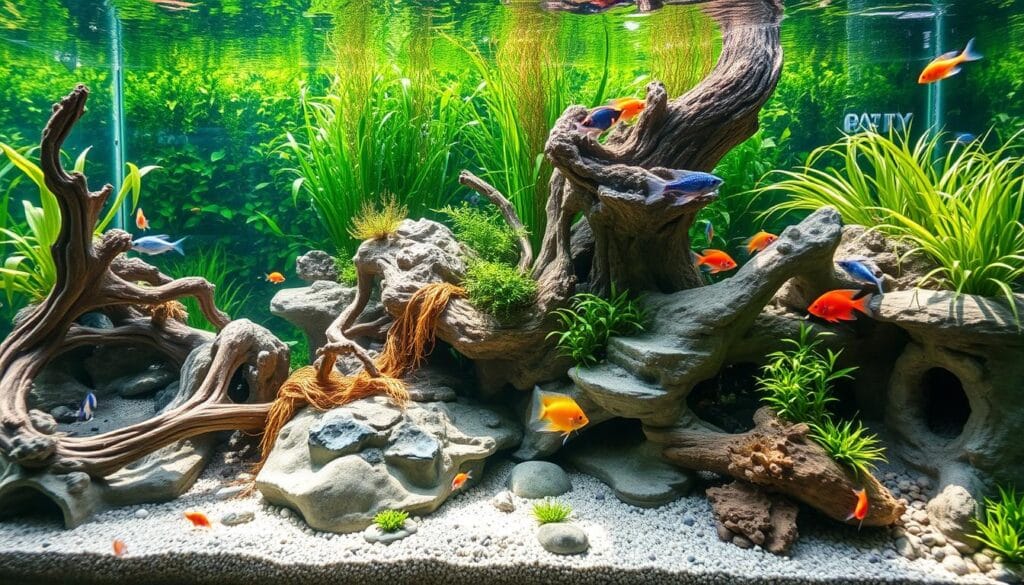
Driftwood and rocks can also beautify your aquarium. Driftwood gives a natural look and provides hiding spots for fish. Make sure it’s safe for aquariums and clean it well before adding it.
Rocks and stones can create caves, decorate the bottom, or just add beauty. Pick aquarium-safe rocks to avoid water problems.
Creating Hiding Spots with Decorations
It’s important to have hiding spots for your fish to feel safe and less stressed. Use live plants, driftwood, rocks, and decorations to create these spots. DIY fish tank decorations can also be fun and creative.
Try making caves, overhangs, or even a treasure chest for a whimsical touch. These elements make your tank lively and good for your fish’s health.
By adding natural decor to your aquarium, you make a beautiful and healthy space for your fish. Whether you’re new or experienced, fish tank landscaping ideas can help you create a unique and thriving home for your fish.
Interactive Feeding Techniques
Feeding time can be more than just a routine. It can be an exciting experience for your fish with the right techniques. By using different methods, you can challenge your fish and improve their well-being.
Using Feeding Toys for Mental Stimulation
Feeding toys are great for mental stimulation in your aquarium. They make fish work for their food, like they do in nature. For example, puzzle feeders dispense food as fish interact with them.
Implementing Slow-Release Feeders
Slow-release feeders are another good choice for interactive feeding. They release food slowly, keeping fish busy for longer. This reduces waste and keeps fish active and stimulated.
Exploring DIY Feeding Stations
Building your own feeding stations can be fun and rewarding. You can use different materials to create feeders that challenge your fish. For example, a plastic bottle with holes drilled into it, filled with food, can be a great DIY feeder.
Here’s a comparison of different interactive feeding techniques:
| Technique | Description | Benefits |
|---|---|---|
| Feeding Toys | Require fish to work for food | Mental stimulation, reduced boredom |
| Slow-Release Feeders | Gradually release food | Extended feeding time, reduced waste |
| DIY Feeding Stations | Custom-made feeders using various materials | Cost-effective, customizable, engaging |
By using these interactive feeding techniques, you can greatly improve your fish’s life. They will have a more engaging and stimulating environment.
Enhancing Water Quality with Plants and Filters
To keep your aquarium fish healthy and happy, focus on improving water quality. Good water quality is key to a thriving aquarium. It means keeping the water clean and the parameters right for your fish.
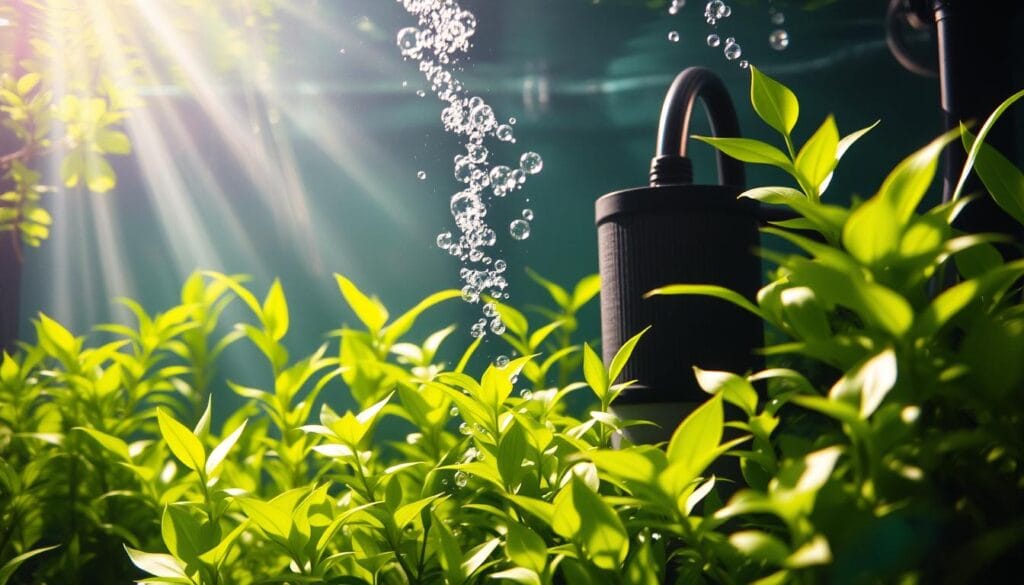
Benefits of Live Plants for Tank Health
Live plants are a natural way to improve water quality. They soak up nutrients and waste, balancing the ecosystem. Plants like Java Moss and Anacharis are great because they’re easy to care for and clean the water well.
“Live plants are not just pretty; they’re vital for your aquarium’s health,” says Dr. James Findley. “Adding plants to your tank can cut down harmful substances and make a natural home for your fish.”
Choosing the Right Filter for Your Fish
Picking the right filter is key for good water quality. Filters like mechanical, biological, and chemical ones do different jobs. A high-quality canister filter can clean the water well, removing debris and chemicals.
- Mechanical filters catch particles.
- Biological filters help break down waste with bacteria.
- Chemical filters remove specific contaminants and odors.
The Role of Water Movement in Enrichment
Water movement is vital for a lively aquarium. It spreads heat, oxygen, and nutrients. It also stops water from getting still and keeps fish healthy. Powerheads or adjusting the filter output can create the right flow.
Understanding water quality and using live plants, the right filter, and enough water movement can greatly improve your fish’s health. This makes your aquarium a better place for both your fish and you.
Adding Movement with Different Tank Mates
Introducing compatible tank mates is a great way to enrich your aquarium. It adds movement and makes your tank more dynamic and engaging.
Selecting Compatible Species for Co-habitation
Choosing the right tank mates is key. Look at their size, temperament, and water needs. For example, peaceful fish like Neon Tetras and Guppies can live well together. But, aggressive fish should be kept alone to prevent fights.
Here are some good pairs:
- Corydoras Catfish and Harlequin Rasboras
- Zebra Danios and Lemon Tetras
- Platies and Swordtails
It’s important to research the needs and behaviors of the fish you want to keep together. This ensures peace in your tank.
Observing Interaction and Social Behavior
Watch how your fish interact after introducing new tank mates. This helps you see if they’re stressed or aggressive. If you notice hiding or avoiding, you might need to change the tank’s layout or separate fish.
Watching your fish can also show you their natural behaviors. This can be fascinating and enriches your aquarium.
Creating Schools for Social Fish
Many fish are social and do best in schools. This can make your tank more lively. For example, Cardinal Tetras or Rasboras are beautiful and interesting when in groups.
To start a school, keep 6-10 fish of the same species. The exact number depends on the species and your tank’s size. Make sure your tank is big enough and well-filtered for a school.
Using Colorful Lighting for Visual Enrichment
Adding colorful lighting to your aquarium can really help your fish. It’s not just for looks; it’s also key for their health and happiness. Good lighting makes their home more interesting and stimulating.
Spectrums and Their Impact on Fish Health
Lighting with different spectrums affects fish in different ways. Some lights make their colors pop, while others might change their behavior. It’s important to know how different lights affect your fish. Studies show that certain lights can help with their sleep, stress, and even how fast they grow.
Seasonal Changes and Lighting Conditions
Aquarium fish like changes in lighting, just like in the wild. Changing the light to match the seasons helps keep them healthy and lively. You can adjust the light’s strength, how long it’s on, or its color to mimic different times of the year.
Effects of LED Lights on Fish Behavior
LED lights are great for aquariums because they save energy and are flexible. They come in many colors and can mimic day and night. LED lights can really shape how fish behave, like making them want to forage or breed. But, picking the right light and intensity is key to not stressing them out.
Choosing the right lighting for your aquarium makes it a better place for your fish. Whether you’re into fish tank landscaping ideas or DIY fish tank decorations, lighting is a big part of it.
Engaging with Fish Through Regular Interaction
Regularly interacting with your aquarium fish can greatly improve their well-being. It also makes your experience more engaging. This way, you can build a stronger bond with your aquatic friends and help keep them healthy.
The Importance of Observation and Interaction
Watching your fish often helps you understand their behavior and spot health problems early. Regular interaction means observing their eating habits and noticing any changes in behavior. It’s also about enjoying their company.
Interaction goes beyond just watching. It’s about engaging with your fish in meaningful ways. This can include using interactive fish tank features that mimic their natural behaviors.
Ways to Engage Without Stressing Your Fish
To interact with your fish without stressing them, follow these tips:
- Move slowly and deliberately around the tank to avoid startling them.
- Use fish tank toy ideas that encourage natural foraging behaviors, such as puzzle feeders.
- Avoid tapping on the glass, as this can be startling and stressful for your fish.
Benefits of Hand Feeding Your Fish
Hand feeding your fish is a great way to bond with them. It’s rewarding for both you and your pets. It lets you check if they’re eating well and makes mealtime a positive experience.
When hand feeding, be gentle and careful to avoid stressing your fish. Start with small amounts and watch their reaction to ensure a positive experience.
Implementing Sensory Enrichment Techniques
Sensory enrichment makes your fish’s life better. It adds different stimuli to their environment. This makes their space more interesting and helps them behave naturally.
Sound and Its Effects on Fish
Sound affects fish a lot. Some sounds calm them, while others excite them. For example, sounds from nature can make fish less stressed and more active.
You can add sound to your tank with speakers or decorations. But, make sure the sounds aren’t too loud. Loud noises can stress your fish out.
Aromatic Additives for Enrichment
Aromatic additives add another layer of fun for your fish. Scents from plants or foods can make them curious and active. For example, adding plant extracts can make them think there are live plants around.
When using scents, pick products made for aquariums. Follow the instructions to avoid overwhelming your fish.
Visual Enrichment Tools and Toys
Visual enrichment is easy and fun. You can use decorations, toys, and lights to make their space exciting. Try changing decorations, using mirrors, or adding LED lights to keep things interesting.
Choose toys and decorations that your fish like. Some fish prefer certain colors or textures. Watch how they react to different things and adjust your choices.
Adapting Enrichment as Your Fish Grow
As your fish grow, their needs change. So should their environment. It’s important to keep their aquarium engaging and stimulating. Watch your fish’s development to know when to add new elements.
Developmental Stages and Enrichment
Fish go through different stages, each needing something special. Young fish might need more hiding spots and gentle water. Mature fish might enjoy more complex feeding challenges. Changing your enrichment keeps your fish active and happy.
Enhancing Aquarium Decor Inspiration
Adding new decor and rearranging can stimulate your fish. Think about adding plants or decorations that encourage exploration. This makes your aquarium look great and keeps your fish happy.
Encouraging Natural Behaviors
Adapting your enrichment can help your fish behave naturally. You might introduce new foods, change water currents, or add toys. These changes keep your fish active and your aquarium healthy.