
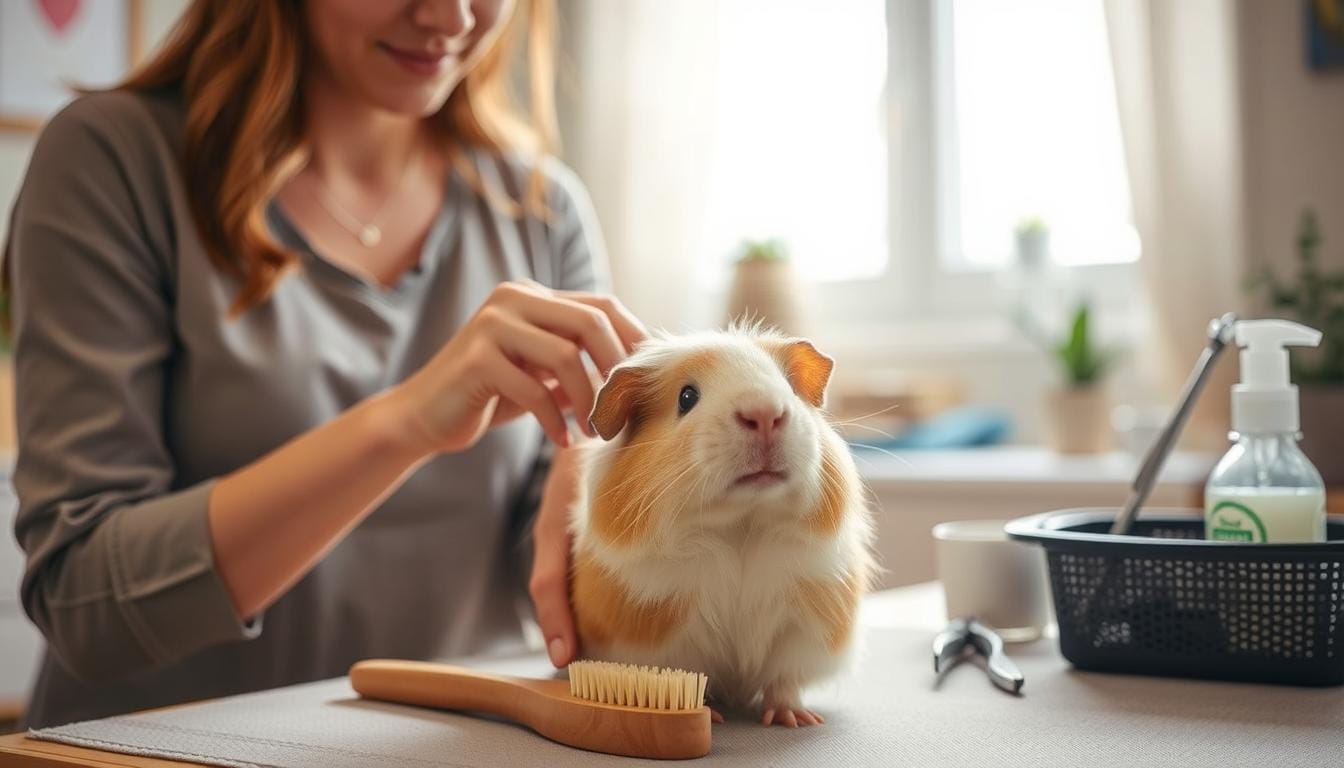
Ever think about your small friend’s health? Many new owners focus on food and where they live. But, consistent maintenance is key for a long, happy life.
Having a routine helps you connect with your pet and check their health. Learning these basics is a vital responsibility. It keeps your pet comfy and joyful every day.
Knowing how to do these tasks right stops health problems early. This guide gives you the must-know info to care for your pet well.
Table of Contents
Understanding the Importance of Grooming
Why do your small friends need so much care? It’s not just about looks. Guinea pig grooming tips are key to a happy life. Regular grooming keeps them comfy and healthy.
Grooming is more than just keeping them clean. It’s a special time to bond with your pet. Regular handling makes vet visits easier for them. Grooming for guinea pigs shows you care, strengthening your bond.
Benefits of Regular Grooming
Regular grooming lets you check on your pet’s health. It helps spot problems early. Early detection can make a big difference in their recovery.
- Prevents painful matting and tangles in long-haired breeds.
- Helps distribute natural skin oils for a healthier coat.
- Allows for regular inspection of nails and ears.
- Reduces the accumulation of debris and waste in the fur.
Impact on Health and Hygiene
Keeping your pet clean is crucial for their health. Bad hygiene can lead to infections and parasites. Grooming for guinea pigs keeps them dry, clean, and comfy all year.
The table below shows how grooming helps your pet’s health:
| Grooming Task | Primary Health Benefit | Frequency |
|---|---|---|
| Brushing | Prevents skin irritation | Weekly |
| Nail Trimming | Prevents foot infections | Monthly |
| Ear Cleaning | Prevents wax buildup | As needed |
| Coat Inspection | Early parasite detection | Daily |
Spending time on guinea pig grooming tips makes a big difference. It keeps your pet vibrant, active, and happy. Good hygiene means a better life for them.
Tools You Need for Grooming
Getting the right gear is key for stress-free grooming for guinea pigs. The right guinea pig grooming tools make grooming a fun bonding time. Keeping these tools organized helps keep grooming sessions calm and efficient for your pet.
Brushes and Combs
The brush you pick depends on your guinea pig’s fur length. For short-haired ones, a soft-bristled brush or a rubber curry brush is perfect. These tools gently remove loose hair and dirt. Make sure the brush is soft on their skin.
Long-haired guinea pigs need a metal comb to avoid tangles. A slicker brush helps smooth their fur after combing. Regular brushing keeps their coat shiny and prevents skin problems.
Nail Clippers
Proper guinea pig nail trimming is crucial to avoid nail overgrowth and pain. Use small animal nail clippers or human toenail clippers if sharp. Sharp blades ensure a clean cut without hurting the nail.
Keep styptic powder handy for nail trimming. It stops bleeding if you cut the nail too short. Having the right tools makes nail trimming safer.
Bathing Supplies
Guinea pigs don’t need baths often, but the right supplies are important. Use a shampoo made for small animals or a mild, fragrance-free baby shampoo. Never use human shampoo, as it can harm their skin.
Have soft towels ready for drying. A small basin or shallow sink is best for bathing. Make sure the water is lukewarm to keep your guinea pig comfortable.
How Often Should You Groom Your Guinea Pig?
Setting up a grooming schedule keeps things organized and stress-free for your pet. Learning how to groom a guinea pig right ensures they stay healthy and happy all year. A routine helps avoid overwhelming tasks and makes grooming easier for both of you.
Daily Care Essentials
Every day, it’s important to keep things clean. Do a quick spot check of your pet’s area to remove dirty bedding and leftover food. This stops ammonia buildup and keeps their coat clean.
Also, spend a few minutes each day watching your pet. Look for any signs of discomfort or unusual discharge. Being consistent is crucial when learning how to groom a guinea pig well.
Weekly Grooming Tasks
Set aside a day each week for a detailed grooming session. Brush your pet to remove loose fur and prevent tangles. Brushing also helps you bond with your guinea pig and check for skin issues.
During this weekly grooming, clean your pet’s ears and eyes. Use a soft, damp cloth to gently remove any debris. Sticking to this routine makes grooming easier and less stressful for your pet.
Monthly Maintenance
Monthly grooming focuses on deeper care to keep your pet in top shape. The key task is trimming your guinea pig’s nails to prevent curling or foot pain. Also, do a full cage clean to keep their home sanitary.
Use this time to check your pet’s weight and coat health. If you see any big changes, it’s time to see a vet. By sticking to this schedule, you learn how to groom a guinea pig and give them the best care.
Basic Grooming Techniques
Learning how to groom a guinea pig can be easy and stress-free. By mastering basic grooming skills, you keep your pet comfortable and healthy. Using the best grooming practices for guinea pigs from the start builds trust and keeps them calm.
Brushing Techniques
When brushing your guinea pig’s hair, use a soft-bristled brush. This avoids irritating their skin. Start by stroking in the direction of hair growth to remove loose fur and debris.
If you find tangles, be patient and work through them slowly. Avoid pulling, as it can cause discomfort.
Brushing regularly keeps their coat shiny and free of mats. Always support your pet’s body while brushing to make them feel secure. If they get restless, take a break and offer a treat to keep the experience positive.
Nail Trimming Tips
Proper guinea pig nail trimming is crucial to prevent overgrown nails and infections. Use a good pair of small animal clippers and styptic powder for minor bleeding. Hold your pet firmly but gently on your lap or a stable surface.
Look at the nail to find the “quick,” the pink blood vessel in the center. Never cut into the quick, as it will hurt and bleed. Trim only the clear, hooked tip of the nail at a slight angle.
If you’re nervous, start by trimming just one or two nails at a time. With practice, you’ll become more confident. Remember, patience is your best tool when working with your pet’s sensitive paws.
Grooming Long-Haired Guinea Pigs
Long-haired guinea pigs are stunning, but they need special care to avoid painful matting. It’s important to follow the best grooming practices for guinea pigs to keep them happy and healthy. Without regular grooming, their beautiful fur can become a source of discomfort.
Special Considerations
Proper guinea pig hair care is more than just brushing the surface. Their fur grows continuously, trapping bedding, hay, and debris that can irritate their skin. You must check their underside regularly to prevent waste from getting stuck in their fur.
Long-haired breeds can also get heat stress if their fur is too thick or matted. Trimming the hair around the rear end helps keep them clean and prevents infections. Always be patient during these sessions to keep your pet calm and secure.
Tools and Techniques for Long Fur
When brushing guinea pig hair, use a gentle touch to avoid pulling on their sensitive skin. Start with a wide-toothed comb to untangle knots, then switch to a softer brush. This gentle approach prevents stress and makes grooming more efficient.
Having the right guinea pig grooming tools is crucial for daily care. Check the table below to see which tools are best for managing long, flowing coats.
| Tool Type | Primary Use | Frequency |
|---|---|---|
| Wide-Tooth Comb | Detangling knots | Daily |
| Soft Bristle Brush | Smoothing the coat | Daily |
| Safety Scissors | Trimming debris | As needed |
| Detangling Spray | Softening mats | Weekly |
Always make sure your pet is on a stable surface during grooming. If you find a stubborn mat, don’t pull it. Instead, gently tease the hair apart with your fingers or use specialized scissors to carefully trim it away.
Bathing Your Guinea Pig
Knowing how to bath a guinea pig is key for any owner. These pets are great at cleaning themselves. But, sometimes they need your help to stay clean.
When to Bathe
Only bathe your guinea pig if they’re really dirty or if a vet says it’s needed. Washing them too much can dry out their skin. Always think about your pet’s comfort and avoid baths unless it’s really necessary.
Step-by-Step Bathing Guide
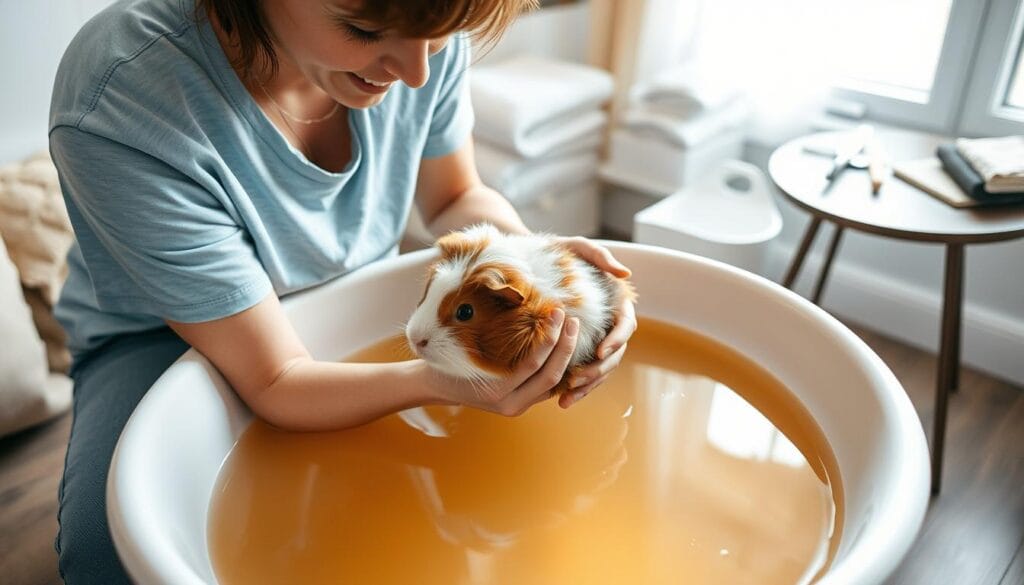
When you need to bath a guinea pig, start with lukewarm water in a shallow basin. Make sure the water is just up to their belly. This keeps them safe and calm. Use a gentle, unscented shampoo made for small animals to protect their skin.
Massage the shampoo into their fur, but avoid their eyes, nose, and ears. Rinse them well to remove all soap. Hold your pet firmly to keep them calm and prevent falls.
Drying Your Guinea Pig
Drying is the most important part. Guinea pigs can get sick if they’re wet or cold for too long. Wrap them in a soft towel and pat them dry until their fur is no longer wet.
Keep them in a warm, safe place until they’re completely dry. Never use a human hair dryer on them. It can hurt their skin or scare them too much. Drying them right is key to a safe bath.
Dealing with Matting and Tangles
Keeping your pet’s coat free of tangles is crucial for their comfort. Tangles can pull on the skin, causing pain. Regular guinea pig hair care keeps them happy and healthy.
Prevention Tips
Preventing tangles is the best approach. Consistency is key in grooming. Regular brushing guinea pig hair stops fur from matting.
Keep your pet’s area clean and dry. Damp bedding can cause matted fur. A balanced diet also helps keep the coat smooth.
How to Safely Remove Mats
Don’t pull on mats to avoid hurting your pet. Use a soft-bristled brush or a metal comb to gently work through the knot. Start at the ends and move slowly towards the skin.
For tough tangles, use a little cornstarch to loosen the hair. If the mat is too tight, see a professional groomer or vet. Never use scissors to cut out a mat, as it can hurt your pet’s skin.
Brushing guinea pig hair should be a bonding experience. If your pet gets upset, take a break and try again later. Proper guinea pig hair care requires patience, but it’s worth it for your pet’s comfort.
Identifying Skin Issues During Grooming
Regular grooming lets you catch skin problems early. When you do guinea pig nail trimming, check the skin for any oddities. Early detection can help your pet recover faster.
Common Skin Problems
Guinea pigs often face skin issues that hurt. Mites can cause itching, hair loss, and crusty spots. Fungal infections, like ringworm, show up as scaly circles on the skin.
Dry or flaky skin might be due to the environment or low humidity. Look for small lumps or bumps under the fur. These could be cysts or abscesses that need vet care.
| Condition | Primary Symptom | Action Required |
|---|---|---|
| Mites | Severe scratching | Vet visit |
| Ringworm | Circular hair loss | Antifungal treatment |
| Dry Skin | Flaky patches | Check environment |
When to Consult a Vet
Not all skin issues can be treated at home. If your pet seems tired, loses weight, or shows pain, get vet help fast. Persistent scratching that causes sores is a clear sign to see a vet.
During your next guinea pig nail trimming, watch for signs of infection like redness or swelling. If you’re unsure about your pet’s skin health, it’s best to talk to a vet. Early action can stop minor issues from becoming serious health problems.
Grooming for Specific Breeds
Proper guinea pig hair care starts with knowing your pet’s breed. Each breed has its own coat type and length. Tailoring your grooming to these needs keeps your pet comfy and healthy all year.
American Guinea Pig
The American guinea pig has a short, smooth coat. This makes grooming easy. A weekly brush is enough to keep their fur and skin in top shape.
Since their hair is short, mats and tangles are rare. Focus on checking for skin issues during grooming. This simple routine keeps them stress-free and happy.
Peruvian Guinea Pig
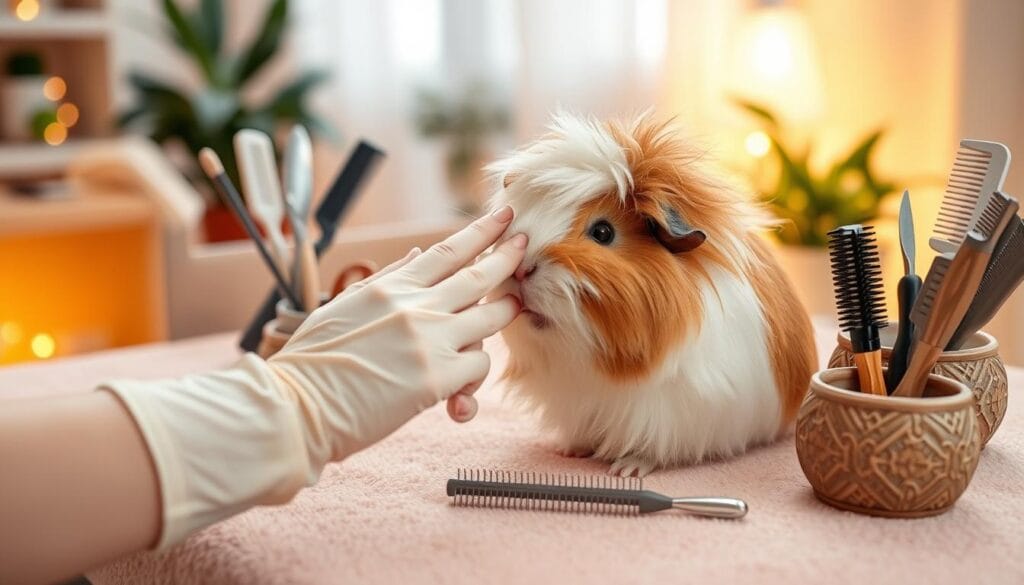
The Peruvian guinea pig needs a lot of grooming due to its long hair. Their hair can get tangled and collect debris. Daily brushing is key to prevent mats near the skin.
Many owners trim the rear hair for better hygiene. Paying close attention to grooming is crucial for this breed. Without regular care, their coat can become matted and uncomfortable.
Abyssinian Guinea Pig
Abyssinian guinea pigs have unique “rosettes” on their bodies. These swirls can trap dust and bedding. Use a soft brush to clean between the rosettes to avoid hidden debris.
Brushing must be gentle to avoid pulling on sensitive skin. With patience, you can keep their coat looking healthy and vibrant.
The Role of Diet in Grooming
Did you know your guinea pig’s fur health starts in the food bowl? Brushing removes loose hair, but true coat vitality comes from inside. A balanced diet is key for strong skin and shiny fur.
Nutritional Needs for Healthy Skin
Guinea pigs need specific nutrients for dermatological health. Vitamin C is crucial since they can’t make it themselves. Without it, their skin and fur can become dry and brittle.
Keeping your pet hydrated is also vital. Make sure they always have fresh, clean water. This keeps their skin soft and their fur shiny. Without enough moisture, grooming can be painful for them.
Foods That Promote a Healthy Coat
For a shiny coat, start with high-quality timothy hay. Add fresh, leafy greens for extra vitamins and minerals. Bell peppers are a great choice because they’re full of Vitamin C.
Offer small amounts of kale or parsley too. But introduce new foods slowly to keep their digestive system happy. A well-nourished pet has softer, more resilient fur that’s easier to groom.
Creating a Comfortable Grooming Environment
Turn grooming into a special time by picking the right spot. The place you groom your pet affects their stress and how well they cooperate. A quiet, safe, and bright area keeps both you and your pet calm.
Setting Up Your Grooming Station
Begin with a flat, stable spot like a strong table or countertop. Add a non-slip mat or soft towel to keep your pet from slipping. This makes them feel secure.
Make sure you have all your guinea pig grooming tools ready before bringing your pet. Good lighting lets you see their skin and fur clearly. Keep the area quiet and free from sudden noises to avoid startling your pet.
Organize your guinea pig grooming tools in a small tray or basket. This keeps things tidy and saves time.
Calming Your Guinea Pig
Keeping calm is key for a good grooming session. Talk to your pet softly to reassure them. If they seem stressed, give them a break and a favorite veggie.
Move slowly and carefully when handling your pet. Having some guinea pig grooming tools nearby helps you work faster. But always put your pet’s comfort first to build trust.
| Surface Type | Stability | Comfort Level | Ease of Cleaning |
|---|---|---|---|
| Rubber Mat | High | Medium | Excellent |
| Soft Towel | Medium | High | Good |
| Plastic Tray | High | Low | Excellent |
Building a Grooming Routine
Being consistent makes grooming a special time with your pet. Set aside time each week for grooming. This strengthens your bond and helps your pet stay healthy.
Establishing a Schedule
Choose a quiet time when your pet is calm and alert. Use a calendar to keep track of grooming sessions. This way, you never forget to care for your pet.
Making Grooming Enjoyable for Your Pet
Give small treats like fresh bell peppers or Oxbow Timothy hay. This helps your pet associate grooming with positive things. Gentle handling makes grooming easier for both of you.
Always be patient during grooming. If you stay calm, your pet will too. Good grooming habits keep your pet happy and healthy for a long time.