
Setting Up Your First Saltwater Aquarium: A Step-by-Step Guide
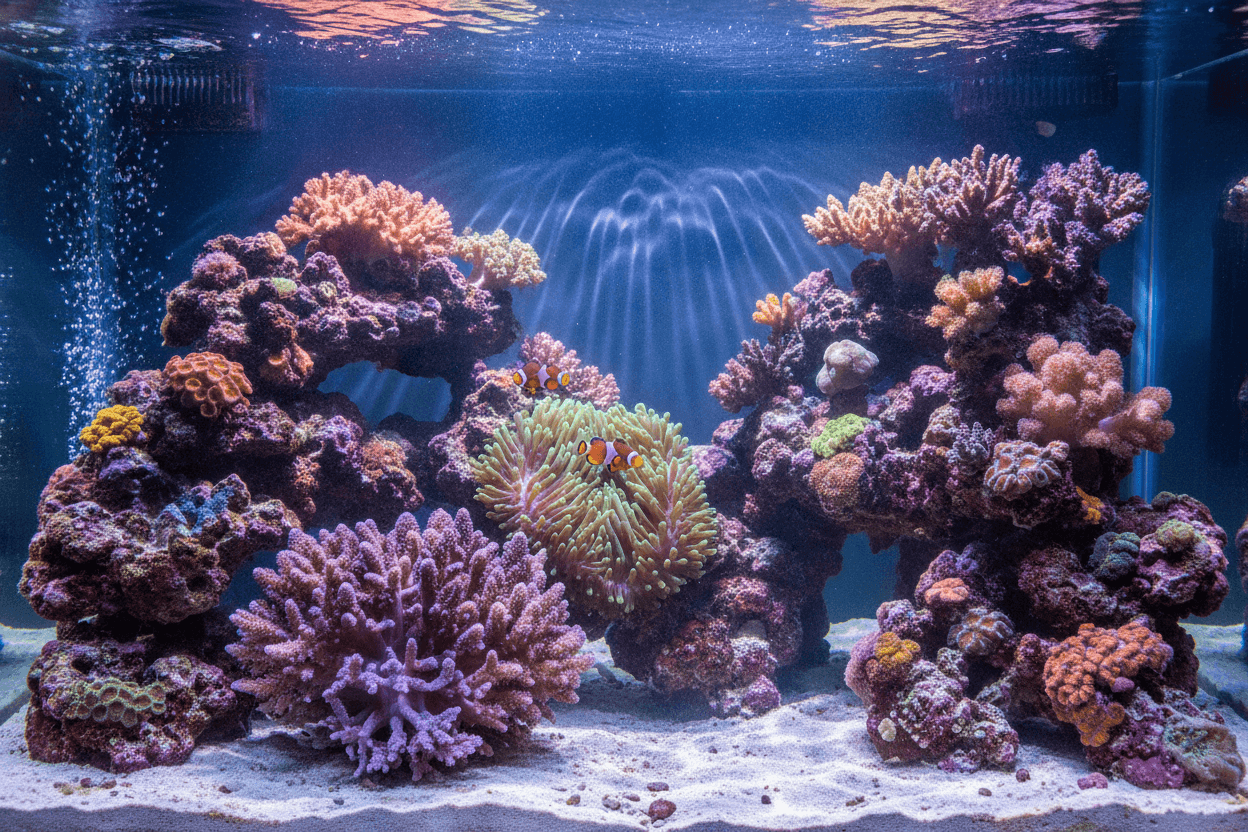
There’s nothing quite like the beauty of a thriving saltwater aquarium. The vibrant colors of coral, the graceful movement of clownfish, and the mesmerizing flow of anemones create a living work of art that transforms any room. While saltwater aquariums once had a reputation for being difficult to maintain, modern equipment and proven techniques have made them more accessible than ever.
Table of Contents
This step-by-step guide walks you through everything you need to know to set up your first saltwater aquarium successfully — from choosing equipment to cycling the tank and adding your first fish.
Step 1: Choose Your Tank Size
Contrary to what many beginners believe, larger tanks are actually easier to maintain than smaller ones. Larger water volumes are more stable and forgiving of minor mistakes. For a first saltwater aquarium, a 20 to 40-gallon tank is the ideal starting point.
| Tank Size | Difficulty | Best For |
|---|---|---|
| 10–20 gallons (nano) | Advanced | Experienced keepers, single fish, corals |
| 20–40 gallons | Beginner | First-time owners, mixed community |
| 40–75 gallons | Moderate | Stable ecosystem, reef tanks |
| 75+ gallons | Moderate | Advanced reef keepers, large fish |
All-in-one (AIO) tanks are a great choice for beginners — they come with built-in filtration, reducing the complexity of setup.
Step 2: Essential Equipment
Must-Have Equipment
- Aquarium tank and stand: Glass or acrylic, with a level, sturdy stand
- Heater: 3–5 watts per gallon, with a thermostat to maintain 76–78°F
- Powerhead or wavemaker: Creates water flow — essential for gas exchange and coral health
- Salt mix and hydrometer/refractometer: For mixing and measuring salinity (target: 1.023–1.025 specific gravity)
- RO/DI filtration system: Purifies tap water — essential for healthy coral and fish
- Test kits: For ammonia, nitrite, nitrate, pH, alkalinity, calcium, and magnesium
- Reef-capable LED lighting: Full-spectrum with UV-blue spectrum for coral growth
- Live rock or dry rock: Provides biological filtration and structure
- Live sand or aragonite sand: Substrate that supports beneficial bacteria
Optional but Recommended
- Protein skimmer: Removes organic waste before it breaks down into nitrates
- Auto top-off (ATO) system: Maintains stable salinity by replacing evaporated water
- Aquarium controller: Monitors and controls temperature, lighting, and more
Beginner Saltwater Setup Cost Breakdown
Starting a saltwater aquarium requires an initial investment in quality gear. Below is an approximate cost breakdown for a standard 20 to 40-gallon beginner setup.
| Item | Estimated Cost (Low) | Estimated Cost (High) |
|---|---|---|
| AIO Tank & Stand | $200 | $500 |
| Reef LED Lighting | $100 | $300 |
| Heater & Powerhead | $40 | $100 |
| Rock & Sand | $60 | $150 |
| Salt Mix & Refractometer | $50 | $100 |
| RO/DI System & Test Kits | $150 | $250 |
| Total Estimated Cost | $600 | $1,400 |
Note: Costs can be reduced by purchasing used equipment or starting with a smaller “nano” kit, though larger volumes offer better stability.
Step 3: Set Up the Tank
- Rinse the tank with fresh water (no soap) and place it on a level stand
- Add substrate: 1–2 inches of aragonite sand or live sand
- Aquascape with rock: Arrange live or dry rock to create caves, overhangs, and swimming areas. Use 1–1.5 pounds of rock per gallon of water
- Fill with RO/DI water and mix in salt according to manufacturer instructions until salinity reaches 1.023–1.025
- Install equipment: Heater, powerhead, protein skimmer, and lighting on a timer
- Start the cycle (see Step 4)
Step 4: Cycle the Aquarium
Cycling is the process of establishing beneficial bacteria that convert toxic ammonia (from fish waste and decaying food) into less harmful nitrates. This is the most important step — patience here prevents disaster later.
The Nitrogen Cycle
- Ammonia appears (from a ammonia source — fish food, pure ammonia, or a raw shrimp)
- Nitrosomonas bacteria convert ammonia to nitrite (toxic to fish)
- Nitrobacter/Nitrospira bacteria convert nitrite to nitrate (less toxic)
- Water changes and macroalgae remove nitrates
The cycle typically takes 2–6 weeks. Use bottled nitrifying bacteria (like Dr. Tim’s or Bio-Spira) to speed up the process. Test water every 2–3 days. The cycle is complete when ammonia and nitrite read zero and nitrate begins to appear.
Step 5: Add Your First Fish (Week 6–8)
Once the tank is fully cycled, start with hardy, beginner-friendly fish. Add them slowly — no more than 1–2 fish per week — to avoid overwhelming the biological filtration.
Best Beginner Saltwater Fish
- Clownfish (Ocellaris or Percula) — Hardy, colorful, and captive-bred
- Royal gramma — Peaceful and strikingly beautiful
- Firefish goby — Peaceful, great for community tanks
- Yellow watchman goby — Fascinating burrowing behavior
- Banggaai cardinalfish — Hardy and peaceful
Detailed Beginner Fish Recommendations
When selecting your first inhabitants, prioritize captive-bred species as they are more resilient and environmentally friendly.
- Ocellaris Clownfish:
- Temperament: Peaceful to semi-aggressive (territorial near their host)
- Size: 3–4 inches
- Compatibility: Excellent community fish; can be kept in pairs.
- Firefish Goby:
- Temperament: Peaceful and shy
- Size: 3 inches
- Compatibility: Great with other peaceful fish; requires a lid as they are known jumpers.
- Yellow Watchman Goby:
- Temperament: Peaceful
- Size: 4 inches
- Compatibility: Reef safe; often forms a symbiotic relationship with pistol shrimp.
- Azure Damselfish:
- Temperament: Semi-aggressive
- Size: 3 inches
- Compatibility: Very hardy; best kept with other active fish that can handle their energy.
- Orchid Dottyback:
- Temperament: Semi-aggressive
- Size: 3 inches
- Compatibility: Bold and colorful; best with similar-sized, active tankmates.
Always quarantine new fish for 2–4 weeks in a separate tank to prevent introducing diseases. If you don’t have a quarantine tank, choose captive-bred fish from reputable sources.
Step 6: Add Corals and Invertebrates
Wait at least 2–3 months after the tank is cycled before adding corals. Start with hardy, low-light corals:
- Zoanthids (Zoas): Colorful, fast-growing, and forgiving
- Mushroom corals: Extremely hardy and low-maintenance
- Leather corals: Tolerant of varying water conditions
- Green star polyps: Beautiful and fast-spreading
Add a cleanup crew (snails, hermit crabs, brittle stars) to control algae and detritus. A good rule of thumb is one cleanup crew member per 2–3 gallons of water.
Maintenance Routine
| Frequency | Task |
|---|---|
| Daily | Check temperature, feed fish, inspect equipment |
| Weekly | 10–20% water change, test water parameters, clean glass |
| Monthly | Clean protein skimmer, replace filter media, check equipment |
| Every 3–6 months | Deep clean pumps, replace RO/DI filters, recalibrate refractometer |
Common Beginner Mistakes to Avoid
- Adding fish too quickly — the number one cause of tank crashes
- Overfeeding — leads to algae blooms and poor water quality
- Skipping water changes — stable water chemistry requires regular maintenance
- Using tap water — tap water contains phosphates and silicates that fuel algae
- Not quarantining new fish — one sick fish can wipe out an entire tank
- Choosing incompatible fish — research temperament and adult size before buying
Frequently Asked Questions
What do I need to start a saltwater aquarium?
To start a successful saltwater tank, you will need an All-In-One (AIO) tank, an aquarium heater, high-quality salt mix, a powerhead for water flow, a refractometer to measure salinity, an RO/DI system for pure water, water test kits, and reef-capable LED lighting.
Is a saltwater aquarium hard for beginners?
While they have a reputation for being difficult, modern equipment and better access to information make saltwater aquariums easier than ever to maintain. Today, the difficulty level is largely on par with keeping a freshwater tropical tank.
How long does it take to cycle a saltwater tank?
The nitrogen cycle typically takes 2 to 4 weeks. You can speed up this process by using bottled nitrifying bacteria to establish the biological filter more quickly.
What are the best beginner saltwater fish?
The best choices for beginners include clownfish, gobies, damsels, and dottybacks. It is highly recommended to always choose captive-bred specimens as they are hardier and better adjusted to aquarium life.
How big should my first tank be?
A 20 to 40-gallon tank is the ideal size for a beginner. It is large enough to provide chemical stability but small enough to manage easily during water changes and maintenance.
Do I need live rock and live sand?
Yes. Live rock and live sand are essential for providing biological filtration and introducing necessary biodiversity into your closed ecosystem.
How much does a beginner saltwater aquarium cost?
A complete beginner setup typically costs between $300 and $1,000, depending on the size of the tank and the quality of the equipment you choose.
Final Thoughts
Setting up a saltwater aquarium is a journey, not a destination. The key to success is patience, research, and consistency. Modern equipment and proven techniques have made reef keeping more accessible than ever — and the reward is a breathtaking underwater ecosystem that you built with your own hands.
For more fishkeeping guides, explore our fish care section and enrichment articles.