
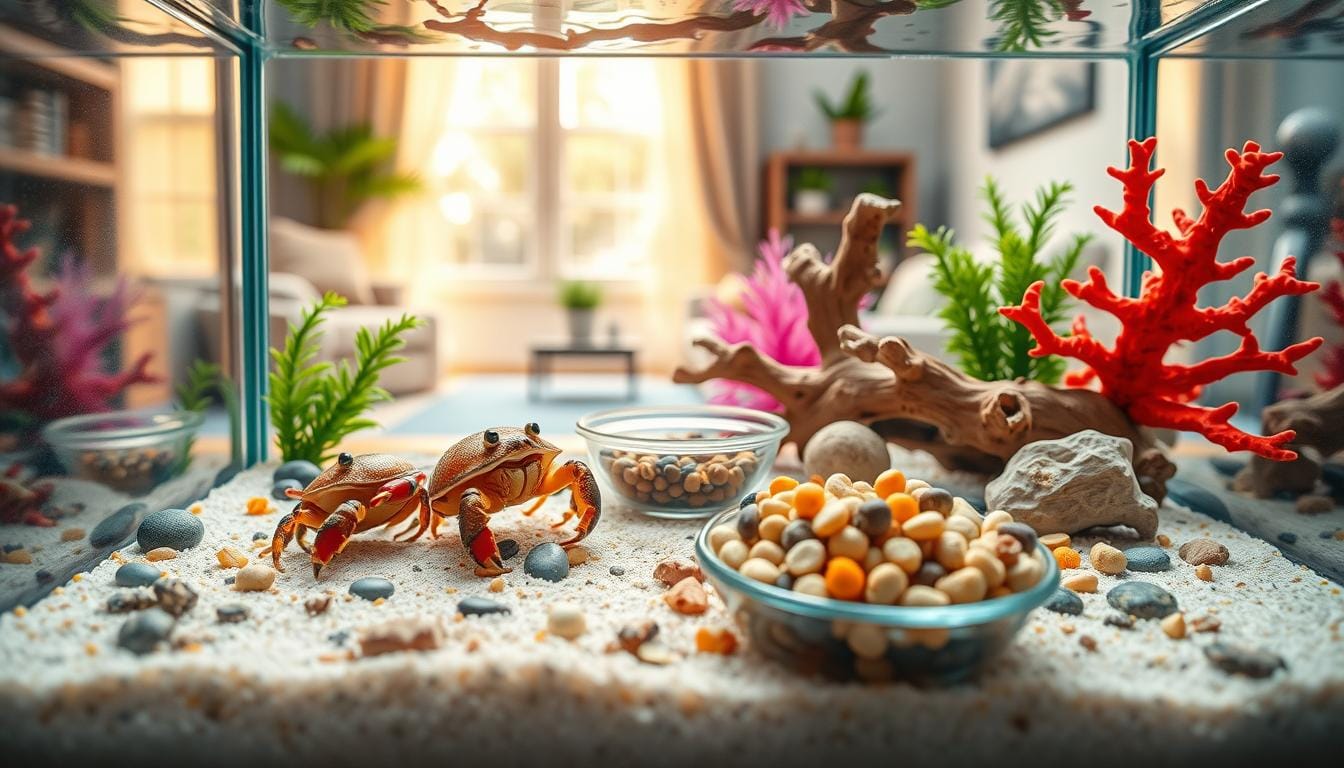
Ever thought about keeping tiny, shell-dwelling creatures as pets? Many think they’re easy to care for. But, they need dedication and specific knowledge to thrive.
Starting this journey can be very rewarding. Success in hermit crab pet care depends on your eagerness to learn and your commitment to a stable home.
This guide is your first step to mastering hermit crab care. With patience and thorough research, you’ll ensure your pets live well. Follow these steps to become a confident Hermit Crab Care for Beginners owner.
Table of Contents
Understanding Hermit Crabs: An Overview
Knowing about your pet’s biology is key to caring for them well. Hermit crabs are not insects but are actually crustaceans. They live on land but still have a strong link to water.
What Are Hermit Crabs?
Hermit crabs have soft, asymmetrical abdomens that need protection. They find shells from other mollusks to carry around. As they grow, they need bigger shells, making shell choice very important.
Common Species of Hermit Crabs
Many types of hermit crabs exist worldwide, but a few are popular pets in the U.S. Knowing your crab’s species helps you care for it better.
- Purple Pincher (Coenobita clypeatus): A favorite pet for its hardiness and bright purple claws.
- Ecuadorian Hermit Crab (Coenobita compressus): Known for being active and social, loves to climb and explore.
Lifespan and Growth Patterns
Remember, hermit crabs are a long-term pet. They can live over 20 years with the right care.
They grow by molting, shedding their old shell for a new, bigger one. During this time, they hide in the substrate to recover. Keeping their environment calm is crucial for their health and growth.
Setting Up the Perfect Habitat
Creating a healthy living space is key for crab owners. A well-designed hermit crab habitat gives your pets the security they need. It lets them thrive and show their natural behaviors.
By focusing on the right environment, you keep your pets active and stress-free.
Choosing the Right Tank Size
When picking a home, choose floor space over height. A glass hermit crab tank is best because it holds humidity well. It also lets you see your pets clearly.
Avoid small, cramped plastic cages that limit movement.
For a pair of small crabs, aim for at least 10 gallons of space. As your pets grow, upgrade to a bigger enclosure. This gives them room to roam and explore.
Substrate Options for Your Tank
The floor of your enclosure needs a deep layer of substrate for burrowing. A mix of play sand and coconut fiber is a good choice. It holds moisture well and lets your crabs dig comfortably during molting.
Make sure the substrate is deep enough to cover at least three times the height of your largest crab. Consistency is key. Keep the mixture slightly damp, like sandcastle sand.
Heating and Lighting Requirements
Maintaining a stable hermit crab setup needs reliable heating. Since they are tropical, they need consistent warmth. This keeps them healthy and active all year.
Use an under-tank heater or a heat mat on the side of the glass to control the temperature. Avoid intense heat lamps, as they can dry out the air too fast. Proper lighting should mimic a natural day-night cycle. This helps your pets keep their internal rhythms.
Essential Supplies for Hermit Crab Owners
Turning a simple glass tank into a lively home for your hermit crabs is easy with the right hermit crab supplies. The right tools keep your pets active and their minds sharp. This is key to their happiness and health.
Food and Water Bowls
Hermit crabs need two water bowls to stay healthy. One bowl should have dechlorinated fresh water. The other should have marine-grade salt water.
The bowls should be deep enough for the crabs to soak but not so deep they drown. Using hermit crab supplies like ceramic or plastic bowls makes cleaning up easier for you.
Hiding Places and Climbing Structures
Hermit crabs love to explore and hide. Adding driftwood, cholla wood, and coconut huts helps them feel at home.
“A habitat that encourages natural behaviors like climbing and hiding is the key to a stress-free and long-lived hermit crab.”
These structures are great for exercise and keeping their minds sharp. Make sure any climbing items are safe and won’t fall on your pets.
Thermometers and Humidifiers
Keeping an eye on your tank’s conditions is crucial. You’ll need a digital thermometer and a reliable hygrometer to check temperature and humidity.
| Supply Category | Primary Function | Maintenance Frequency |
|---|---|---|
| Water Bowls | Hydration and bathing | Daily cleaning |
| Climbing Decor | Physical exercise | Monthly inspection |
| Monitoring Tools | Environmental tracking | Continuous check |
Keeping your hermit crab supplies in top shape creates a stable home. Regular checks help you spot any changes in their environment early.
Feeding Your Hermit Crabs
Feeding your hermit crabs right is key to their happiness and health. A balanced hermit crab diet boosts their immune system. It also gives them the energy they need for molting.
Nutritional Needs and Diet Essentials
In the wild, hermit crabs eat a lot of different things. To feed them well in captivity, mix proteins, calcium, and fresh fruits or veggies. Variety is the key to avoiding health problems.
Calcium is very important for their shells. Make sure their food has crushed eggshells, cuttlebone, or mineral supplements. This keeps their shells strong.
Types of Food to Offer
Offer a variety of foods that change each week. Good protein sources include freeze-dried shrimp, bloodworms, or cooked chicken. Fresh veggies like carrots, spinach, and broccoli add vitamins and minerals.
Stay away from foods with artificial preservatives or too much salt. Here’s a table with the basics of a healthy diet:
| Food Category | Examples | Frequency |
|---|---|---|
| Proteins | Shrimp, Mealworms, Fish | 3-4 times weekly |
| Calcium | Cuttlebone, Eggshells | Always available |
| Fresh Produce | Apples, Carrots, Leafy Greens | Daily |
Feeding Schedule and Portion Control
Having a regular feeding schedule makes your pets feel safe and healthy. Remove any leftover food in 24 hours to stop it from spoiling.
It’s important to control how much food you give. Start with small amounts and adjust as needed. This keeps your tank clean and your hermit crab diet safe and healthy.
Maintaining Proper Humidity and Temperature
Hermit crabs need a specific climate to thrive at home. The right atmosphere is key for their health and happiness. Keeping the air quality in your tank just right is crucial.
Importance of Humidity Levels
Hermit crabs breathe with modified gills that work best in moist air. Aim for 70% to 80% humidity in their habitat. Dry air can be deadly for them.
High humidity keeps your crabs active and healthy. Use a spray bottle or a humidifier to keep the air right. Consistent humidity is essential for their well-being.
Recommended Temperature Range
Temperature also affects your crab’s energy levels. Keep it between 75°F and 85°F for their best health. Cold temperatures can make them sluggish or even sick.
But, too much heat is also bad. Place heat sources on the tank’s side, not the bottom. This lets your crabs choose their temperature.
Tools for Monitoring Environmental Conditions
Guesswork won’t do when it comes to your crab’s environment. A digital hygrometer and thermometer are must-haves. They help you track humidity and temperature accurately.
Check these readings every day. Adjust your tank’s setup if the levels get off track. This way, you can catch problems early.
| Condition | Ideal Range | Risk of Failure |
|---|---|---|
| Humidity | 70% – 80% | Respiratory distress |
| Temperature | 75°F – 85°F | Lethargy or shock |
| Monitoring | Daily checks | Unnoticed fluctuations |
Understanding Hermit Crab Behavior
Hermit crabs show interesting social behaviors that tell us about their happiness. By watching them, you can understand their language and make sure they’re doing well. Observation is key for any caring owner.
Social Structure Among Hermit Crabs
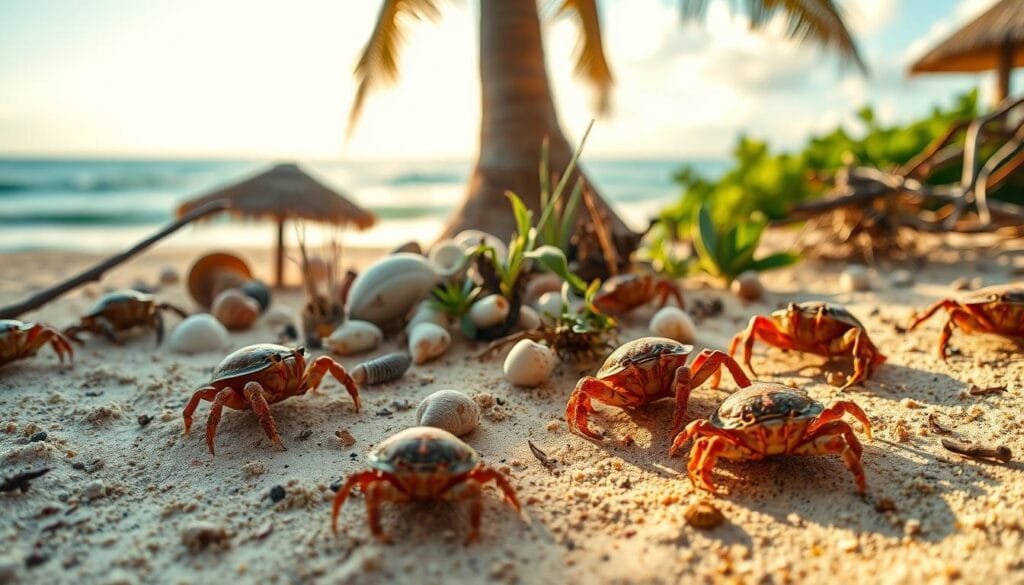
These creatures are very social and live in groups in nature. In your tank, they might form a social hierarchy. This means some crabs might get the best spots or food first. It’s normal and keeps things orderly.
They often sleep together or huddle in a corner. This behavior makes them feel safe and comfortable. It’s important to give them enough space and resources to avoid fights.
Common Behaviors to Observe
Watching them swap shells is fascinating. They check each other’s shells and sometimes trade. This shows they’re healthy and curious.
They also love to climb and explore, mostly at night. Being active at night means they feel safe and confident. Active exploration is a good sign.
Signs of Stress and Illness
It’s crucial to spot early signs of trouble. If a crab stays hidden for too long or seems very tired, it might be stressed. Shell abandonment is a big warning sign that needs quick action.
Here’s a table to help you understand what your crabs are trying to tell you:
| Behavior | What It Means | Recommended Action |
|---|---|---|
| Active climbing | Healthy exploration | Ensure secure decor |
| Communal sleeping | Social bonding | Maintain group size |
| Lethargy | Potential stress | Check humidity levels |
| Shell abandonment | Severe distress | Check shell availability |
Cleaning and Maintenance of the Habitat
Keeping your hermit crab habitat clean is crucial for their health. A clean space stops harmful bacteria and mold from growing. This can make your pets very sick. For more tips on keeping a healthy home for your hermit crabs, check out this guide to hermit crab care.
Regular Cleaning Routines
Every day, do a quick check on your hermit crab tank. Look for any leftover food or waste on the substrate. Being consistent helps avoid bad smells and keeps your crabs happy.
Also, clean the water bowls every day. If the water is cloudy or has substrate in it, wash the bowls with dechlorinated water. This helps prevent bacteria from growing.
When to Change the Substrate
Spot cleaning is good for surface messes, but sometimes you need a deeper clean. Change the substrate if you smell something bad or see mold. Even if you don’t see these signs, change the bedding every few months to keep things fresh.
When you change the bedding, clean the tank walls too. Make sure the new substrate is moist to keep the right humidity. Watch your crabs closely during this time to make sure they’re not stressed.
Avoiding Harmful Products
Be very careful when choosing cleaning products for your pets. Many household cleaners are highly toxic to hermit crabs. These chemicals can harm your pets’ breathing or even kill them.
Instead of using harsh cleaners, use warm water or a mild, pet-safe vinegar solution. Never use soaps or detergents because they leave behind harmful residues. Using natural, safe cleaning methods helps keep your crabs safe from harmful chemicals.
Handling Your Hermit Crabs
Hermit crabs are fascinating to watch, but they don’t like being handled a lot. They see human touch as a danger, not a way to bond. Respecting their boundaries is key to a good relationship with them.
Best Practices for Handling
When you need to pick up your crab, do it slowly and carefully. Let the crab climb onto your palm instead of grabbing it. Never force your crab out of its shell, as it can hurt them a lot.
Keep your time with the crab short and your hands near the floor. This way, if the crab drops, it won’t fall far. Make sure your hands are clean and free of harmful chemicals.
Observing Your Crab’s Body Language
It’s important to understand your crab’s behavior. If it hides deep in its shell or stays still, it’s scared or stressed. Give them space right away if you see this.
A happy crab will have its antennae out and explore its home. If its antennae wave fast, it’s checking its surroundings or smelling something new. Pay close attention to these subtle cues to know when your crab is okay or needs alone time.
Taking Precautions to Prevent Injury
Hermit crabs have strong claws that can pinch hard if they’re scared. Move slowly and avoid sudden movements near the tank. If a crab pinches you, stay calm and don’t pull your hand away.
Instead, slowly put your hand back in the tank or near a surface. Often, the crab will let go when it feels safe again. Consistency and calmness help prevent accidents when you’re cleaning or feeding.
Recognizing Signs of Health Issues
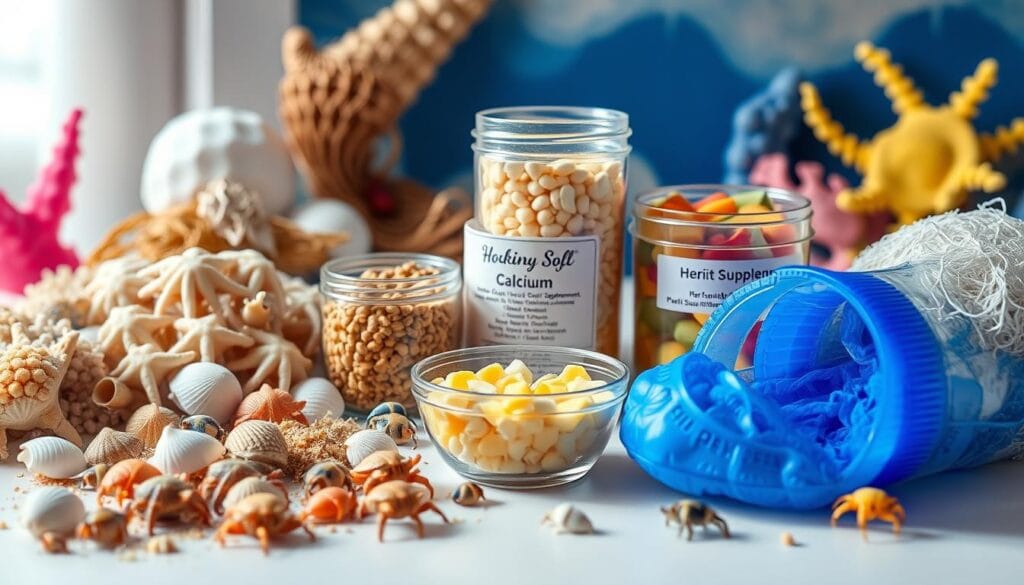
Even with the best care, hermit crabs can face health challenges. Being able to identify these issues early can improve their chances of recovery. Regularly check your hermit crab supplies to keep their environment safe and stress-free.
Common Health Problems in Hermit Crabs
One common issue is limb loss, often due to stress or poor conditions. Another concern is shell abandonment, leaving the crab vulnerable. For more information, see this hermit crab care sheet.
Symptoms to Look Out For
Look for signs like extreme lethargy, a foul odor, or no interest in food. If your crab stays inactive for too long, it might be sick. Make sure your hermit crab supplies, like water conditioners and substrate, are clean and working right.
When to Consult a Veterinarian
If your crab has persistent health issues, find a vet experienced in treating crustaceans. Not all vets know how to care for invertebrates, so call ahead. Early action is crucial for your crab’s recovery.
| Symptom | Potential Cause | Recommended Action |
|---|---|---|
| Limb Loss | Stress or Fighting | Isolate and check habitat |
| Shell Abandonment | Improper Shells | Provide variety of shells |
| Foul Odor | Bacterial Infection | Consult a veterinarian |
| Lethargy | Poor Environment | Check humidity and heat |
Creating a Social Environment
Keeping hermit crabs in a thriving colony is very rewarding. They are social animals that do well in groups, not alone. It’s key to their hermit crab pet care.
Keeping Multiple Crabs Together
In the wild, hermit crabs live in big colonies. They interact a lot. Keeping at least three crabs together lets them show their natural behaviors and feel safe.
Loneliness can make them lazy. This can shorten their lifespan.
Introducing New Crabs Safely
When you add new crabs, safety first to avoid stress and fights. First, put the new crab in a separate tank for a few weeks. This checks for health and parasites.
After that, introduce them in the evening. This is when they are most active. It helps them adjust to the new group.
Importance of Socialization
Socialization keeps your pets active and curious. Watching their interactions helps you understand their social hierarchy and communication. Good hermit crab pet care means creating a natural environment. This makes their lives more fulfilling.
Preparing for Shedding
Growth and healing for your hermit crab happen through a fascinating process known as hermit crab molting. This natural cycle allows your pet to shed its old exoskeleton to make room for a larger, stronger body. Understanding this process is vital for ensuring your crab stays healthy throughout its life.
What to Expect During a Molt
You will likely notice behavioral changes as your crab prepares to shed. Common signs include increased digging into the substrate and a sudden decrease in overall activity levels. Your crab may also appear lethargic or show a cloudy appearance in its eyes.
It is important to recognize that these changes are normal. During this time, your pet is gathering energy for the upcoming transition. Avoid the urge to disturb them, as they are preparing to enter a vulnerable state.
Creating a Safe Molting Environment
To support a successful hermit crab molting experience, you must provide a quiet and undisturbed habitat. Ensure the substrate is deep enough for your crab to bury itself completely. This provides the necessary darkness and security they need to shed safely.
If you have multiple crabs, consider isolating the one preparing to molt if possible. This prevents other crabs from bothering them while they are soft and defenseless. Maintaining consistent humidity levels is also crucial during this phase to keep the exoskeleton pliable.
Post-Molt Care
Once your crab emerges, it will be very fragile and hungry. The most important step in post-molt care is providing calcium-rich foods to help them harden their new exoskeleton. Items like crushed eggshells, cuttlebone, or specialized mineral supplements are excellent choices.
Allow your crab to eat its old shed exoskeleton, as it contains essential nutrients. Keep the environment calm and avoid handling your pet for at least a week after they reappear. This patience ensures they recover fully and regain their strength.
| Molting Stage | Primary Observation | Recommended Action |
|---|---|---|
| Pre-Molt | Increased digging | Do not disturb |
| Active Molt | Lethargy/Buried | Maintain humidity |
| Post-Molt | Soft exoskeleton | Provide calcium |
Frequently Asked Questions About Hermit Crab Care
New owners often start with wrong ideas about these unique crustaceans. Knowing the truth about their needs helps your pets live happily for years.
Debunking Common Myths
Many think these animals are easy pets that need little care. But, they are actually complex creatures that need special care to survive. Learning the right hermit crab facts helps you avoid mistakes that harm their health.
Addressing Beginner Concerns
You might wonder about your new pets’ needs. Giving them a varied diet is key for their health and shell growth. Also, be ready for their molting by keeping the substrate deep and moist.
Resources for Further Learning
Learning doesn’t stop here. Talking to experienced keepers helps as your crabs grow. Look for trusted forums and care guides to learn more about these amazing animals.
1 thought on “Hermit Crab Care for Beginners: Your Complete Starter Guide”
Comments are closed.