
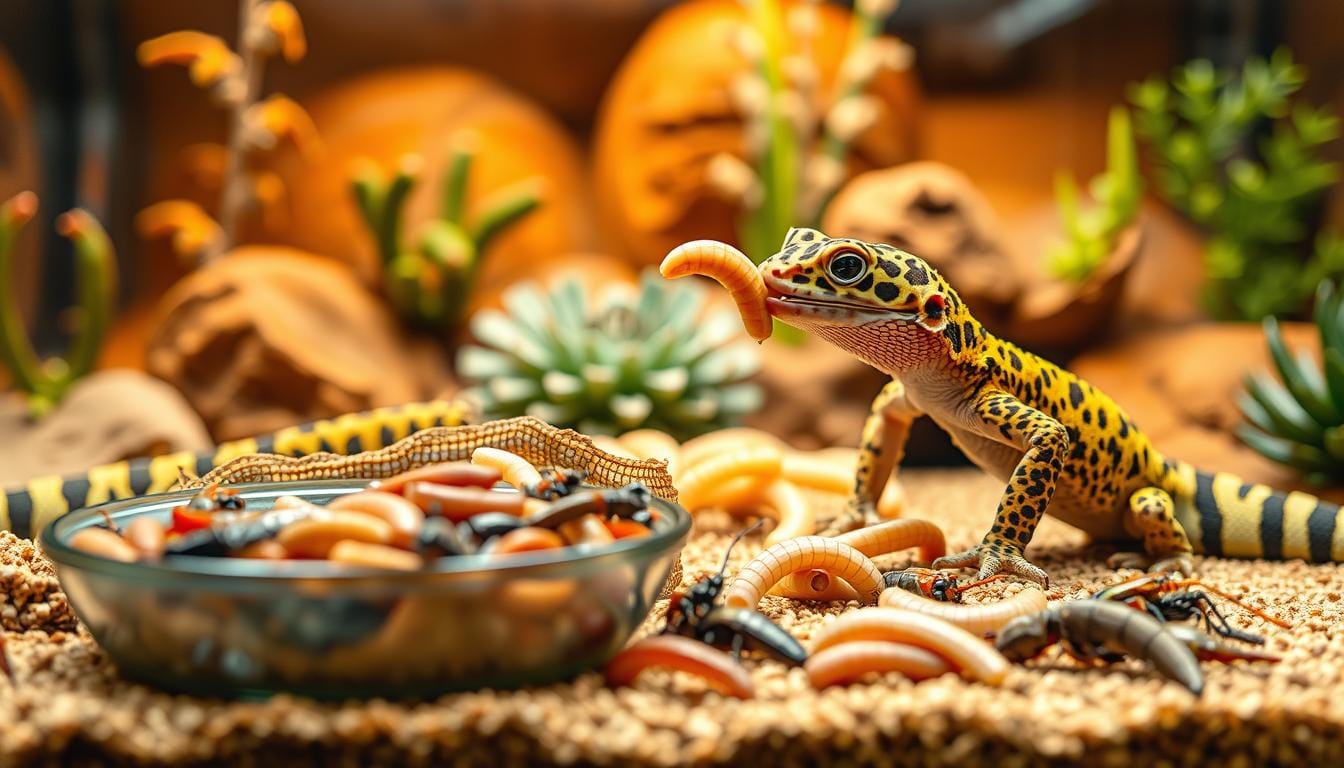
Ever think if your scaly friend is really doing well or just getting by? Giving the right Leopard Gecko Diet is key to making sure your pet lives a long, happy life.
Knowing what these reptiles need is the first step in being a good owner. When you focus on good food, you help stop many health problems that can affect pets in captivity.
This guide is your complete guide to taking care of your gecko. By learning about the Leopard Gecko Diet, you give your pet the nutrients they need to thrive in your care.
Table of Contents
Understanding the Nutritional Needs of Leopard Geckos
Your leopard gecko depends on you for all its nutrients. A good Leopard Gecko Diet keeps it active and healthy. By offering a variety of foods, you help your pet stay well for a long time.
Essential Nutrients for Healthy Growth
Leopard geckos need different nutrients at different ages. Young ones eat often to grow fast. Adults need less food to avoid getting too fat.
A healthy diet for leopard gecko includes moisture, protein, and minerals. Eating many different insects gives them all the nutrients they need. Eating the same foods all the time can cause problems.
“Reptiles in captivity are entirely dependent on their keepers to replicate the complex nutritional balance they would naturally seek in the wild.”
Importance of Calcium and Vitamin D3
Calcium is crucial for strong bones in leopard geckos. Without enough, they can get Metabolic Bone Disease. Make sure to dust their food with calcium.
Vitamin D3 for leopard gecko helps use calcium. It’s key for strong bones. Without enough D3, even lots of calcium won’t help.
The Role of Protein in Their Diet
Protein is vital for muscle and energy in geckos. They need high-quality, protein-rich foods. Choose active, healthy insects for the best nutrition.
| Life Stage | Protein Needs | Calcium/D3 Focus |
|---|---|---|
| Hatchling | High (Daily) | Daily Supplementation |
| Juvenile | High (Daily) | Daily Supplementation |
| Adult | Moderate (Every 2-3 days) | Weekly Supplementation |
Types of Food Suitable for Leopard Geckos
Choosing the best food for leopard gecko health is key. They love to eat small insects in the wild. This gives them the protein and fat they need to stay active.
A good Leopard Gecko Diet should include live prey. This meets their natural hunting needs and gives them the nutrients they need.
Crickets: A Primary Protein Source
Crickets are the top choice for your gecko’s meals. They are very active, which makes your gecko want to hunt. They also have the right mix of protein and fat. Make sure to gut-load your crickets with veggies for 24 hours before feeding them to your gecko.
Mealworms vs. Superworms
When picking between mealworms and superworms, think about your gecko’s age and size. Mealworms are softer and better for younger geckos. They are easier to digest.
Superworms are bigger and have more chitin. They should be given to adult geckos as an occasional treat, not every day.
Fruits and Vegetables: A Treat, Not a Staple
Many think leopard geckos need plant matter in their diet. But they are strict insectivores. Unlike crested geckos, which can eat fruits, leopard geckos can’t digest plant fibers well. So, it’s best to avoid giving them fruits or veggies to prevent stomach problems.
Store-Bought Diet Options
Many pet stores sell pellets or canned insects. But these should not be the main part of your gecko’s diet. They lack the moisture and movement that live prey provides. If you use store-bought options, see them as a supplemental emergency backup for your Leopard Gecko Diet. The best food for leopard gecko success comes from fresh, live insects.
Feeding Schedule for Leopard Geckos
Having a good feeding schedule for leopard gecko health is key. Regular meals keep your pet’s metabolism healthy and prevent obesity or bone disease. Remember, leopard geckos are insectivores and need a diet rich in protein.
Juvenile vs. Adult Feeding Frequency
Young geckos grow fast and need lots of energy. Feed them daily to help their bones and muscles grow. Consistency is key in these early months to ensure they grow safely.
Adult geckos eat less, needing food every two to three days. This helps prevent weight gain and keeps them healthy.
| Life Stage | Feeding Frequency | Primary Goal |
|---|---|---|
| Juvenile (0-6 months) | Daily | Rapid Growth |
| Sub-Adult (6-12 months) | Every other day | Steady Development |
| Adult (12+ months) | Every 2-3 days | Weight Maintenance |
Signs of Overfeeding or Underfeeding
Watching your gecko’s body condition helps you know if you need to change their feeding schedule for leopard gecko. A healthy gecko has a plump, thick tail. If the tail looks thin, your pet needs more food.
If your gecko looks bloated or has fat under its “armpits,” you’re overfeeding. Always observe your pet after meals. Remove leftover food to prevent stress and keep the enclosure clean.
Adjusting Feeding Times for Seasonal Changes
Leopard geckos slow down in cooler months. They might eat less or be less active. It’s okay to feed them less during this time.
If your gecko doesn’t want to eat, don’t force it. Just make sure it has fresh water and watch its weight. When it gets warmer, they’ll start eating again.
How to Offer Food to Your Leopard Gecko
Feeding your gecko the right way is key to its happiness and health. Choosing the best food for leopard gecko is just the start. How you give it food matters a lot too.
Live vs. Pre-Packaged Food Options
Experts say live prey is best because it makes your gecko hunt like it would in the wild. This essential mental stimulation is something canned food can’t offer.
While canned insects are easy to use, they don’t move like live food. They might be okay as a last resort, but live food is better for your gecko’s health.
“The act of hunting is not just about nutrition; it is a fundamental behavior that keeps a captive reptile mentally sharp and physically active.”
Using Feeding Dishes Effectively
Always use a shallow dish to feed your gecko. This keeps it from swallowing too much substrate, which can be dangerous.
The dish should be low so your gecko can easily see and get to the food. If it’s too high, your pet might get upset trying to eat.
Properly Gut-Loading Live Food
The food value of your insects depends on what they eat before they’re fed to your gecko. By gut-loading insects for leopard gecko consumption, you make sure your pet gets the nutrients it needs.
Just put healthy veggies like carrots, squash, or leafy greens in the insect container for 24 hours before feeding. This makes a simple cricket or mealworm into the best food for leopard gecko health and growth.
Supplements for a Balanced Diet
Captive reptiles often miss out on the diverse nutrients found in their natural habitat. Since you control their environment, you must provide the essential minerals they cannot hunt for themselves. Using leopard gecko supplements correctly ensures your pet avoids common metabolic bone diseases and stays active throughout its life.
When to Use Calcium Powder
Providing calcium for leopard gecko health is the most important step in your routine. You should lightly dust your feeder insects with calcium powder at almost every feeding session. This practice prevents the softening of bones, which is a frequent issue in captive populations.
Always ensure the powder is pure calcium carbonate without added phosphorus. Phosphorus can actually hinder the absorption of calcium, so check your labels carefully before purchasing. Consistency is the key to maintaining strong skeletal health for your gecko.
Vitamin Supplements to Consider
Beyond basic minerals, your pet requires a multivitamin to thrive. Vitamin D3 for leopard gecko health is absolutely vital because it allows the body to process and absorb calcium effectively. Without this specific vitamin, even the best calcium supplement will pass through your gecko without providing any real benefit.
“A well-planned supplementation schedule is the foundation of long-term reptile health, bridging the gap between captive diets and the complex nutritional intake of wild specimens.”
You should offer a high-quality multivitamin containing D3 once or twice a week. Do not over-supplement, as excessive vitamins can sometimes lead to toxicity. Balance is essential for a healthy, thriving reptile.
Special Considerations for Breeding Geckos
Breeding females have significantly higher nutritional demands than males or non-breeding adults. Producing eggs drains a massive amount of calcium from their bodies. You must increase the frequency of supplementation during the breeding season to prevent health complications.
Many breeders provide a small dish of pure calcium powder inside the enclosure at all times. This allows the female to self-regulate her intake based on her current needs. Always monitor her weight and overall condition closely during this demanding time.
| Supplement Type | Frequency | Purpose |
|---|---|---|
| Pure Calcium | Every feeding | Bone density |
| Multivitamin + D3 | 1-2 times weekly | Metabolic support |
| Breeding Calcium | Always available | Egg production |
Creating a Feeding Environment
Creating the perfect feeding space is key to your gecko’s health and happiness. The place where your pet eats affects its appetite and digestive health. By making this space optimal, you help your gecko stay on a regular eating schedule.
Ideal Cage Setup for Feeding
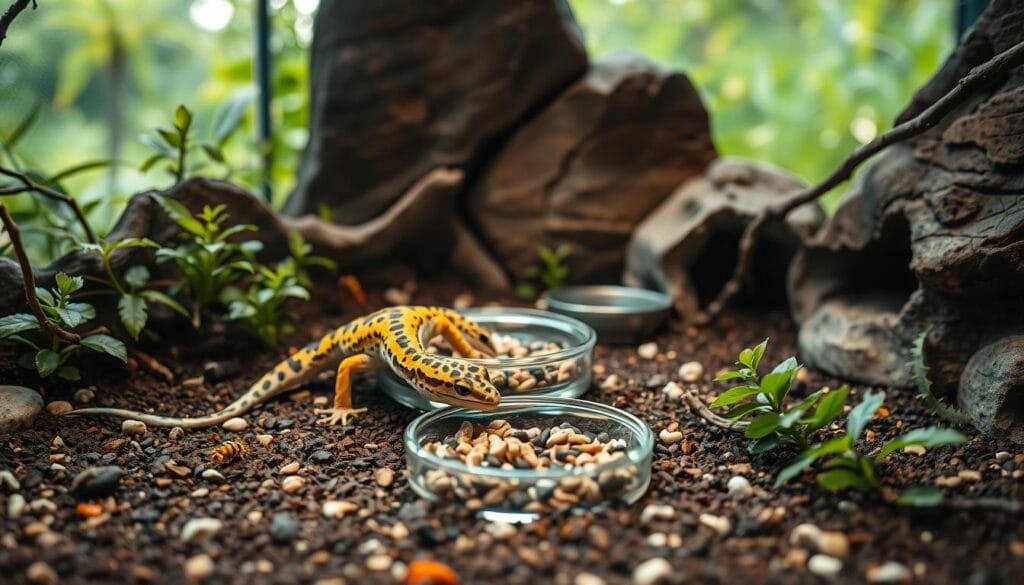
A clean and quiet area is crucial for your gecko to hunt safely. Make sure the enclosure floor is free from loose substrate that could be swallowed. Use a flat surface, like a slate tile or a dedicated feeding dish, to prevent your gecko from eating bedding.
If you’re not sure about the best feeding practices, learn more about what should leopard geckos eat. A clutter-free feeding zone helps your gecko focus on its prey. This makes hunting more efficient.
Managing Temperature and Humidity Levels
Proper environmental control is vital because it affects your gecko’s metabolic rate and appetite. Leopard geckos need external heat to digest their food well. If it’s too cold, they might not eat or have trouble digesting.
- Keep a consistent warm side temperature for digestion.
- Ensure humidity levels are in the recommended range.
- Use a digital thermometer and hygrometer for accurate readings.
Consistent warmth is essential for a healthy metabolism. When your gecko is warm, it’s active and ready to hunt. Always check your heat sources before feeding.
Reducing Stress During Feeding
Reducing stress during feeding helps your pet stay calm and interested in food. Sudden movements or loud noises can scare a gecko and make it lose interest. Feed your gecko during its natural active hours, like dusk or dawn.
Avoid handling your gecko before or after eating. Let it eat in a quiet, undisturbed place. This builds confidence and encourages natural hunting behaviors. When your gecko feels secure, it’s more likely to eat well.
Common Mistakes in Feeding Leopard Geckos
Feeding your leopard gecko right is more than just throwing in insects. Even the best owners can make mistakes that hurt their pet’s health. Spotting these errors early helps keep your gecko happy and healthy for a long time.
Overlooking Hydration Needs
Many owners focus too much on food and forget about water. Water is key for a healthy diet for leopard gecko. Make sure your pet always has clean, fresh water. This helps with digestion and keeps your gecko’s metabolism working well.
Neglecting Variety in Their Diet
Feeding only one type of insect is a big mistake. It can lead to nutritional problems. A varied diet keeps your pet interested and ensures they get all the nutrients they need.
- Rotate between crickets, mealworms, and dubia roaches.
- Use gut-loading techniques to boost the nutritional value of every feeder.
- Avoid feeding only one type of insect for extended periods.
Ignoring Signs of Dietary Issues
Your gecko may show signs if it’s not getting the right food. Ignoring these signs can cause serious health problems. Catching issues early is key to keeping your gecko healthy.
Watch for changes in appetite or stool quality. These are often the first signs of a problem. If you see these changes, check your feeding plan right away. Keeping your gecko’s diet healthy is an ongoing task that requires watching and adjusting.
Recognizing Dietary Health Issues
Your gecko’s health shows in their diet. Watching your pet closely helps meet their leopard gecko nutritional requirements for a long life. Small changes in behavior or looks can mean something’s off.
Symptoms of Nutritional Deficiencies
Nutritional gaps can be hard to spot at first. Look for lethargy, which means your pet lacks energy. Also, poor shed quality or dull skin can mean a lack of vitamins.
Soft or rubbery bones are a big warning sign of calcium deficiency. If your gecko has trouble moving or seems weak, it’s time to check their leopard gecko nutritional requirements. Regular checks can catch problems early.
Common Illnesses Linked to Diet
Bad diet habits can lead to serious health issues. Metabolic Bone Disease (MBD) is caused by calcium and Vitamin D3 lack, leading to bone deformities. Impaction, where a gecko can’t digest food or substrate, is another common problem.
These issues can be avoided with the right diet and avoiding bad substrates. A balanced diet and natural feeding habits can greatly reduce the risk of these diseases.
When to Consult a Veterinarian
At times, only a vet can save your pet. If your gecko loses weight, stops eating, or shows physical deformities, call an exotic animal vet. Don’t wait for symptoms to get worse, as early treatment is key.
A vet can create a diet plan tailored to your gecko’s needs. They can also do tests to find infections or parasites. Keeping a diet and behavior log helps your vet give the best care.
| Condition | Primary Cause | Key Symptom |
|---|---|---|
| Metabolic Bone Disease | Calcium/D3 Deficiency | Soft or deformed limbs |
| Impaction | Improper substrate/diet | Lethargy and constipation |
| Vitamin A Deficiency | Poor diet variety | Eye issues and poor shed |
Seasonal Variations in Diet
Seasonal changes affect your leopard gecko’s natural rhythm. These reptiles are very sensitive to their surroundings. You might see changes in their appetite as the seasons change. Adjusting their feeding schedule for leopard gecko health helps them through these changes.
Adjusting Diet in Different Seasons
In winter, it gets colder and darker. Your gecko might eat less because they’re less active. It’s completely normal for them to eat less during this time, as their metabolism slows down to save energy.
Keep an eye on their weight during these cooler months. They might skip a meal or two, but they shouldn’t lose a lot of weight. If you see a big drop in weight, talk to a professional. They can help make sure your feeding schedule for leopard gecko is right for their activity level.
Impact of Breeding Season on Nutrition
The breeding season increases your pet’s energy needs. Females need more protein and minerals to support egg production. Make sure they have plenty of high-quality calcium and vitamins to avoid deficiencies.
Extra nutrition helps them stay strong during this challenging time. Watch their body condition closely, as breeding can be hard on them. A well-thought-out feeding schedule for leopard gecko is key to their health and vitality.
Recognizing Natural Behaviors
Many new owners worry when their gecko’s eating habits change. But these changes are often due to their natural cycles. By understanding these cycles, you can tell if it’s just a seasonal change or a health issue.
Consistency in your care routine is important for your pet’s stability. Recognizing these patterns makes you a more attuned and effective keeper. Trusting your gecko’s natural cycle will make your experience together more rewarding.
The Role of Hydration in Diet
Hydration is key for your gecko’s health. Many owners focus on insects, but water is crucial for digestion and metabolism. Without enough moisture, your pet may have trouble digesting food.
Providing Fresh Water: Best Practices
Use a shallow, stable water dish that’s easy for your gecko to reach. Daily cleaning is a must to avoid bacteria and biofilm. Place the dish in a cool corner to reduce evaporation and keep the water temperature steady.
“Hydration is the silent partner to nutrition; without it, even the best diet will fail to sustain a reptile’s complex biological needs.”
Signs Your Gecko is Dehydrated
Watch for signs of dehydration in your pet. If you see these symptoms, your gecko might not have enough moisture. Early detection is crucial to avoid serious health issues.
| Indicator | Observation | Action Required |
|---|---|---|
| Eyes | Sunken or dull appearance | Increase humidity/water access |
| Skin | Stuck shed or wrinkled texture | Check hydration and environment |
| Activity | Lethargy or lack of appetite | Consult a veterinarian |
Using Hydration Supplements
Standard water might not be enough during stress or illness. Consider leopard gecko supplements for electrolyte balance. These products support leopard gecko nutritional requirements when your pet is recovering or facing environmental changes.
Always talk to a professional before adding supplements to your gecko’s water. The right use ensures your pet gets the needed support without upsetting their internal balance.
Safe Feeding Practices
Keeping your leopard gecko safe during mealtime is key for every owner. Choosing the best food for leopard gecko is important, but how you feed it matters too. A clean, consistent routine helps avoid stress and health problems for your pet.
Avoiding Toxic Foods
Not all insects or plants are safe for your reptile. Avoid wild-caught insects because they can have harmful chemicals. Also, never feed fireflies as they are very toxic.
Make sure your feeder insects are bred for reptiles. Never give your gecko human food, as it can harm them. A commercial diet is the safest choice for your gecko’s health.
Hygiene Considerations for Feeders
Keeping the feeding area clean is crucial to avoid bacteria. Wash all dishes and tongs with a reptile-safe cleaner after each use. Don’t leave uneaten food in the enclosure as it can rot and attract pests.
Check the enclosure for waste after feeding. A clean habitat helps prevent health issues and keeps your gecko’s immune system strong. Consistency in hygiene is key to your pet’s well-being.
Safe Handling of Live Food
Properly gut-loading insects for leopard gecko health is important. Feed your crickets or mealworms high-quality food before offering them as a meal. Store live feeders in well-ventilated containers to keep them healthy.
Use feeding tongs to handle live food safely. This helps your gecko associate the tongs with food, reducing stress. Always watch your gecko while it eats to ensure it catches its prey without swallowing substrate.
| Practice Category | Recommended Action | Risk to Avoid |
|---|---|---|
| Insect Sourcing | Use reputable breeders | Wild-caught insects |
| Dish Hygiene | Daily sanitization | Leftover decaying food |
| Nutritional Prep | Gut-loading 24 hours | Feeding empty insects |
| Feeding Method | Use feeding tongs | Hand-feeding risks |
Conclusion: Ensuring a Well-Rounded Diet
Optimal nutrition is key for a long, healthy life for your reptile. You have the power to improve your pet’s health through consistent habits and careful observation.
Essential Habits for Success
Keeping a strict feeding schedule is crucial for your leopard gecko’s health. Use high-quality gut-loaded insects and professional supplements like Repashy Calcium Plus. A good diet for your gecko’s health requires your attention to detail and quality ingredients.
The Value of Daily Observation
Watch your gecko closely during meals to notice any changes in appetite or behavior. Spotting these early helps you make necessary changes before problems get big. Keeping a log of what your pet eats helps track trends over time.
Building a Lasting Bond
Feeding time is a special chance to bond with your gecko in a calm setting. These moments build trust and make caring for your pet rewarding. Enjoy nurturing your companion as they grow and thrive under your care.