
Storms, wildfires, floods, and unexpected power outages can turn a normal day into a logistics problem quickly—especially when your pet depends on carefully managed heat, humidity, ventilation, or diet. A practical exotic pet emergency preparedness plan helps you act before roads close or supplies become scarce.
This guide is a planning checklist, not a substitute for species-specific veterinary advice. Care needs vary widely between a gecko, parrot, rabbit, rat, tortoise, or amphibian. Ask an experienced exotic-animal veterinarian about your individual animal before an emergency.
Table of Contents
Start with a two-option evacuation plan
Decide now whether you will shelter in place or leave, and write down the trigger for each choice. Identify a destination that explicitly accepts your species; many emergency shelters cannot house animals, and some facilities have restrictions. Keep a backup destination and a trusted “buddy” who can collect your pet if you are away.
Ready.gov recommends including pets in the household disaster plan and keeping both a larger stay-at-home kit and a lightweight travel kit. Review its official pet disaster-planning guidance and check local emergency-management notices before a storm or other hazard.
Build an exotic-pet emergency kit
Store the kit where you can grab it without entering the enclosure room. Use sealed, clearly labeled containers and rotate perishable supplies.
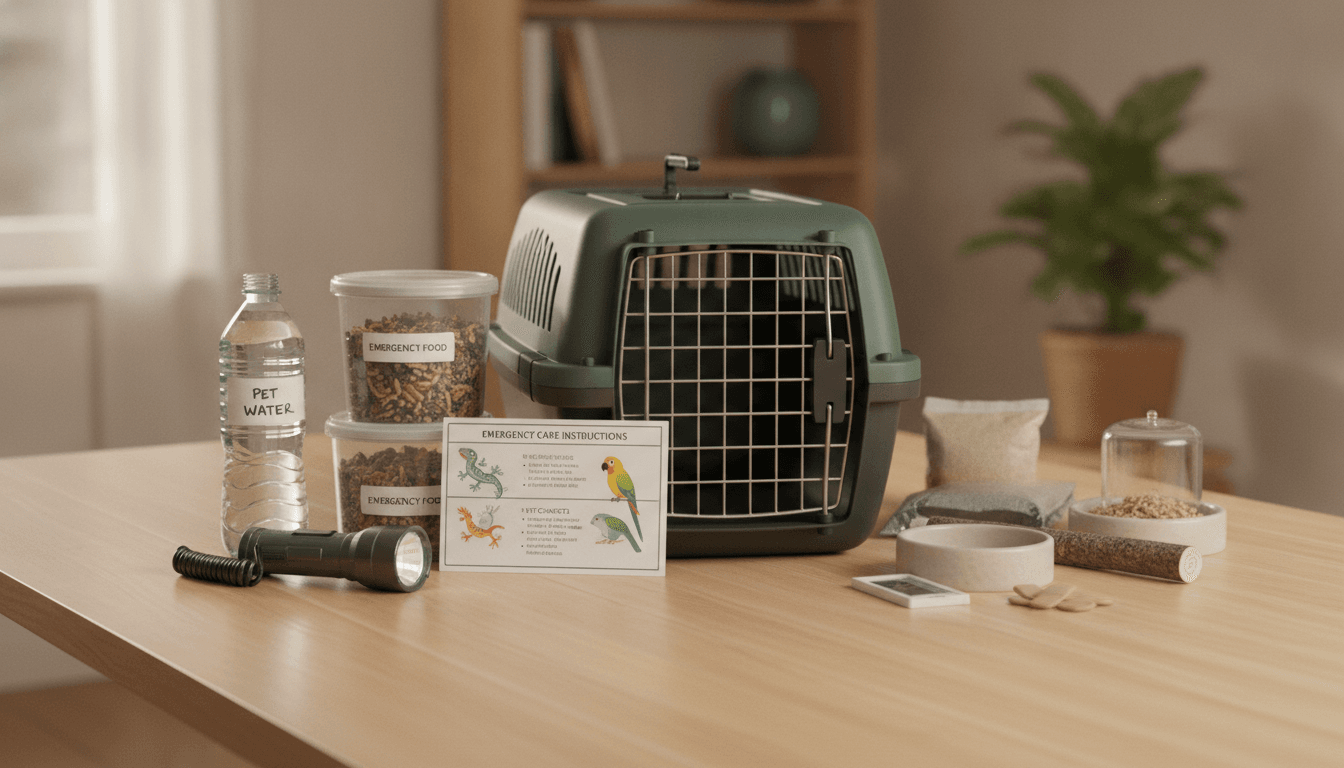
- At least several days of the food your pet already eats, plus appropriate feeding tools.
- Water, spill-resistant bowls, and a way to measure or dispense it.
- A secure, species-appropriate carrier or travel enclosure with ventilation and escape-proof fasteners.
- Printed care instructions: normal diet, handling notes, enclosure settings, daily routine, and your veterinarian’s phone number.
- Recent photos, identification details, medical and adoption records, and proof of ownership in a waterproof sleeve.
- Familiar bedding or a washable comfort item, towels, disposable gloves, paper towels, and waste bags.
- Basic cleaning supplies, a spare thermometer or hygrometer when relevant, batteries, a flashlight, and charging cables.
- Prescribed medication only as directed by the prescribing veterinarian. Do not add over-the-counter drugs or home remedies without professional advice.

Prepare the carrier before you need it
Choose containment that prevents escape while allowing adequate airflow. A carrier that works for a cat may not be suitable for a snake, bird, rabbit, or small mammal. Place the carrier near the habitat, practice calm, brief transfers, and never wait until the warning siren to discover that the door sticks.
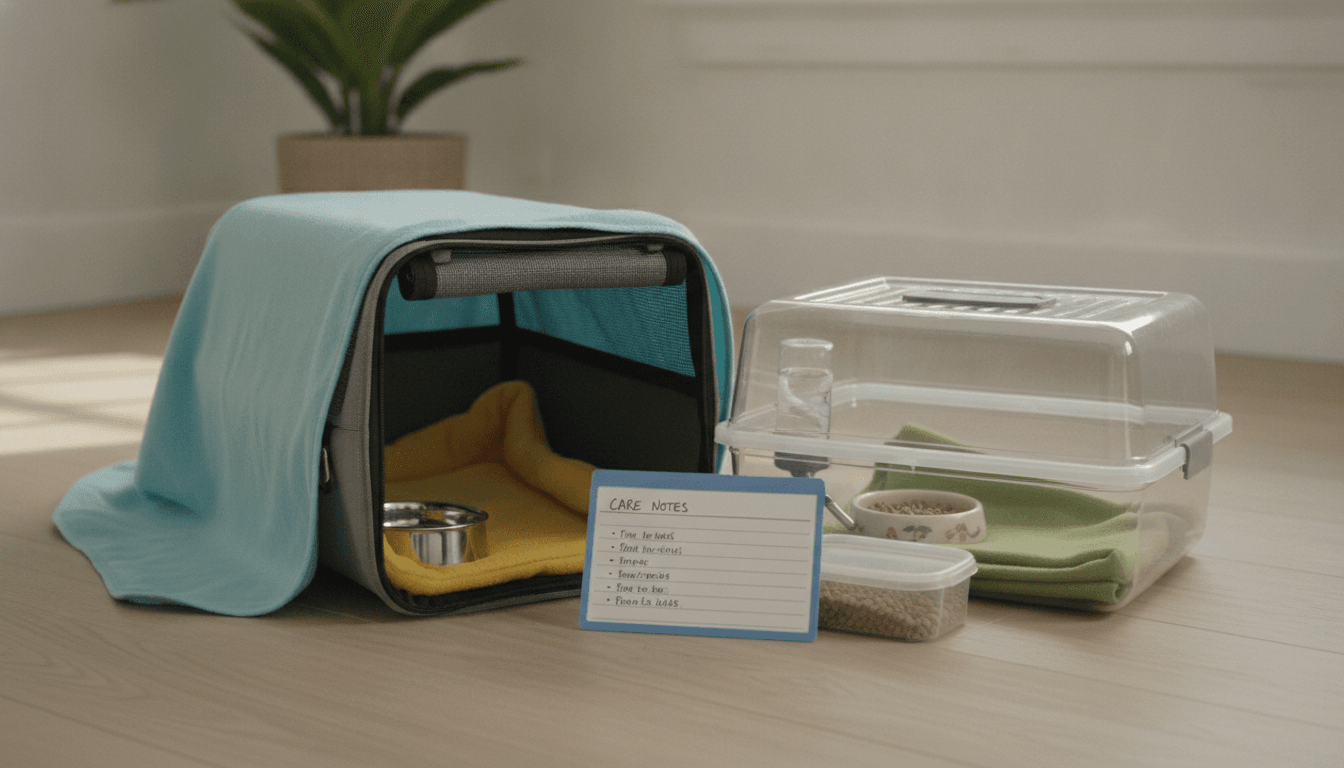
For travel, keep the enclosure stable and protected from direct sun, drafts, smoke, and extreme temperatures. Do not leave an animal unattended in a parked vehicle. If your pet is frightened, minimize handling and noise; a familiar towel can reduce visual stimulation without blocking ventilation.
Species-specific contingencies
Reptiles and amphibians
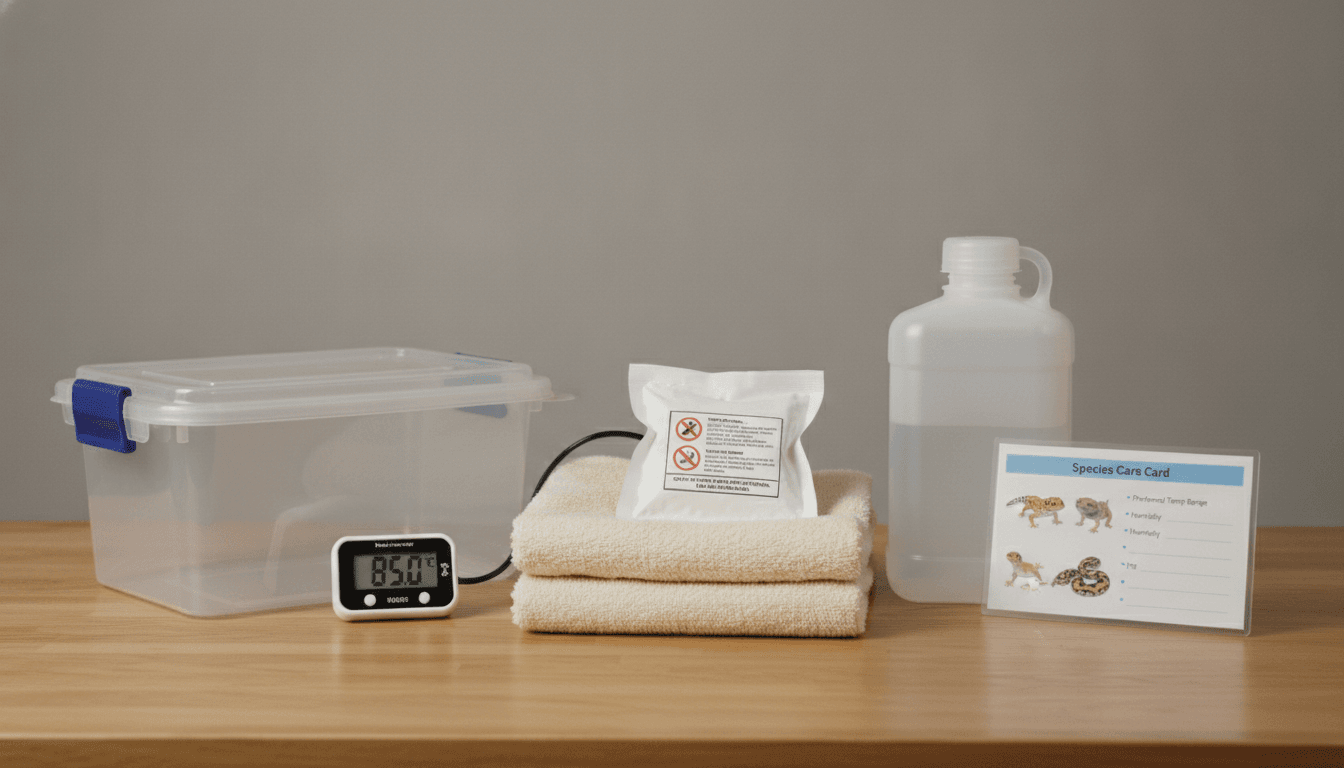
Write down the normal temperature and humidity ranges for your species and life stage, along with how you monitor them. During an outage, avoid improvising with open flames, unsafe heating devices, or direct contact between heat packs and the animal. Ask your veterinarian in advance how to manage a temporary temperature change, hydration, and feeding schedule for your species. A portable thermometer, insulated carrier, and preplanned destination are more useful than guessing.
Birds
Have a secure carrier, familiar perch or liner, food, water, and a light cover that still permits ventilation. Keep birds away from smoke, fumes, aerosol products, and rapidly changing temperatures. Never use non-veterinary sedatives. If breathing, balance, or behavior changes, contact an avian veterinarian or emergency service rather than relying on a checklist.
Small mammals
Pack familiar bedding, hay or staple food as appropriate, a stable carrier, and a spill-resistant water option. Keep rabbits, guinea pigs, chinchillas, rats, and other small mammals away from overheating, damp bedding, and household chemicals. Because species differ, record the normal diet and acceptable transport conditions for your particular pet.
Protect the home if you shelter in place
Move carriers and supplies to a quiet interior area away from windows, falling objects, smoke, and floodwater. Secure enclosures against tipping, keep doors latched, and check batteries and monitoring equipment. Do not use generators, charcoal grills, or fuel-burning heaters indoors; carbon monoxide is an immediate household hazard.
Keep a written observation log if routines change: eating, drinking, elimination, activity, and enclosure readings. Seek urgent veterinary guidance for signs such as difficulty breathing, collapse, uncontrolled bleeding, seizures, severe weakness, or a sudden major change from normal. The safest next step depends on the species and situation.
Check supplies and contacts each season
Twice a year, inspect carrier hardware, replace expired food or batteries, update photos and records, and confirm that your destination still accepts your animal. Save the numbers for your exotic veterinarian, an after-hours clinic, local emergency management, and a trusted caregiver.
The ASPCA disaster-preparedness checklist covers household planning and evacuation basics. The American Red Cross pet disaster guidance also emphasizes secure carriers, food, water, and records; adapt those general recommendations to your animal’s species-specific requirements.
Quick checklist
- Carrier tested and accessible.
- Food, water, medication, records, and care instructions packed.
- Two destinations and one backup caregiver confirmed.
- Species-specific temperature, humidity, ventilation, and handling notes written down.
- Emergency contacts saved offline and supplies reviewed.
Preparedness is not about predicting every emergency. It is about reducing rushed decisions while keeping your exotic pet contained, hydrated, protected from hazards, and connected to appropriate professional care.
1 thought on “Exotic Pet Emergency Preparedness: A Practical Storm and Evacuation Checklist”
Comments are closed.