
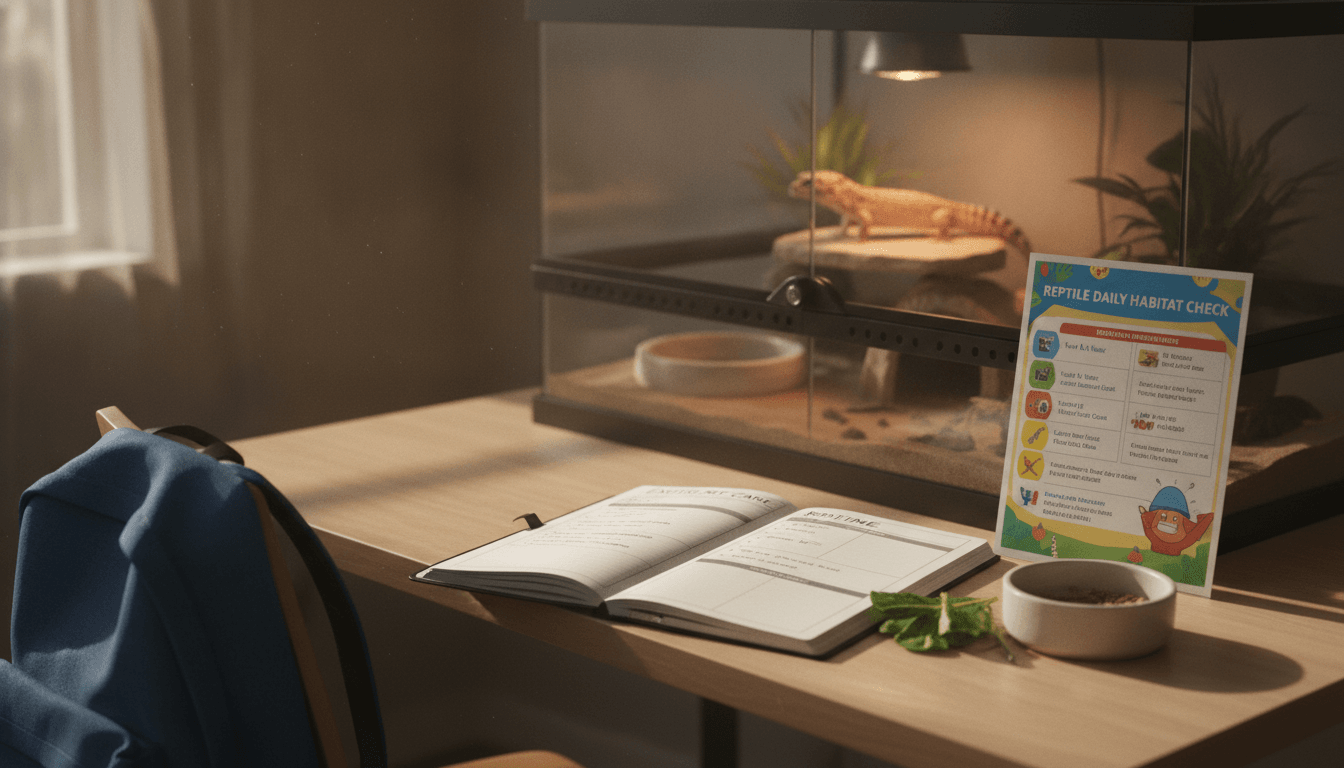
When school, work, or extracurricular schedules change, an exotic pet’s day can become unpredictable too. A calmer approach is to build a simple, repeatable care rhythm before the household gets busy. This guide covers practical ways to adjust feeding, lighting, cleaning, enrichment, and observation for reptiles, birds, and small mammals without treating one routine as a universal prescription.
Start with a species-appropriate baseline
Write down what your pet currently receives each day: food and water checks, light or heat checks where applicable, exercise or supervised out-of-enclosure time, spot cleaning, and quiet rest. The right timing depends on species, age, health, enclosure design, and advice from an exotic-animal veterinarian. A schedule is a reminder system, not a replacement for observing the individual animal.
Move timing gradually when you can
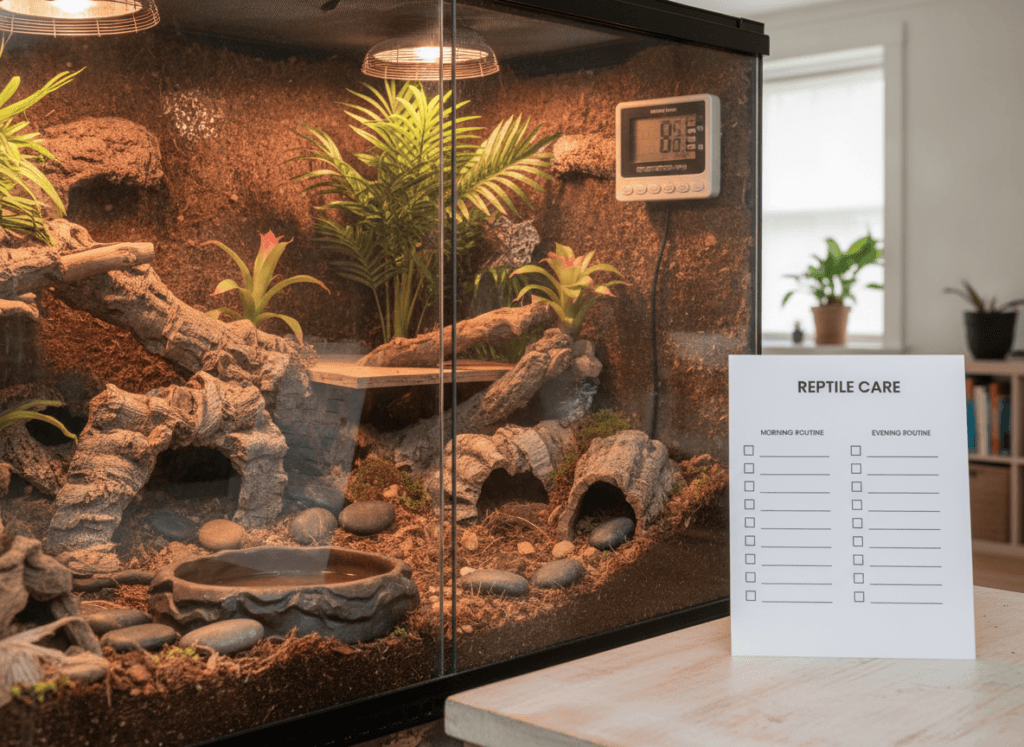
If a new school or work timetable changes when you can provide care, shift routine tasks in small steps rather than making a sudden change. Keep the essentials consistent: fresh water, appropriate food, secure housing, suitable environmental monitoring, and a predictable period of darkness or quiet when the species requires it. Never delay a time-sensitive treatment or alter a veterinary plan without asking the prescribing clinic.
- Prepare food, supplies, and clean water the night before a busy morning.
- Use a written log for feeding, weights when your veterinarian recommends them, and unusual observations.
- Check that timers, thermostats, thermometers, and securely latched enclosures are working.
- Keep a backup caregiver’s contact details and written instructions where an adult can find them.
Make enrichment easy to repeat
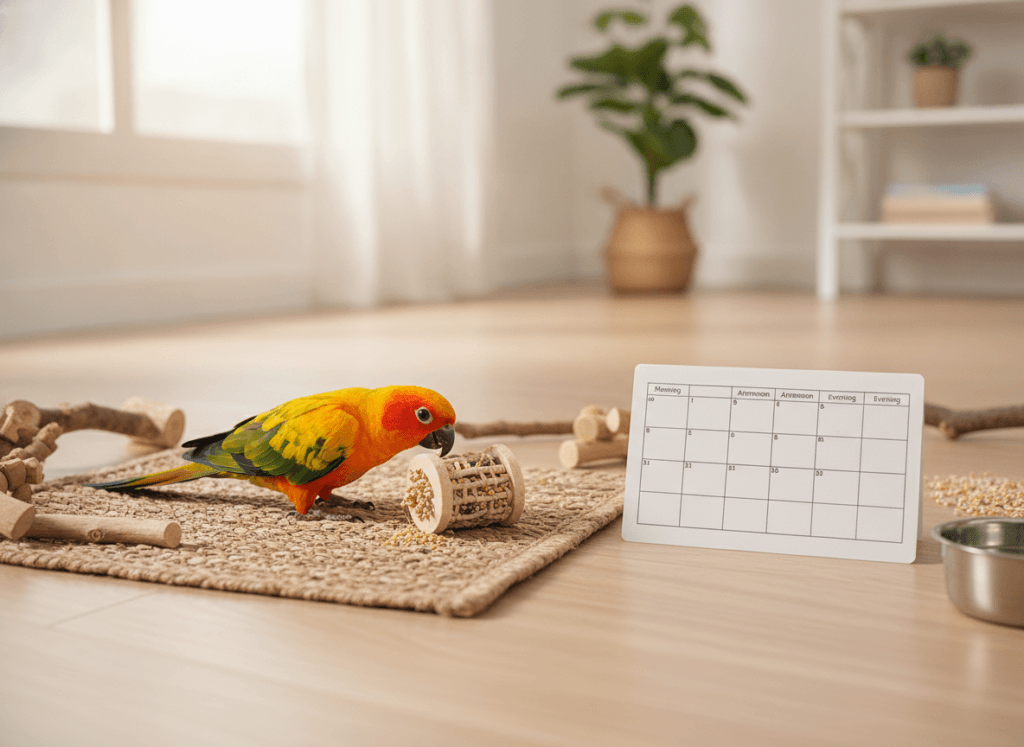
Short, appropriate enrichment sessions are often easier to maintain than ambitious projects. For birds, that might mean rotating safe, size-appropriate foraging opportunities or supervised interaction. For small mammals, it could be a changed tunnel route, scatter-feeding when suitable for the species, or a safe chew item. For reptiles, enrichment must fit the animal’s natural history and enclosure: a hide, climbing opportunity, or exploration item should not compromise ventilation, temperature zones, security, or hygiene.
Plan for the quieter hours
A quieter home after people leave can be a useful time to review the environment, but avoid assuming that every pet needs extra handling or background noise. Maintain the species’ normal light and dark pattern, offer a secure retreat, and keep household sounds and activity within a range the animal already knows. Ask an exotic-animal veterinarian for individualized advice if appetite, activity, breathing, droppings, posture, or other normal patterns change.
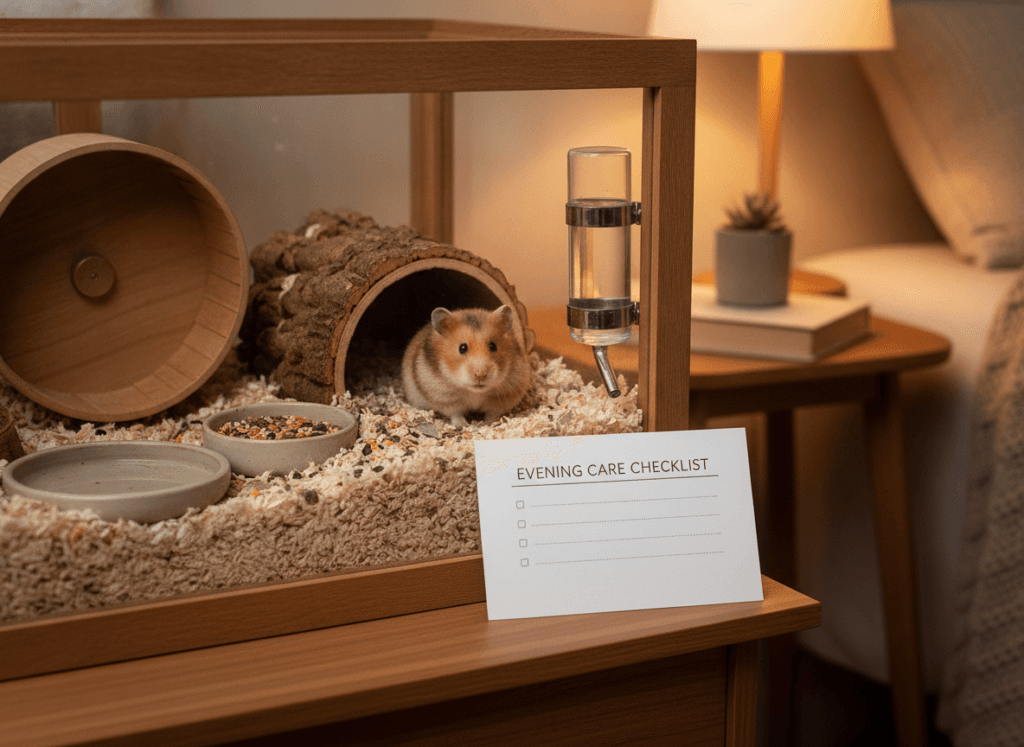
A five-minute departure checklist
- Look at the animal before leaving: note normal posture, responsiveness, and activity for that individual.
- Confirm water, food, enclosure security, and any species-specific environmental readings that your care plan requires.
- Remove obvious hazards such as loose cords, unsafe food, or unstable enrichment.
- Check the room for temperature, drafts, direct sun, fumes, and access by other pets.
- Record anything unusual and contact a qualified exotic-animal veterinarian promptly when a change concerns you.
When a routine change needs professional advice
Do not use a checklist to diagnose illness. A persistent change in eating, drinking, droppings, breathing, movement, weight, or responsiveness deserves professional guidance, especially because many exotic species can hide signs of illness. Use a veterinarian experienced with your species for diagnosis and treatment. The Association of Avian Veterinarians and the Association of Exotic Mammal Veterinarians provide educational resources and professional directories; reptile keepers can also start with the RSPCA’s reptile-care information and then confirm details with a qualified clinician.
Sources and further reading
- Humane Rescue Alliance: preparing pets for back-to-school routines
- RSPCA: care and welfare information for other companion animals
- Association of Exotic Mammal Veterinarians: owner education and veterinary resources
- Association of Avian Veterinarians: bird health education and veterinary resources
Bottom line: Keep the essentials dependable, change timing thoughtfully, make enrichment manageable, and ask a qualified exotic-animal veterinarian when your pet’s normal pattern changes.