
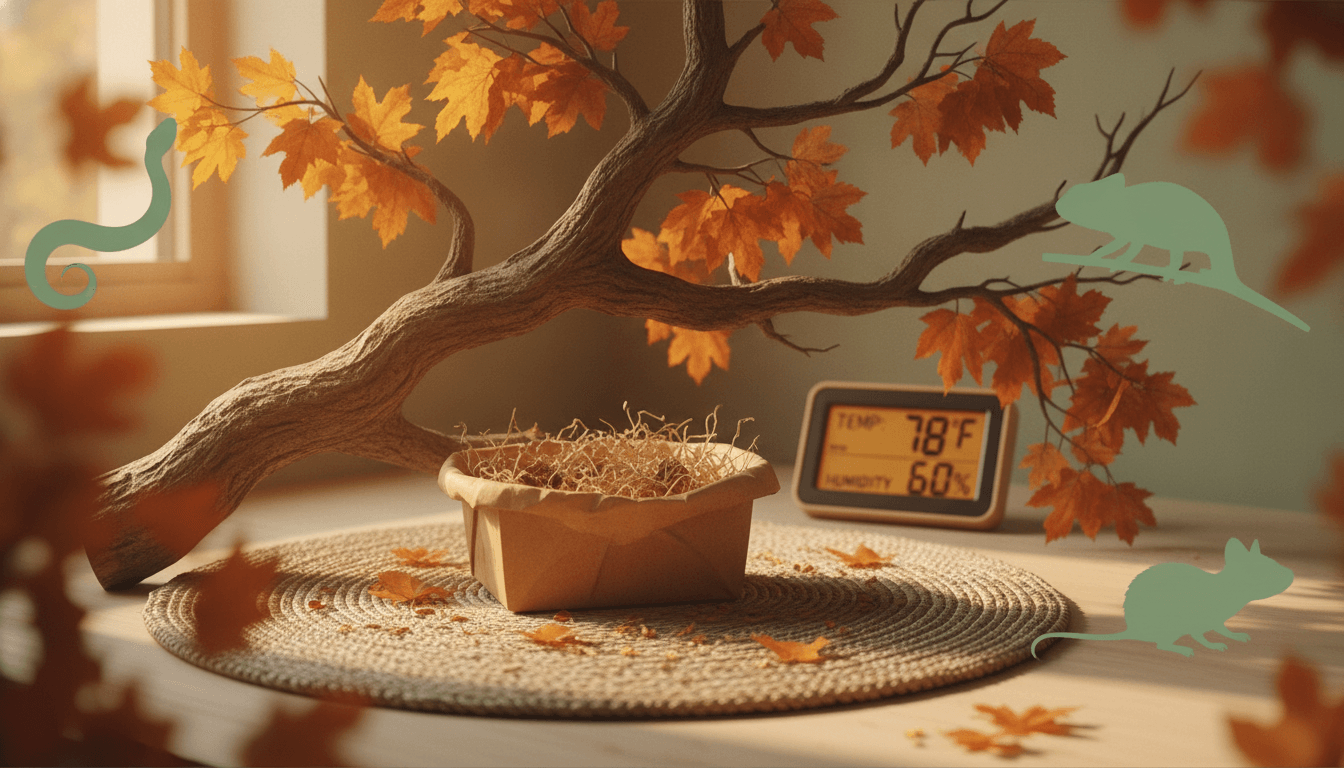
As daylight shifts and cooler evenings keep more pets indoors, enrichment becomes a practical way to support normal exploration, foraging, and choice without turning your pet’s habitat upside down. The best autumn setup is not the busiest one: it is predictable, species-appropriate, easy to clean, and easy to remove if your pet ignores it or seems uneasy.
This guide covers a safe starting framework for pet birds, reptiles, and small mammals. It does not replace a species-specific care sheet or an examination by an exotic-animal veterinarian. Enrichment should complement—not compensate for—correct nutrition, housing, temperature, lighting, humidity, sleep, and social needs.
Start with the essentials before adding enrichment
- Confirm the baseline: Check that your pet’s enclosure, diet, lighting, heat, humidity, and cleaning routine match reliable species-specific guidance.
- Measure instead of guessing: Use the appropriate, functioning gauges for your setup and record readings when you make changes. Do not copy a generic temperature or humidity number from another species.
- Preserve retreat: Every animal should be able to move away from an activity and access its normal hide, perch, nest area, or quiet zone.
- Change one thing at a time: A single new object or food-searching challenge makes it easier to notice what your pet prefers and what creates stress.
Bird enrichment: make foraging simple and observable
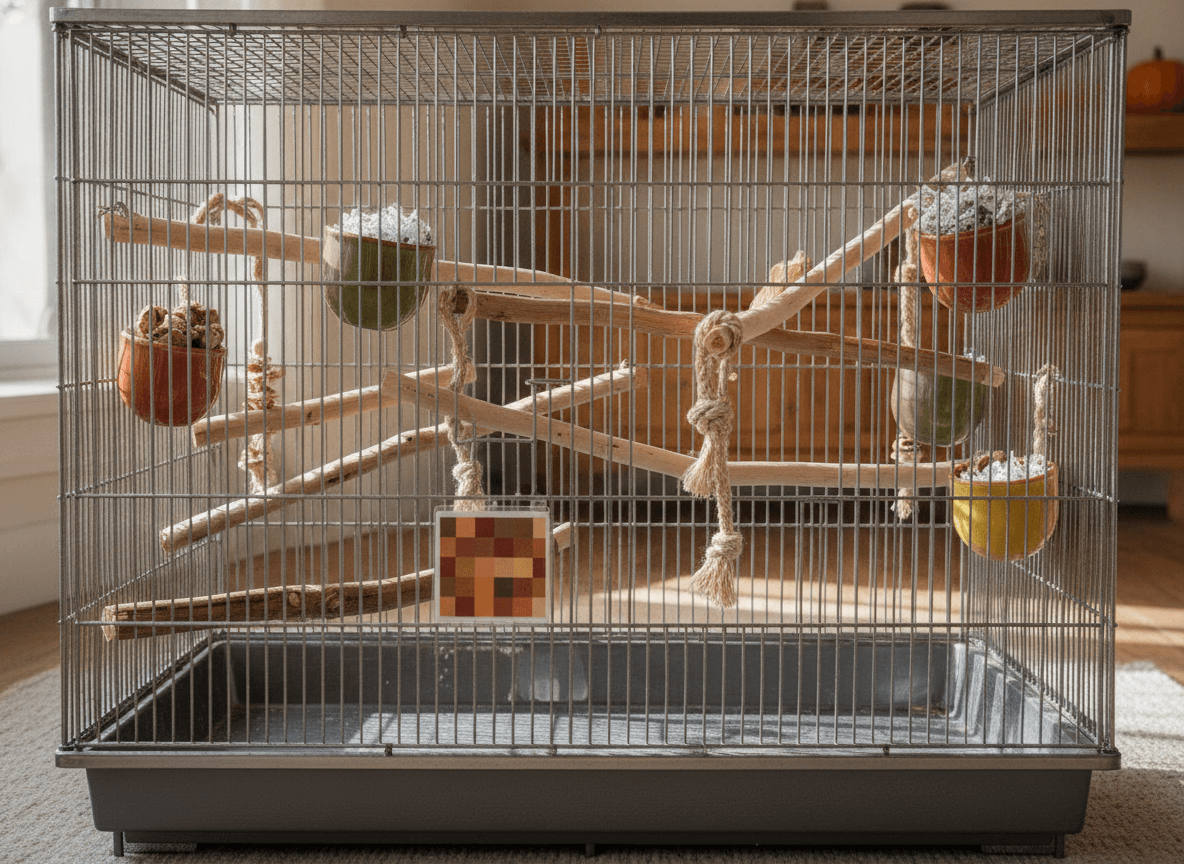
Many companion birds spend time searching, manipulating, and investigating food in natural settings. At home, you can offer a small portion of the normal diet in a paper cup, folded paper, or another bird-safe container, while keeping the rest of the meal available in the familiar way. Start with an easy search so your bird can succeed immediately.
- Use only materials you can identify as free of toxic coatings, loose fibers, sharp edges, and small parts your bird could swallow.
- Inspect new perches, toys, and fasteners for splinters, fraying, and unstable attachment points.
- Keep food-search activities separate from the bird’s clean water and normal feeding station.
- Watch body language and appetite. Remove an item if your bird becomes fearful, fixates on it, or cannot access food normally.
Rotate a small number of familiar activities rather than filling the cage with novelty. The Association of Avian Veterinarians’ pet-owner resources are a useful starting point, but your bird’s veterinarian should guide species-specific diet, safety, and behavior questions.
Reptile enrichment: support choice without disrupting the climate
For reptiles, enrichment often means opportunities to choose a hide, explore a secure texture, climb when appropriate for the species, or investigate a carefully placed scent or food item. It should never block the animal’s ability to reach its required thermal gradient, ultraviolet lighting, water, or hides.
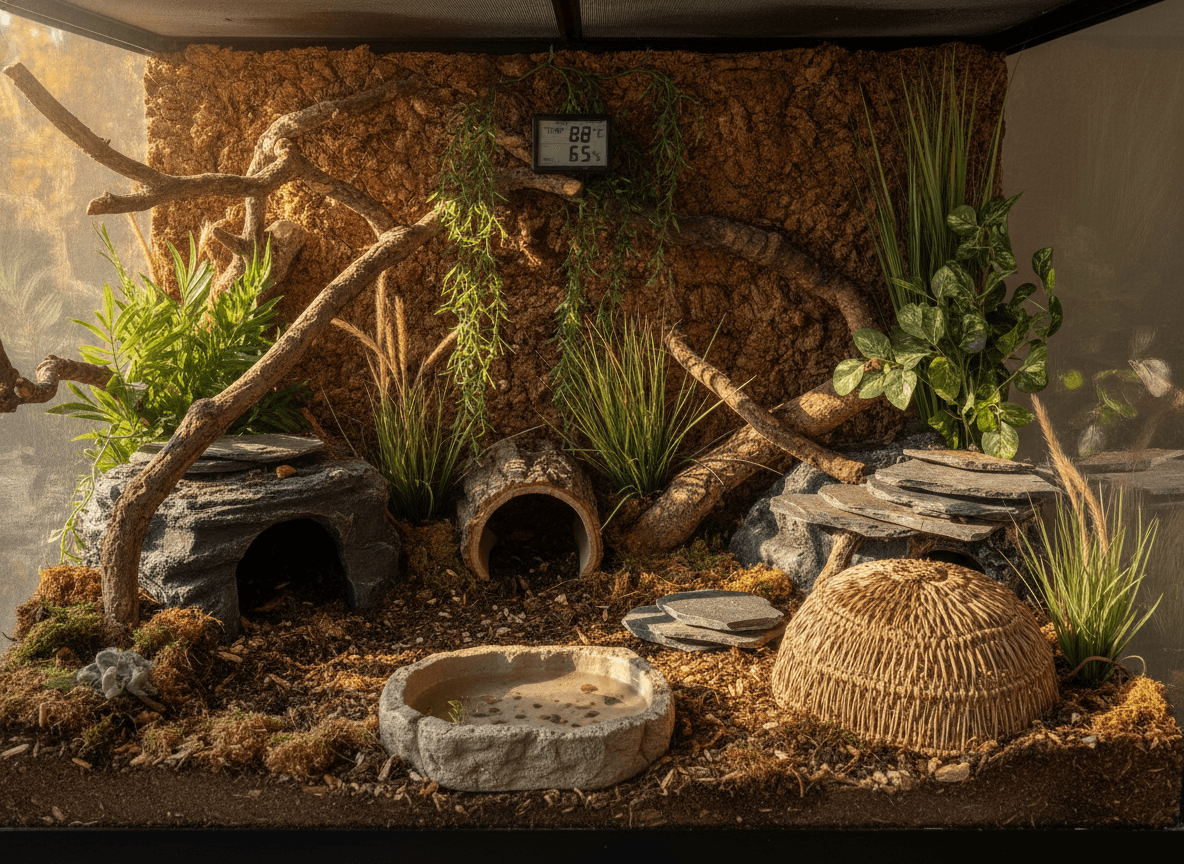
- Secure branches, platforms, and décor so they cannot fall, trap the animal, or contact a hot element.
- Choose surfaces and plants appropriate for the species; avoid collecting outdoor materials unless you know how they were sourced, cleaned, and prepared.
- Recheck temperatures and humidity after changing décor because airflow and shade can shift.
- Offer food-based enrichment only within the animal’s established diet and feeding plan; remove leftovers promptly.
Merck Veterinary Manual explains why reptile care must be species-specific. A new decoration is not a substitute for correct husbandry, and a reptile that stops eating, becomes unusually weak, or shows other concerning changes needs prompt veterinary advice rather than an enrichment experiment.
Small-mammal enrichment: dig, chew, hide, and forage safely
For many small mammals, a useful indoor rotation includes opportunities to tunnel, investigate scents, forage, chew appropriate materials, and retreat. Scatter a portion of the usual food only if you can confirm that your pet will find enough to eat and that the habitat remains hygienic.
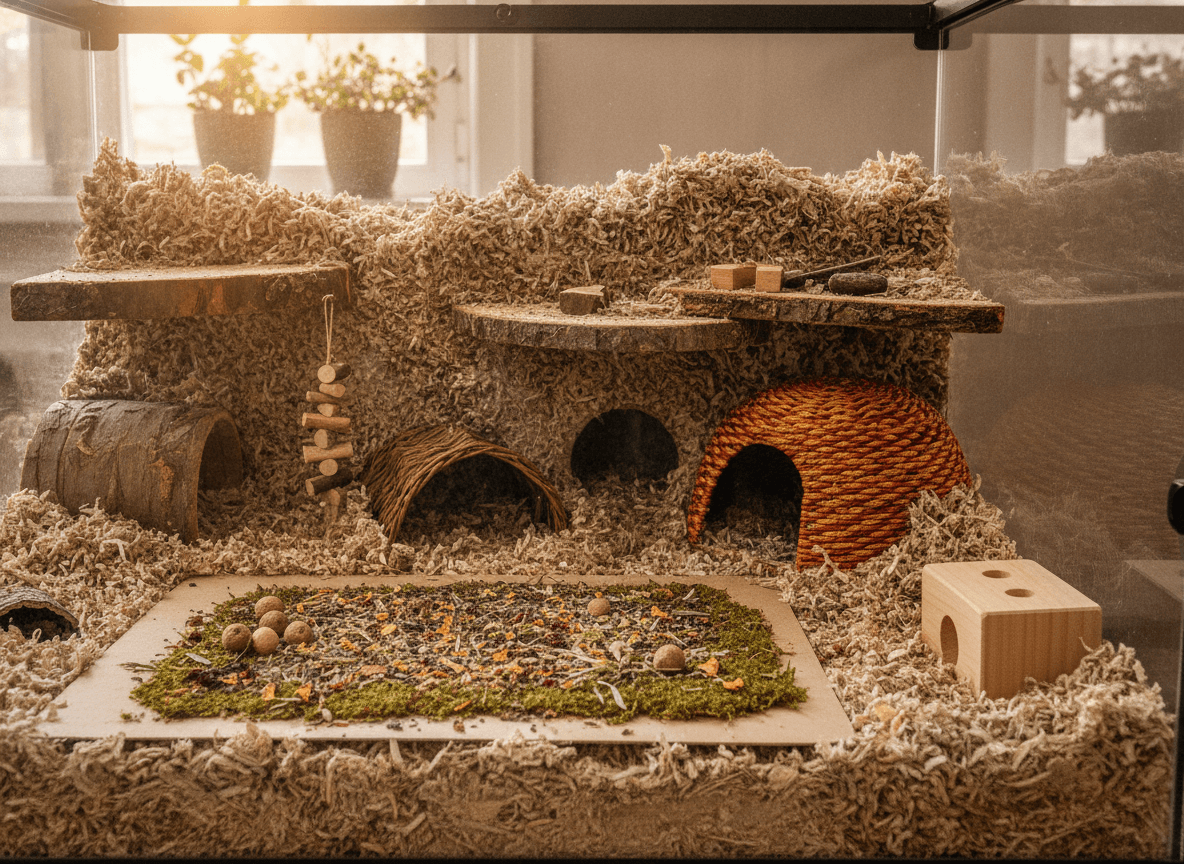
- Offer cardboard tubes or paper items only when they are plain, clean, and appropriate for your species.
- Remove anything that becomes wet, moldy, heavily soiled, or chewed into sharp or swallowable pieces.
- Keep exercise equipment stable and correctly sized; ask a veterinarian or qualified care source if you are unsure what is appropriate.
- Do not assume a toy labeled for one species is safe for another.
VCA’s animal-health library can help you identify questions to discuss with a veterinarian, but it is not a replacement for individualized care. Species, age, health history, and housing dimensions all matter.
A low-stress autumn enrichment rotation
- Observe first: Note normal eating, drinking, activity, sleep, elimination, and favorite resting locations for several days.
- Add one familiar-material activity: Use a safe item your pet already tolerates, such as a hide, paper forage, or stable perch.
- Keep the first session short: Let your pet choose whether to investigate. Never force interaction.
- Inspect afterward: Check for frayed fibers, loose pieces, wet bedding, tipped décor, or food spoilage.
- Record the response: Keep the activity if it is safe and voluntarily used; simplify or remove it if it causes avoidance or disrupts routine.
When to pause enrichment and call your veterinarian
Pause new activities if your pet has a sudden appetite or weight change, breathing difficulty, unusual weakness, repeated vomiting or diarrhea, bleeding, injury, a major behavior change, or another sign that concerns you. Do not delay professional care while trying different toys, foods, temperatures, or home remedies. For an emergency, contact an exotic-animal veterinarian or emergency clinic that confirms it treats your species.
Autumn enrichment checklist
- Baseline husbandry checked for the specific species
- One change introduced at a time
- Normal food, water, sleep, and retreat options preserved
- Materials inspected before and after use
- Temperature and humidity rechecked after habitat changes
- Pet’s voluntary response recorded
- Veterinary contact information easy to find
Seasonal enrichment works best when it is modest, observable, and reversible. Give your pet choices, protect the essentials, and let the animal’s normal behavior—not a calendar date—tell you whether an activity belongs in the rotation.