
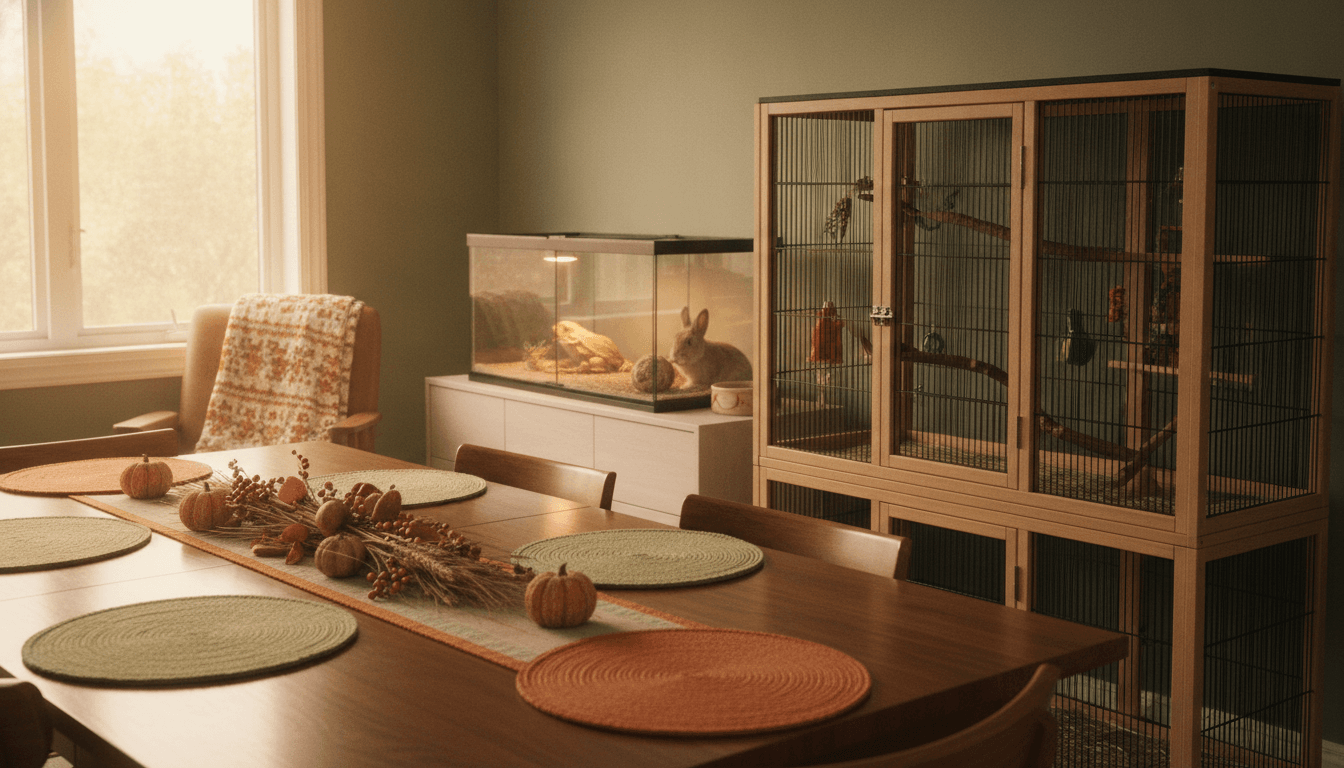
Thanksgiving can be a rewarding time at home, but a busy kitchen, unfamiliar visitors, open doors, and changed routines can create avoidable risks for birds, reptiles, small mammals, and other exotic pets. The safest plan is simple: keep your pet’s normal care routine, provide a quiet secure retreat, and make sure guests know the boundaries.
This guide is general information, not a substitute for advice from an exotic-animal veterinarian who knows your pet’s species and history. If your pet has a sudden change in appetite, breathing, activity, droppings, or behavior, contact a qualified veterinarian promptly.
Before guests arrive: make a quiet-pet plan
- Choose a calm room or enclosure location away from the kitchen, speakers, drafts, and the main doorway.
- Check latches, screens, cage doors, terrarium lids, and carrier fasteners before the gathering begins.
- Put your pet’s normal food, water, supplements, lighting, heating, and monitoring supplies on their usual schedule.
- Tell household members who is responsible for feeding and checking the pet so care is not duplicated or missed.
- Post a friendly “quiet space—please ask before entering” note if your pet needs privacy.
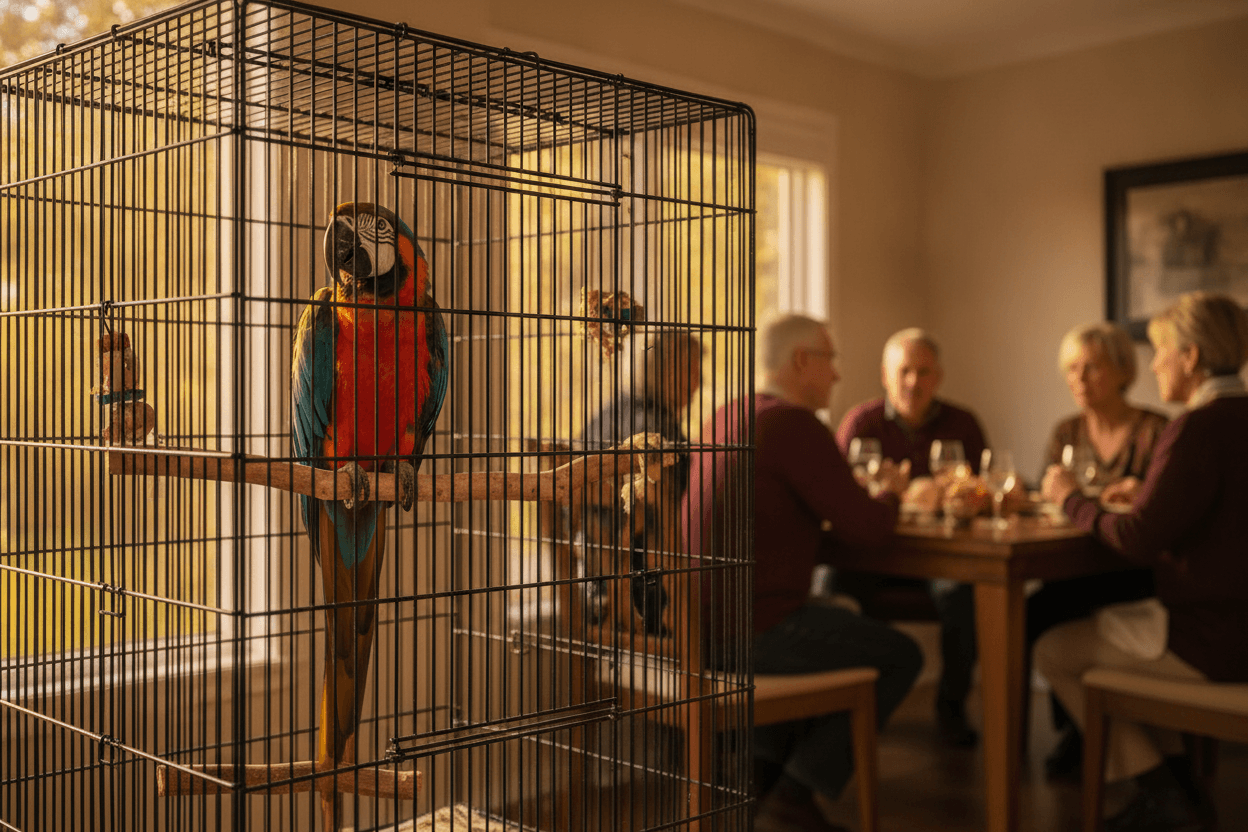
Keep holiday guests and open doors away from pets
Many exotic pets are sensitive to noise, crowding, handling, and sudden changes. A bird does not need to be passed around, and a reptile or small mammal should not be picked up by an unfamiliar guest. Keep enclosure doors closed, supervise any necessary interaction, and never rely on a child to prevent an escape.
- Keep pets away from the entryway during arrivals and departures.
- Ask guests not to tap on glass, reach into enclosures, feed treats, or take photos with flash unless you have confirmed it is appropriate.
- Wash hands after touching reptiles, amphibians, their food, or enclosure equipment. The CDC’s reptile and amphibian guidance explains why careful hand hygiene matters.
- Keep dogs, cats, and visiting animals separated from exotic pets; a calm-looking interaction can change quickly.
Protect pets from people food and decorations
Do not improvise a holiday treat for an exotic pet. Species, life stage, health status, and normal diet all matter, and foods that are harmless for people may be unsuitable for another animal. Keep plates, cooking ingredients, alcohol, chocolate, onions, garlic, very salty foods, and desserts out of reach. Ask an exotic-pet veterinarian before offering any new food.
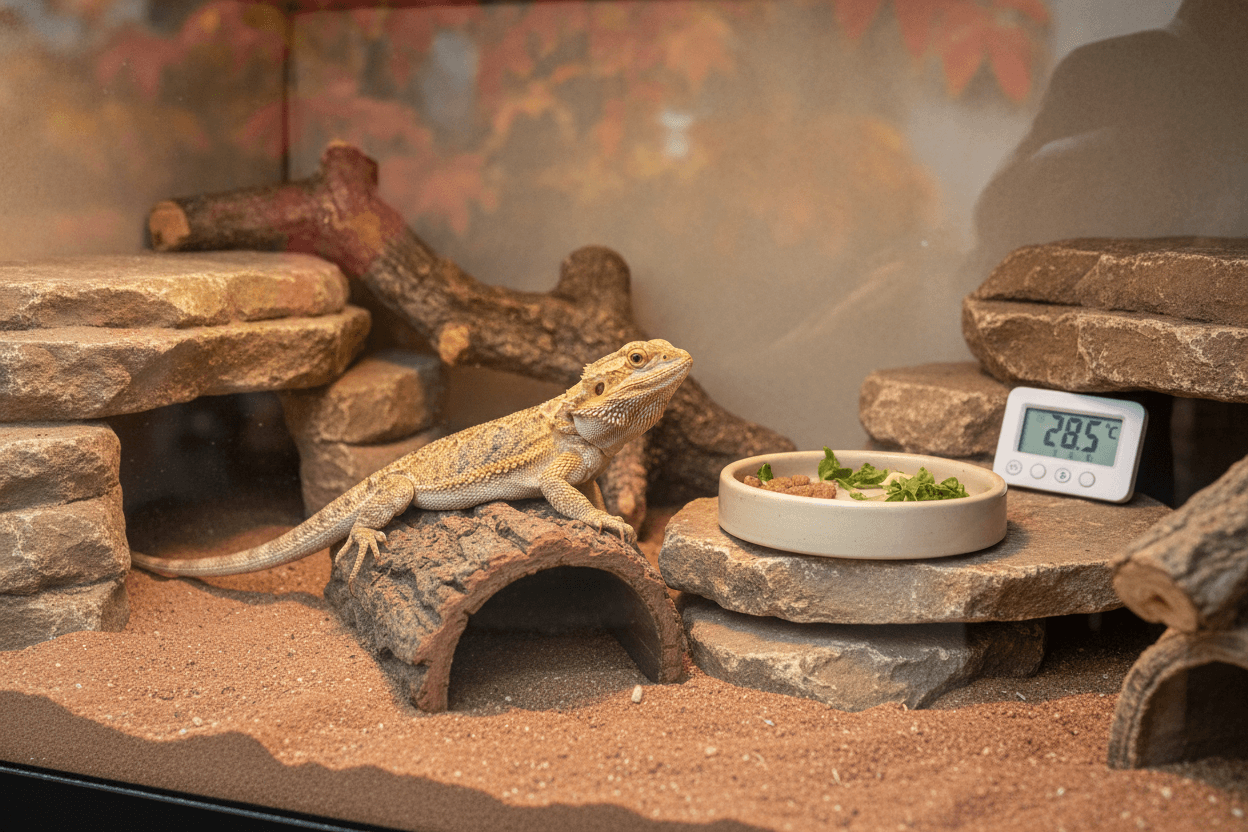
Secure candles, electrical cords, ribbon, tinsel, artificial leaves, and small decorative pieces. Never place an unfamiliar plant or scented product inside an enclosure. For reptile habitats, preserve the established temperature, humidity, lighting, and ventilation rather than changing the setup for a holiday theme.
If travel is necessary, reduce changes
The best travel plan depends on the species and the destination. Before taking a pet anywhere, ask an exotic-animal veterinarian about temperature control, ventilation, hydration, medications, and whether travel is appropriate. Use a secure, species-appropriate carrier; add familiar bedding or hay when suitable; and avoid leaving an animal unattended in a vehicle.
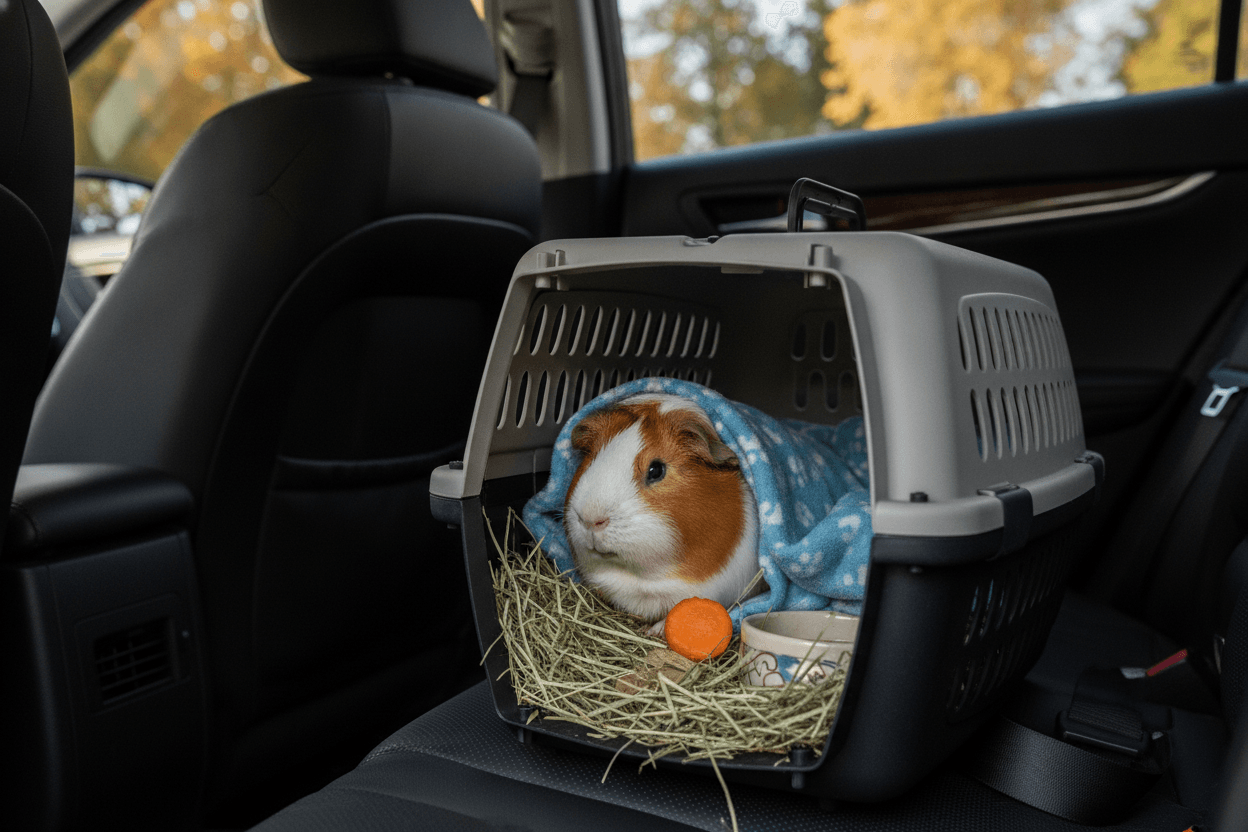
- Pack the usual food, water, supplies, and written care instructions.
- Confirm that the destination can provide the correct temperature, lighting, quiet, and enclosure security.
- Keep the carrier level, ventilated, and restrained; avoid unnecessary stops and handling.
- Have the address and phone number of an exotic-animal veterinarian near the destination.
A 10-minute Thanksgiving safety check
- Enclosure or carrier doors and latches are secure.
- Temperature, humidity, lighting, and ventilation are within the pet’s established range.
- Normal food and water are available, with no unapproved holiday foods nearby.
- Guests, children, dogs, and cats know the pet’s quiet-space rules.
- Exterior doors and windows are managed to prevent escapes.
- Emergency contact information and the regular veterinarian’s number are easy to find.
When to call your veterinarian
Contact an exotic-animal veterinarian if your pet has concerning or persistent changes such as labored breathing, weakness, repeated vomiting or regurgitation, bleeding, suspected toxin exposure, injury, inability to maintain its normal body temperature, or a marked change in eating or elimination. Do not give human medicines or attempt a home treatment unless a veterinarian directs you to do so.
Sources and responsible-care notes
The American Veterinary Medical Association’s Thanksgiving pet-safety guidance recommends keeping exotic pets away from holiday guests and planning carefully for travel. For species-specific husbandry, use care information from a qualified exotic-animal veterinarian and reputable veterinary references such as VCA Animal Hospitals’ pet health library. Requirements and risks vary by species, so local veterinary advice should take priority over general online guidance.
With a secure retreat, familiar routine, careful food boundaries, and a little advance planning, your exotic pet can have a calmer Thanksgiving while your household enjoys the day safely.