
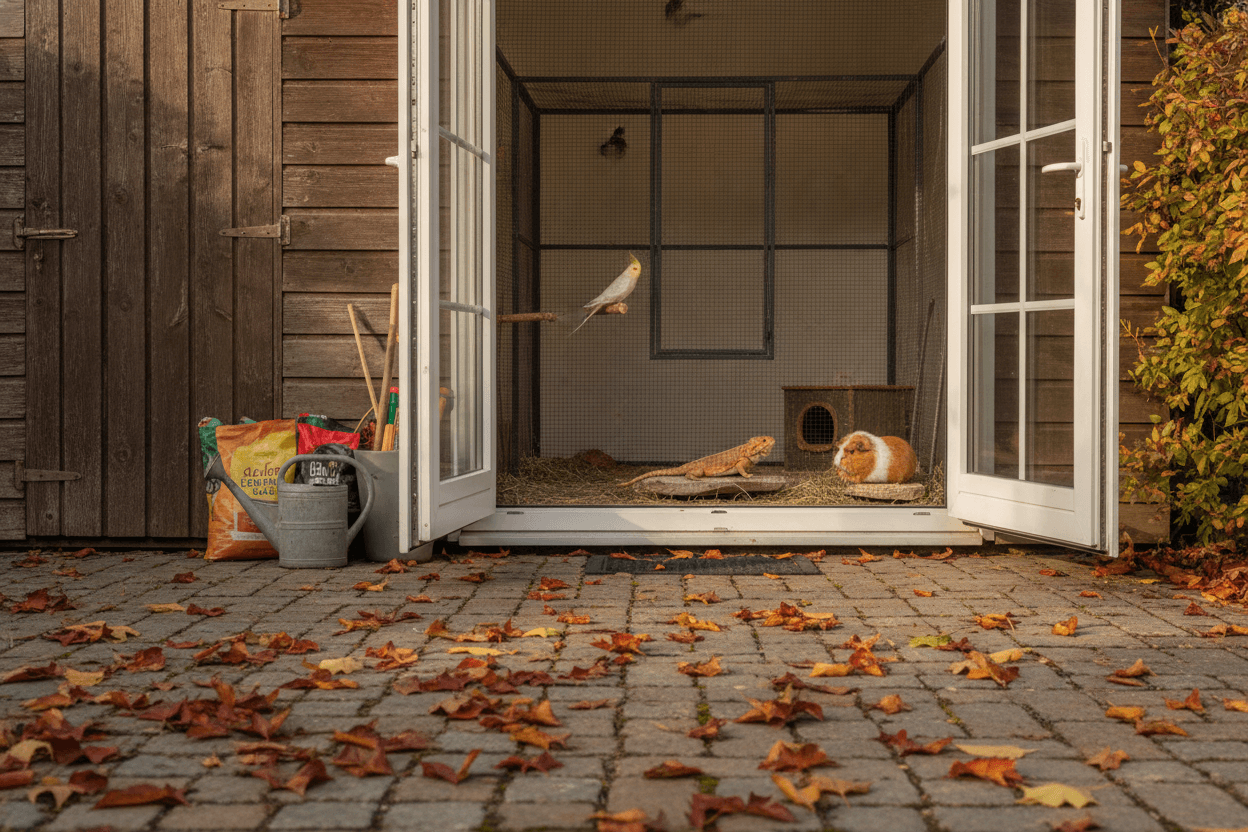
Autumn yard work can create hidden exposure risks for birds, reptiles, small mammals, and other exotic pets. Fertilizers, pesticides, treated plants, standing water, mushrooms, fallen fruit, and decorative materials can all become problems when a curious animal can reach them or when residue is carried indoors.
This guide is a practical prevention checklist—not a substitute for species-specific veterinary advice. Your pet’s normal enclosure and diet should remain the priority, and outdoor access should only happen when it is safe for that species.
Why fall yard changes deserve a safety check
Seasonal cleanup often changes the environment quickly. A lawn may be treated, a shed may be opened, leaves may hide old debris, and ornamental plants or mulch may be moved within reach. Birds can be especially sensitive to airborne irritants, while reptiles and small mammals may investigate damp soil, plant material, or spilled products by tasting or touching them.
Autumn yard and garden safety checklist
1. Inventory every product before using it
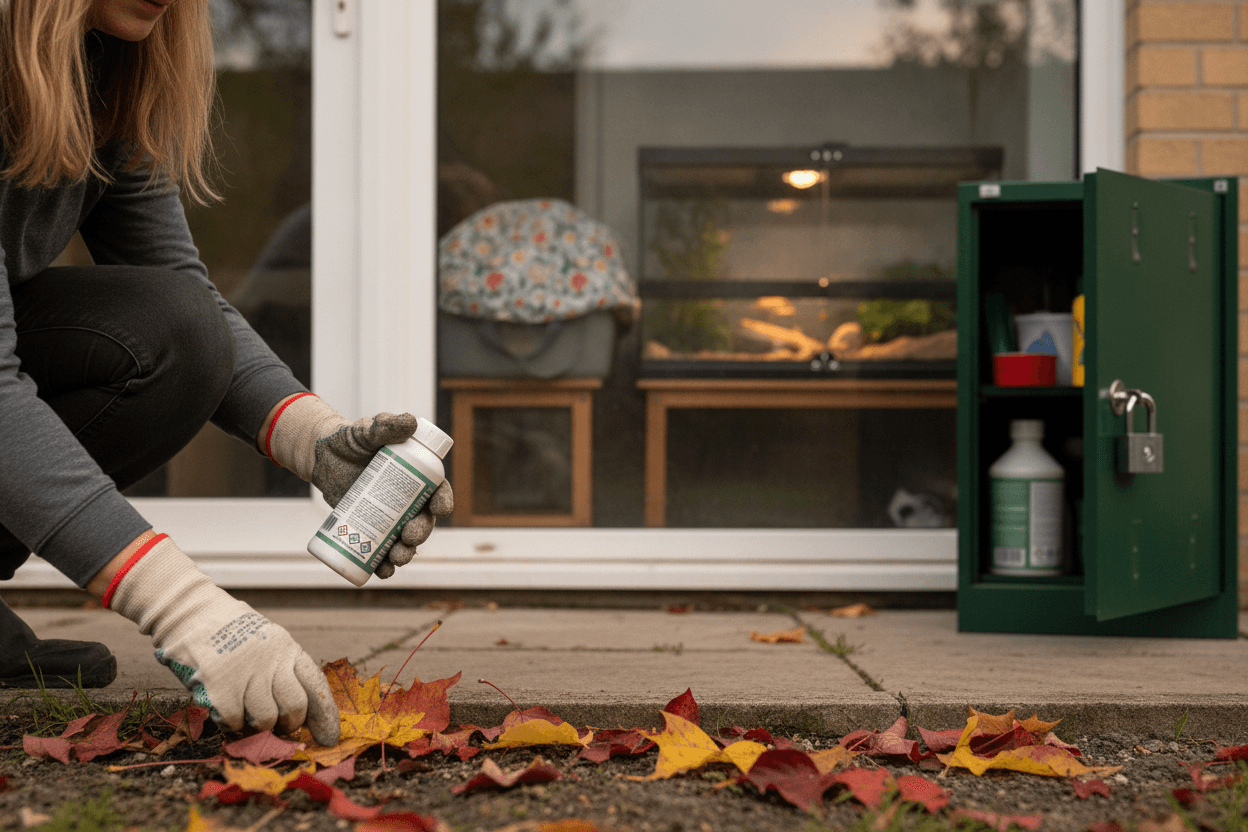
Read the complete label for fertilizers, weed controls, insecticides, slug and snail products, and other garden treatments. “Natural,” “organic,” or “pet-friendly” does not automatically mean safe for every bird, reptile, or small mammal. Keep products in their original containers, secured away from pets, food, bedding, and water dishes. Follow the product label’s application, ventilation, and re-entry instructions exactly.
2. Keep pets away during and after treatment
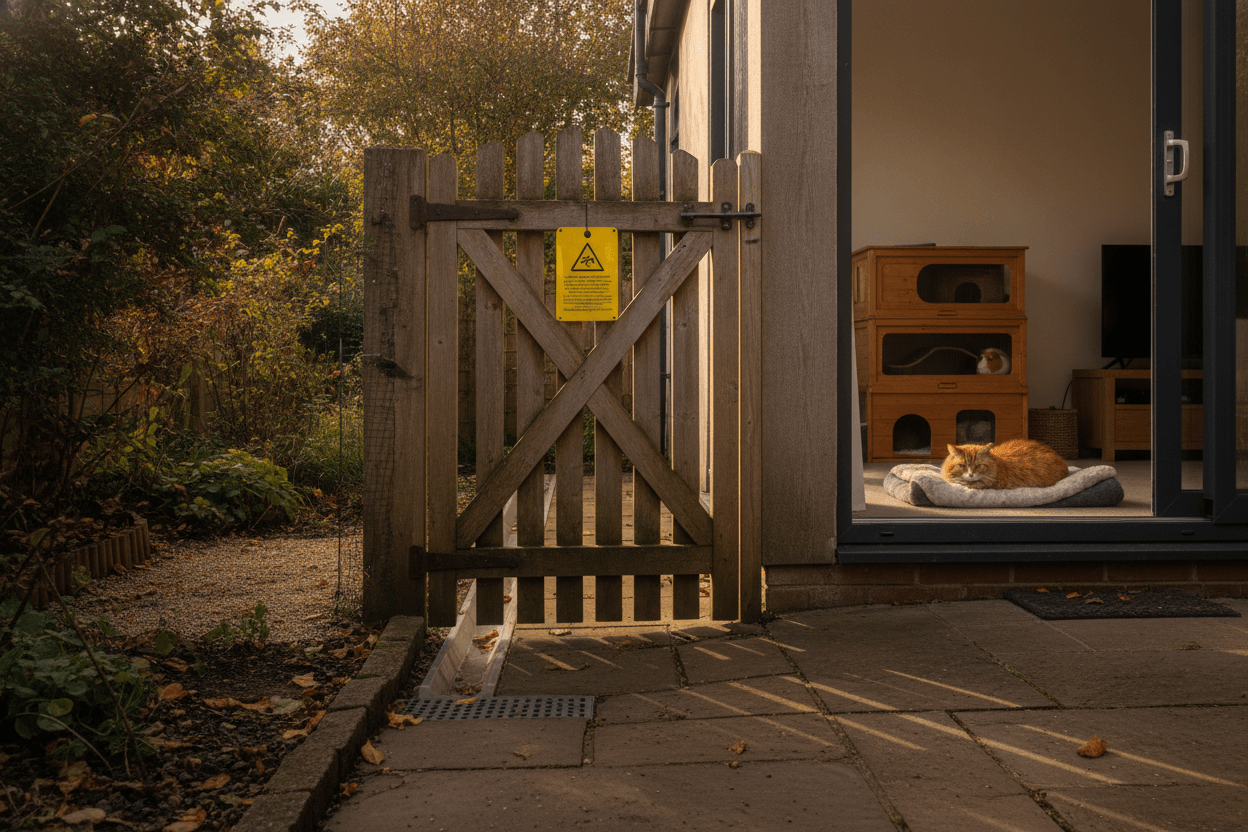
Use a physical barrier rather than relying on a verbal cue. Do not allow an exotic pet to walk on, forage in, or drink from an area until the label says it is safe for access and the area is fully dry when applicable. Prevent contact with puddles, runoff, granules, treated clippings, and tools that may carry residue.
3. Remove hidden hazards during leaf cleanup
Check under leaves, behind pots, and along fence lines for spilled pellets, rodent bait, moldy food, sharp objects, mushrooms, and dead or decaying plant material. Do not offer yard plants, weeds, fallen fruit, or insects as food unless an experienced exotic-animal veterinarian has confirmed that the species and source are appropriate. Wild insects and plants may carry pesticides, parasites, or other contaminants.
4. Protect air quality and water
Keep birds and other sensitive animals indoors and away from fumes, dust, smoke, and aerosolized products. Store hoses and buckets so pets cannot drink unknown water. Make sure outdoor water cannot collect runoff from a treated surface. When cleaning an enclosure or carrier after outdoor contact, use species-appropriate materials and rinse thoroughly; ask your veterinarian about any product used near the animal.
Build a simple exposure plan before you need it
Save the label or product name, take a photo of the ingredients, and keep your regular exotic-pet veterinarian’s contact information easy to find. If you suspect contact or ingestion, move the animal away from the source, do not give home remedies or induce vomiting unless a veterinarian specifically directs you, and contact an exotic-animal veterinarian or an appropriate animal poison service promptly. Seek urgent care for breathing difficulty, collapse, seizures, severe weakness, or other sudden serious signs.

A safer fall routine for exotic-pet households
- Keep habitats indoors and secure before yard work starts.
- Use barriers and locked storage for all garden products and tools.
- Inspect leaves, soil, plants, and water before allowing any controlled outdoor time.
- Never assume a product is safe because it is marketed as natural or pet-friendly.
- Record the product name and contact a veterinarian quickly if exposure is possible.
Reliable sources and a responsible note
The ASPCA’s pet-safe yard and garden guidance recommends careful handling and storage of fertilizers and pesticides. The American Bird Conservancy’s bird-friendly gardening guidance explains why avoiding toxic pesticides benefits birds and wildlife. For species-specific poisoning prevention, review Exotic Vet Care’s poisoning-prevention resource.
Important: This article provides general prevention information and does not diagnose or treat illness. Product labels, local conditions, and species needs differ. When in doubt, keep the pet away from the area and contact a qualified exotic-animal veterinarian.