
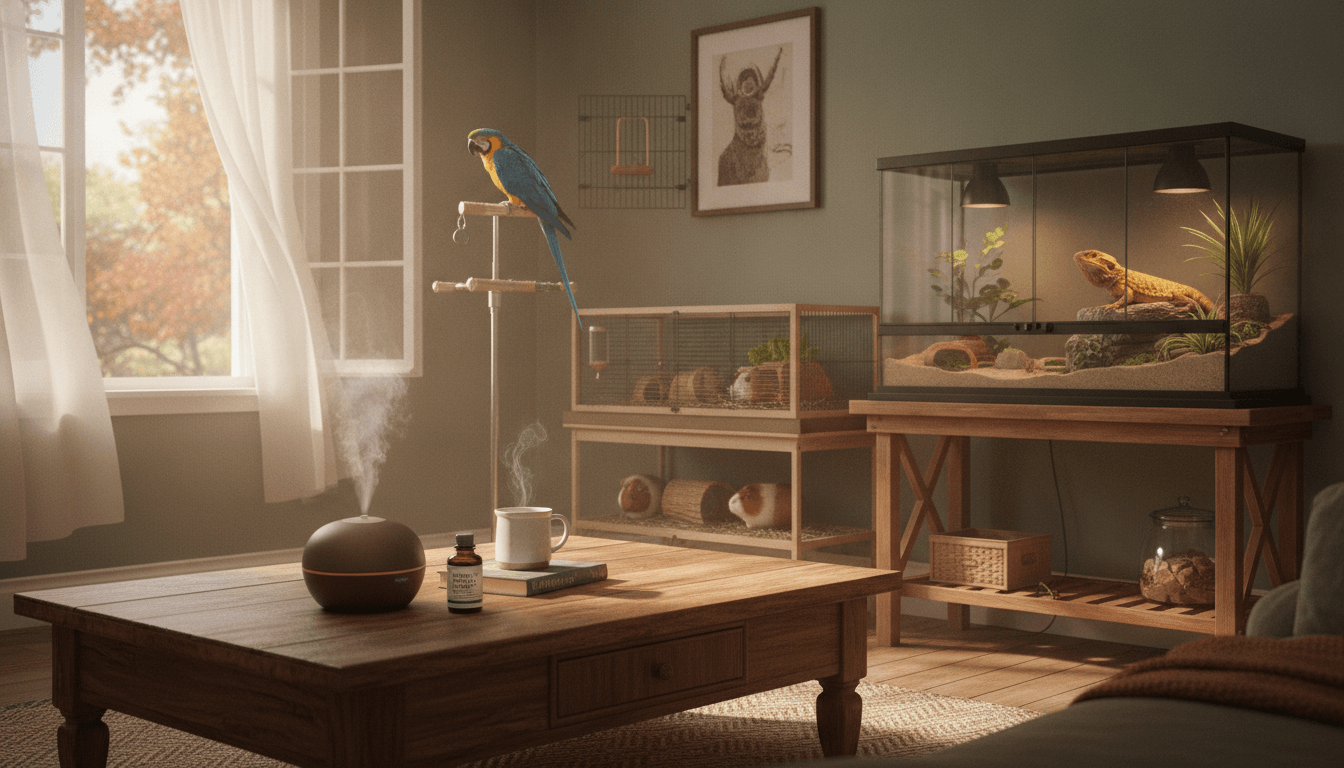
As autumn arrives, many homes add candles, wax melts, room sprays, essential-oil diffusers, and stronger cleaning products to the daily routine. For an exotic pet, the air around the enclosure is part of the habitat. A pleasant scent to a person can be an unwanted airborne exposure for a bird, reptile, or small mammal.
This guide is a practical fall reset: remove avoidable airborne irritants, check ventilation, keep products secured, and know what to do if a pet may have inhaled smoke or fumes. It is not a substitute for a veterinarian who treats your species.
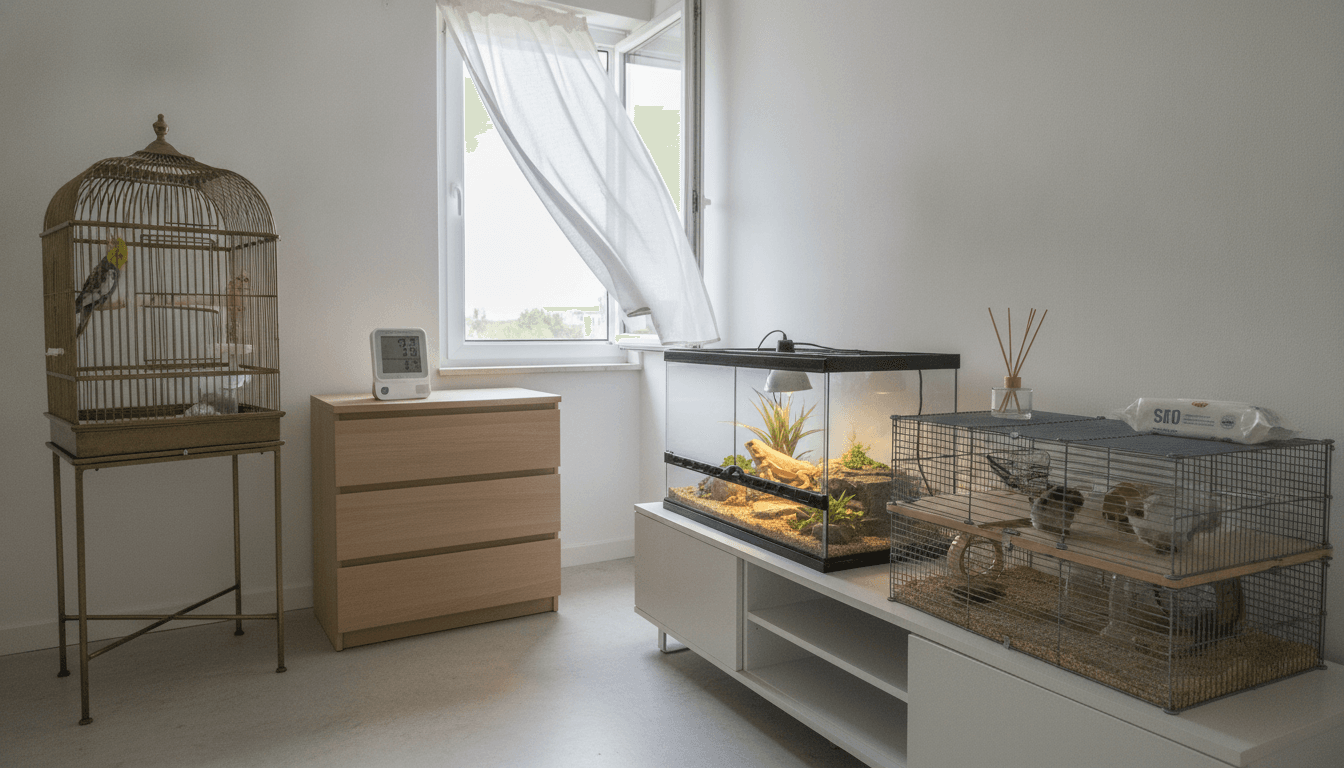
Why household air deserves an autumn safety check
Birds are especially sensitive to airborne contaminants because of their highly efficient respiratory system. The ASPCA advises avoiding essential-oil diffusers in homes with birds and recommends veterinary advice when using cleaning products around them. Merck Veterinary Manual also describes smoke and other inhaled toxins as urgent concerns for pet birds.
That does not mean every product affects every species in exactly the same way. Reptiles and small mammals have different biology and enclosure needs, but they still share the room air. Do not rely on a label that says “natural,” “non-toxic,” or “pet-friendly” unless a qualified veterinarian has assessed the specific product, species, concentration, ventilation, and exposure route.
A safer fall home-air reset
1. Remove fragrance from the pet room
Do not burn candles, use wax melts, spray air freshener, use aerosolized products, or run an essential-oil diffuser in the room where an exotic pet lives. Avoid smoking or vaping anywhere near the home. Moving a product across the room is not the same as removing its airborne emissions, and ventilation may not eliminate risk.
For birds, make avoidance the default. For reptiles and small mammals, ask an exotic-animal veterinarian about any product you are considering rather than assuming a different species makes it safe.
2. Clean without creating a fume problem
Choose simple, unscented cleaning methods when possible. Move the pet and its enclosure away from the area being cleaned, follow the product label, prevent access to wet surfaces, and allow the area to dry and air out before returning the animal. Never mix cleaning products. Keep concentrates and disinfectants closed and secured.
Cleaning does not replace husbandry: remove soiled bedding, keep food and water areas hygienic, and ask a veterinarian which disinfectant is appropriate for your species and enclosure materials.
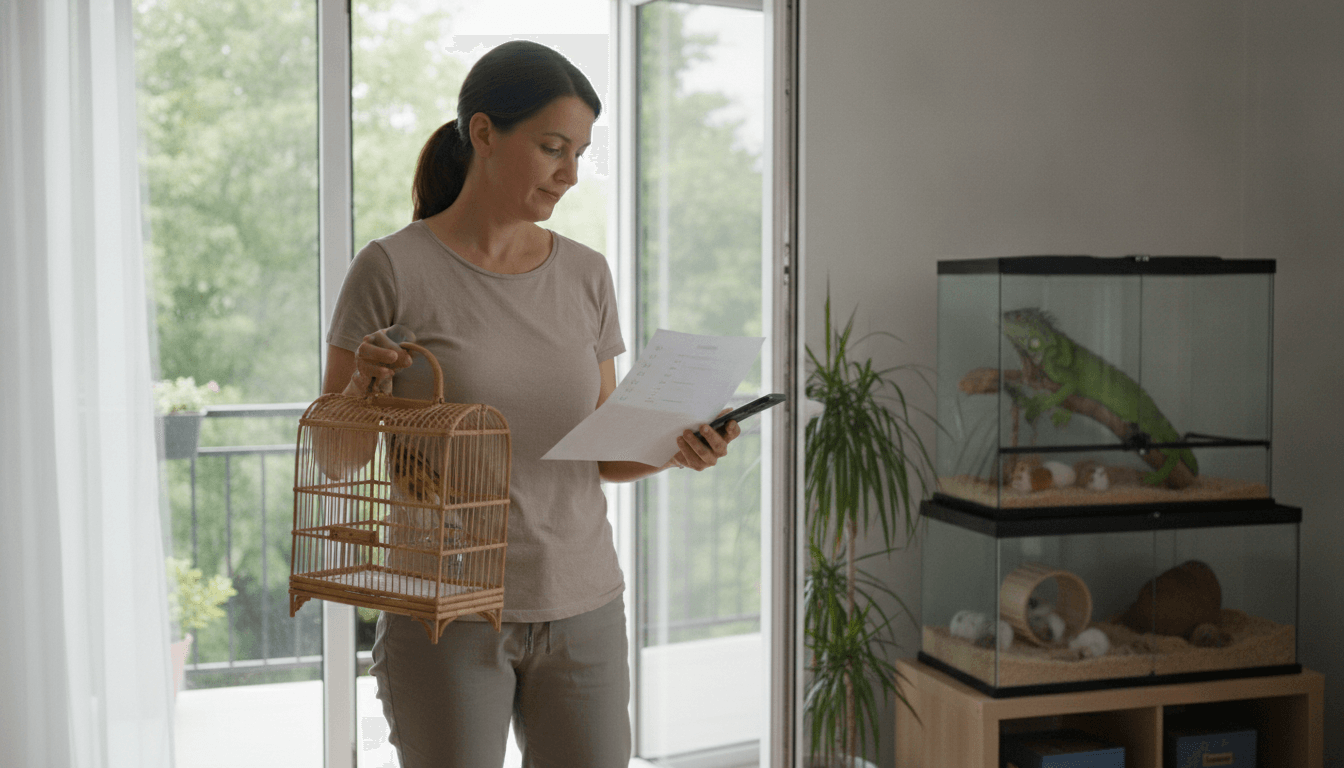
3. Check airflow without causing a draft
Fresh air can help clear a room, but an open window should not create a cold or hot draft across an enclosure. Check the temperature and humidity where the animal actually rests, not only across the room. Keep cages and terrariums away from kitchens, garages, fireplaces, and areas where vehicles, paints, solvents, or sprays are used.
For species with tightly controlled environmental requirements, change conditions gradually and use the equipment recommended for that species. AAHA emphasizes that exotic pets need species-appropriate husbandry and access to veterinary care; a generic “ideal temperature” is not safe advice for every animal.
What to do after possible smoke or fume exposure
If an exposure occurs, stop the source and move the pet to clean, uncontaminated air while avoiding additional handling or stress. Do not give home remedies, force food or water, or try to make the animal vomit. Contact an emergency veterinarian or an animal poison service promptly and provide the product label, ingredients, approximate time, and species.
Seek urgent veterinary help for breathing difficulty, open-mouth breathing, weakness, collapse, unusual vocalization, loss of coordination, seizures, marked lethargy, or any sudden change after smoke or fumes. Birds can deteriorate quickly, and a reptile or small mammal may hide early signs. If you are unsure, call rather than waiting for symptoms to become obvious.
A five-minute autumn checklist
- Remove candles, wax melts, diffusers, room sprays, and smoking or vaping from pet areas.
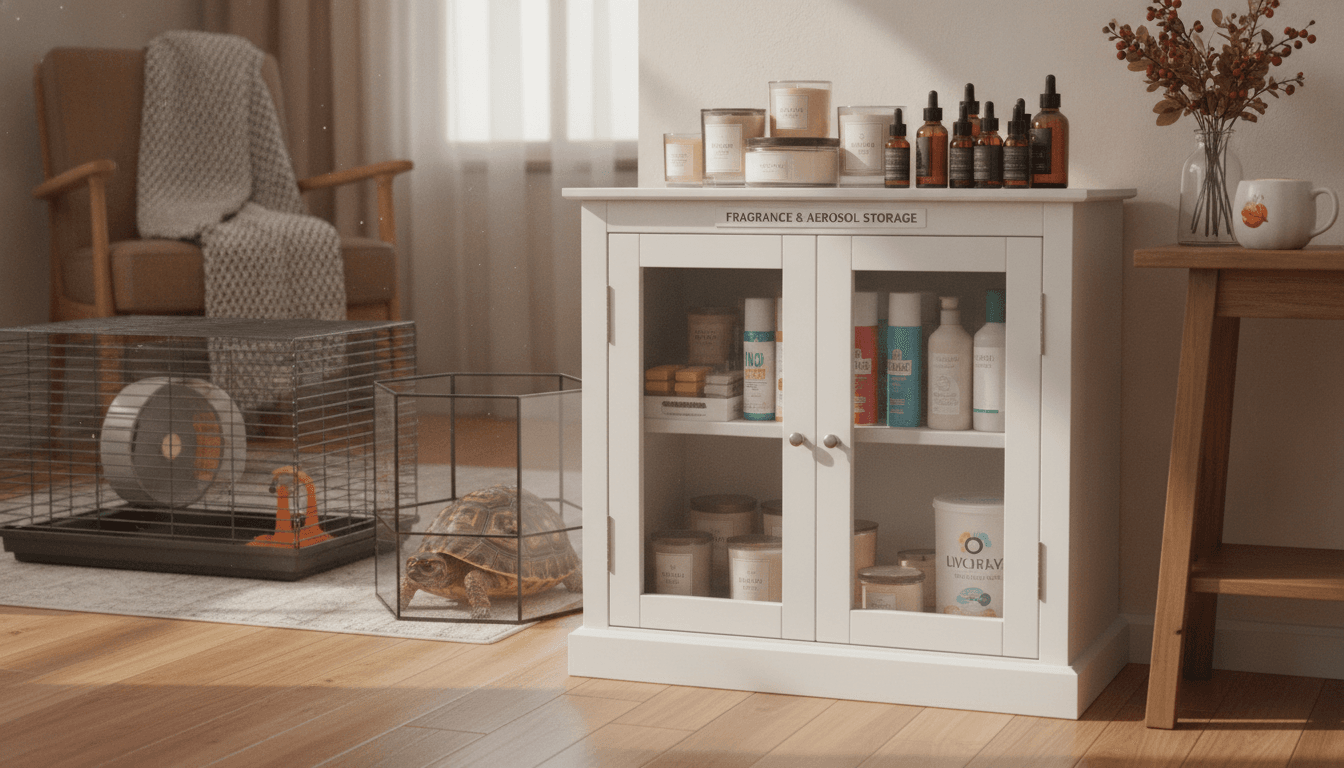
- Move cleaning products and fragrance oils into a closed, inaccessible cabinet.
- Check that ventilation does not create a direct draft or unsafe temperature swing.
- Confirm that smoke and carbon-monoxide alarms work and that emergency contacts are easy to find.
- Save the local emergency veterinarian and poison-control contact details before an incident.
When to ask for species-specific help
Ask an exotic-animal veterinarian for guidance before changing disinfectants, substrate, heating, humidity, or air-cleaning equipment. The Association of Avian Veterinarians and other specialist practices can help owners locate appropriate care, while AAHA’s exotic-pet guidance is a useful reminder that responsible ownership includes specialized husbandry and preventive veterinary planning.
For reliable background, see the ASPCA guidance on essential oils around pets, the ASPCA household-products resource, Merck Veterinary Manual’s overview of toxicoses in pet birds, and AAHA’s guide to caring for exotic pets. The Pet Poison Helpline resource on wildlife and exotics also explains why airborne exposures deserve caution.
Important: This article provides general safety information, not a diagnosis or treatment plan. Species, age, health status, enclosure design, product formulation, and exposure amount all matter. Contact a qualified exotic-animal veterinarian for advice about your pet.