
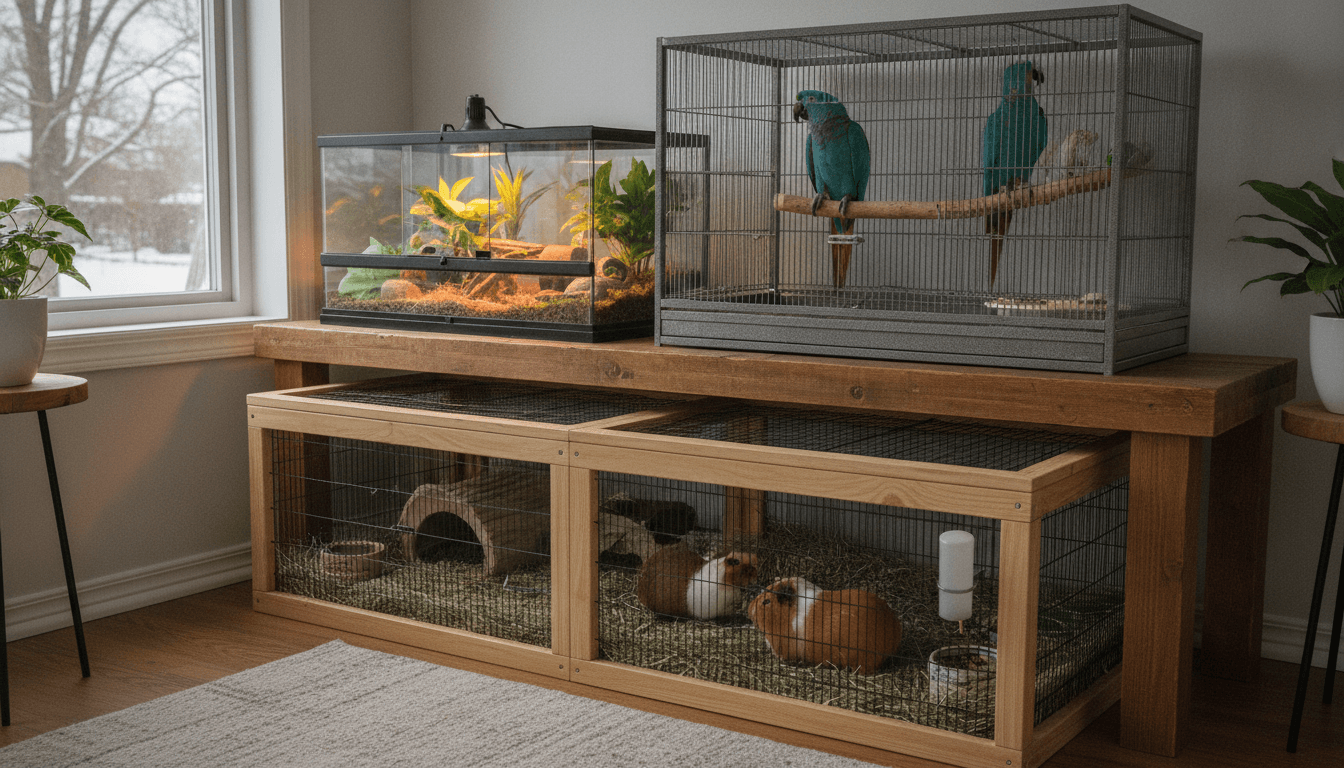
When daylight shortens and indoor heating begins, an exotic pet’s environment can change faster than your calendar suggests. Drafts, dry air, equipment faults, and disrupted routines may affect birds, reptiles, and small mammals differently.
This winter-readiness checklist helps you inspect the setup before the coldest days arrive. It is a starting point, not a substitute for species-specific guidance from an experienced exotic-animal veterinarian.
Start with a simple winter habitat audit
Walk through the room and the enclosure rather than relying on how the room feels to you. Record the temperature and, when relevant, humidity at the locations your pet actually uses. Recheck readings at different times of day because a comfortable afternoon can become a chilly night.
- Look for drafts from doors, windows, vents, and exterior walls.
- Confirm that thermometers and humidity gauges are working and positioned meaningfully.
- Inspect cords, plugs, guards, thermostats, lamps, and heating equipment for damage.
- Keep a backup plan for a power interruption, including a carrier and an exotic-pet veterinarian’s contact information.
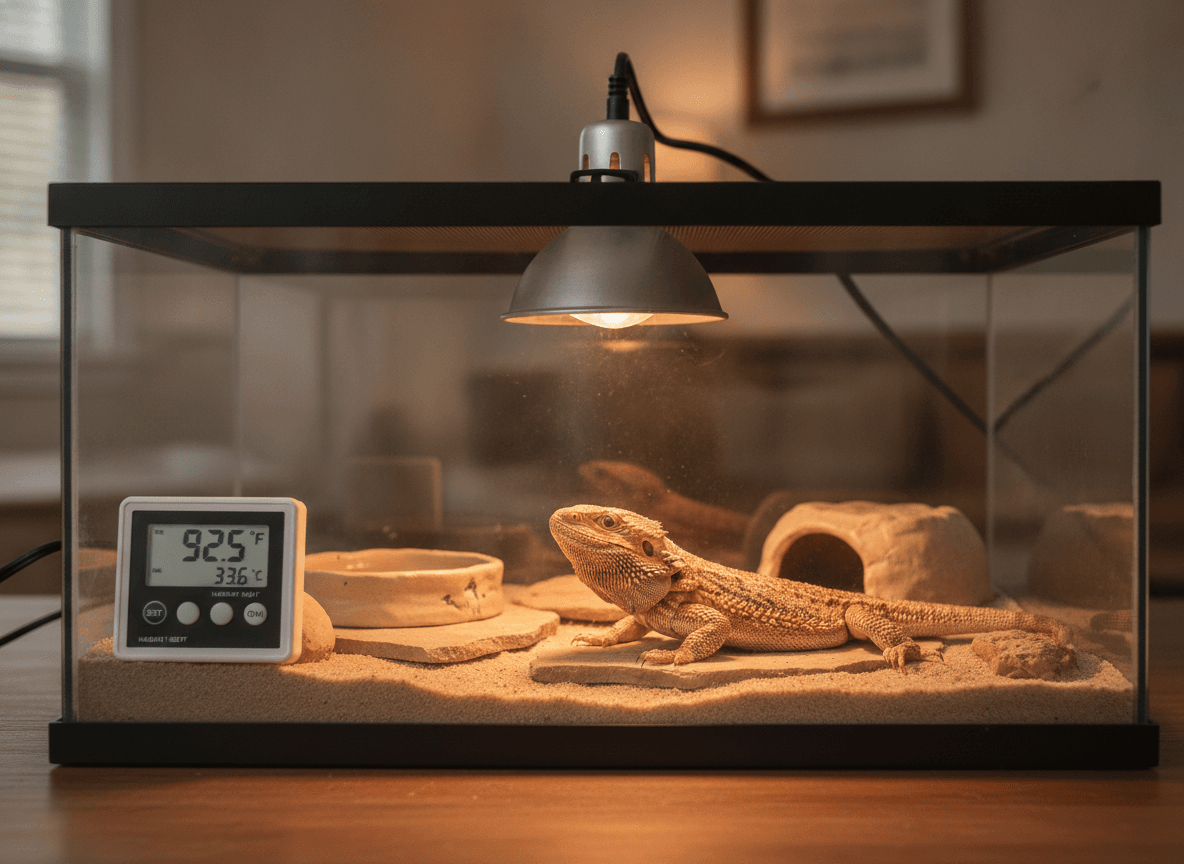
Reptiles: verify the heat gradient, not just one number
Reptiles depend on their environment to support normal body temperature regulation, but the right range is species- and life-stage-specific. Use a thermostat where appropriate, measure both warmer and cooler zones, and follow a care sheet from a qualified veterinarian or established zoological source for your species.
Never improvise with an unregulated heat source or place a hot device where it can burn your pet. Check that guards are secure, the basking area is accessible, and the pet can move away from the heat. If your reptile’s appetite, activity, posture, or appearance changes, contact an exotic-animal veterinarian rather than changing temperatures dramatically on your own.
Birds: reduce drafts while protecting air quality
Place the cage away from exterior doors, frequently opened windows, and direct blasts from heating or cooling vents. A breathable cover may help maintain a consistent nighttime routine, but it should not block ventilation or become a chewing hazard. Avoid smoke, aerosols, scented products, and overheated or nonstick cookware fumes around birds; their respiratory systems are especially sensitive.
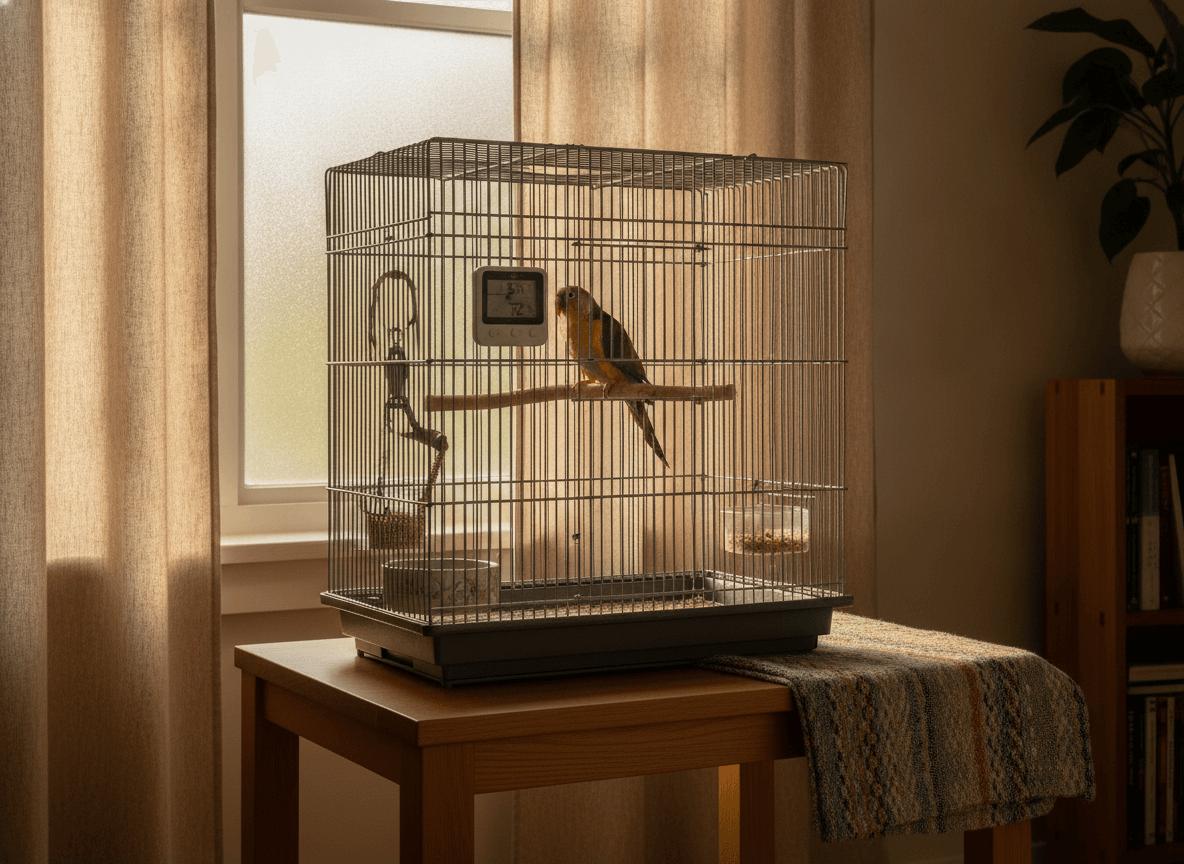
Watch your bird’s normal eating, activity, droppings, and posture. Puffed feathers or unusual quietness can have many causes and should not be diagnosed from an article. Promptly call a veterinarian familiar with birds if you notice a concerning change.
Small mammals: keep bedding, water, and routines dependable
Rabbits, guinea pigs, hamsters, rats, and ferrets have different housing requirements, so use species-specific advice. Keep habitats away from drafts and direct heat. Provide the bedding or nesting material your species safely uses, keep food and water clean, and check water bottles and bowls regularly for freezing, leaks, or blockage.
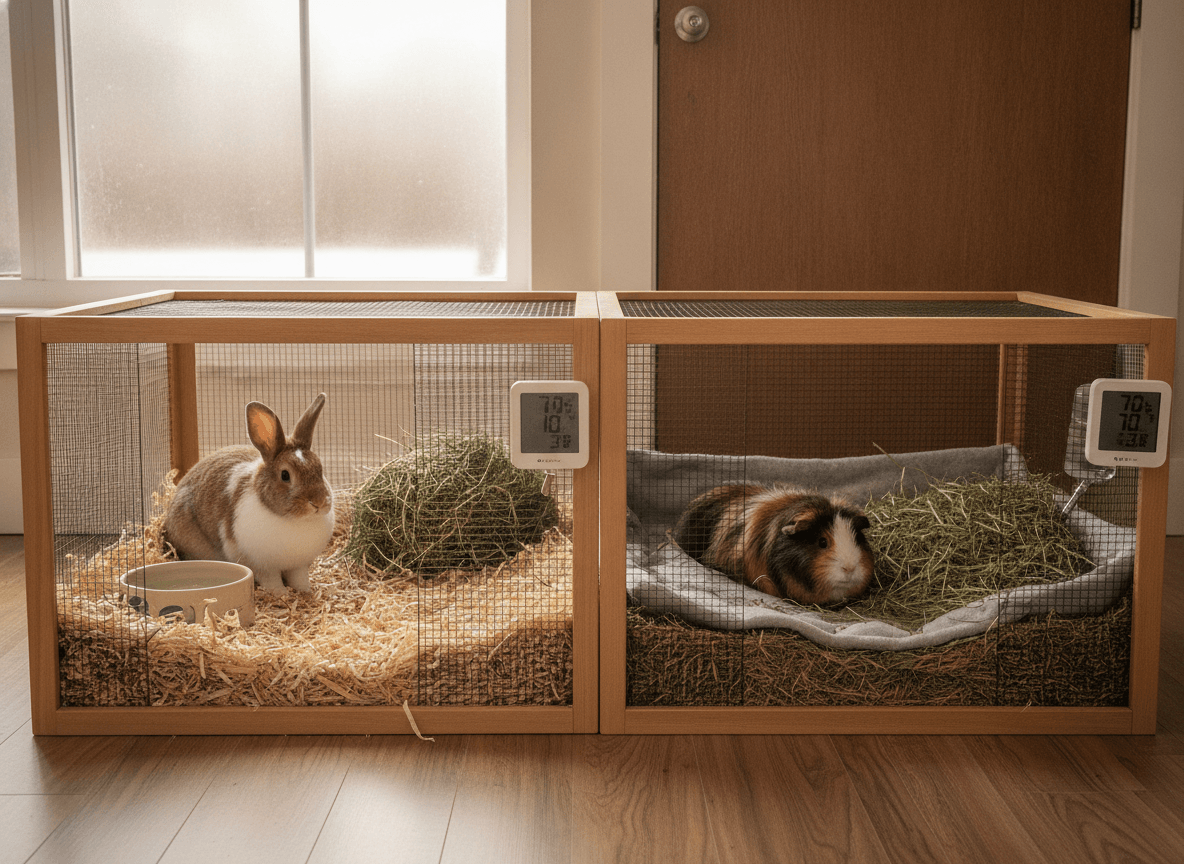
Do not seal an enclosure or add unfamiliar materials simply to make it feel warmer. Good ventilation, dryness where required, and a predictable routine are important. Ask an exotic-animal veterinarian before making major dietary, housing, or temperature changes.
A practical weekly winter checklist
- Record the room and habitat readings in a small log.
- Test the thermostat, lamp, heater, thermometer, and humidity monitor.
- Inspect for drafts, chewable cords, damaged guards, and fire hazards.
- Refresh safe bedding or nesting material and verify food and water access.
- Confirm the carrier, backup supplies, and veterinary contact details are ready.
- Compare behavior and appetite with your pet’s normal baseline.
When to call for help
Temperature-sensitive pets can hide illness, and a sudden change in activity, appetite, breathing, balance, droppings, or responsiveness deserves professional advice. Contact an exotic-animal veterinarian promptly for concerning changes; seek urgent care for breathing difficulty, collapse, severe weakness, or another emergency sign. Do not delay care while trying a home remedy.
Reliable starting points
For general responsibility and species-specific considerations, see the American Veterinary Medical Association’s reptile guidance. For seasonal planning across birds, reptiles, and small mammals, review this winter care overview from South Texas Avian & Exotic Hospital. Use these sources as orientation, then confirm the details for your pet’s species with a qualified veterinarian.
Important: This article is educational and does not diagnose illness or replace individualized veterinary care.