
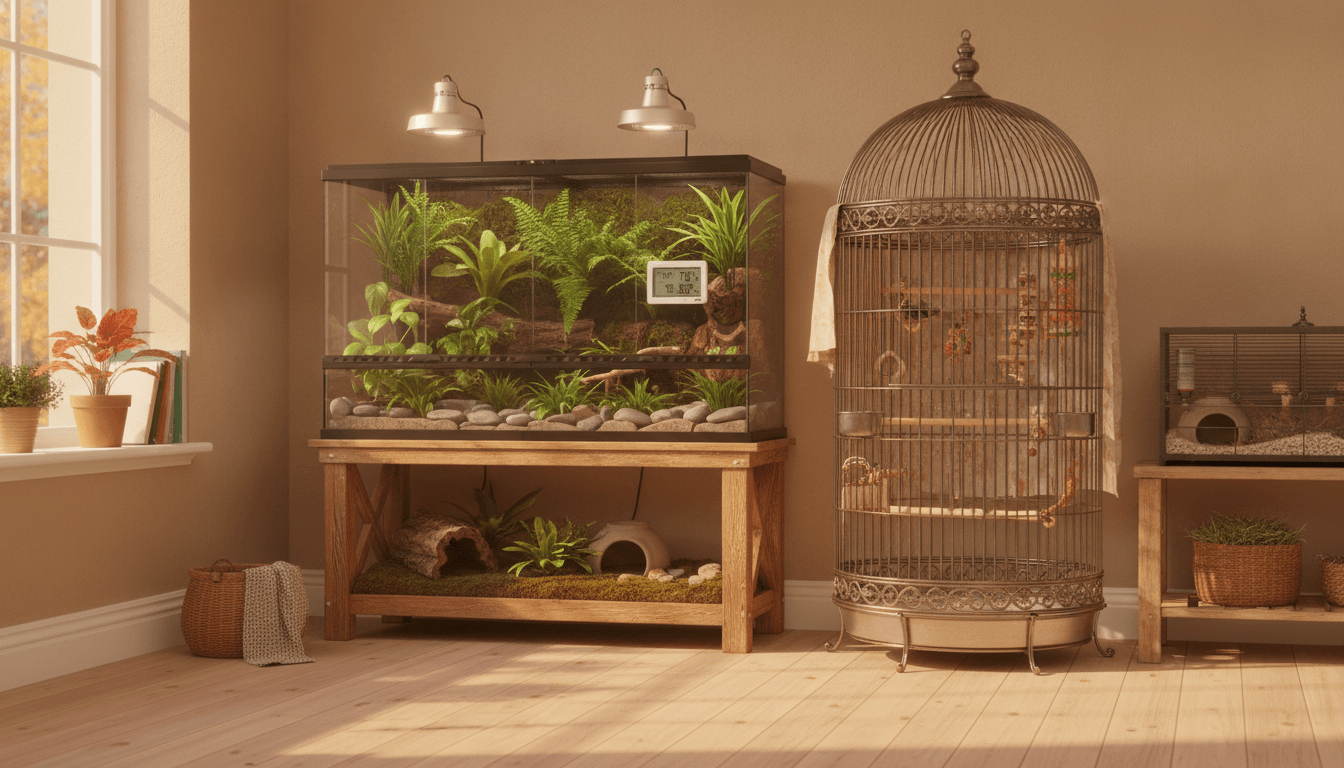
Early autumn can change an exotic pet’s indoor environment faster than you might notice. Windows close, heating or air-conditioning schedules shift, daylight changes, and habitats may be moved away from drafts or busy rooms. A short, species-aware reset helps you spot equipment problems before they become stressful for your pet.
This guide is a practical home check for reptiles, birds, and small mammals. It is not a substitute for an exotic-animal veterinarian. Use your species’ care plan—not a generic room target—for temperature, humidity, lighting, diet, and enclosure design.
Why an autumn indoor reset matters
Seasonal comfort is not the same as a single room reading. A reptile may need a measured warm and cool zone, while a bird needs protection from direct drafts and airborne household hazards. A guinea pig or rabbit may be affected by heat, damp bedding, poor ventilation, or a sudden location change. The goal is stable, measured conditions with enough fresh air—not sealing an enclosure or room to chase a number.
The 20-minute habitat reset
- Look and listen. Note normal appetite, activity, breathing sounds, droppings, and use of the habitat. A change from your pet’s baseline deserves attention.
- Check the instruments. Confirm thermometers and hygrometers are placed where they measure the animal’s actual zones, not just the room. Replace damaged batteries and record readings at the same time each day for a few days.
- Inspect heat and light. Check guards, cables, timers, bulbs, and thermostats. Keep heat sources away from fabric and chewed cables. Never change a species’ lighting schedule or temperature range based only on a general autumn rule.
- Review airflow. Keep vents and enclosure ventilation clear. Avoid placing a habitat directly under an air vent, beside a drafty window, or in a room with strong temperature swings.
- Refresh safely. Remove wet or soiled substrate, wash dishes, and inspect hides, perches, doors, and mesh. Change one major feature at a time so you can tell what your pet tolerates.
Reptiles and amphibians: measure zones, not guesses
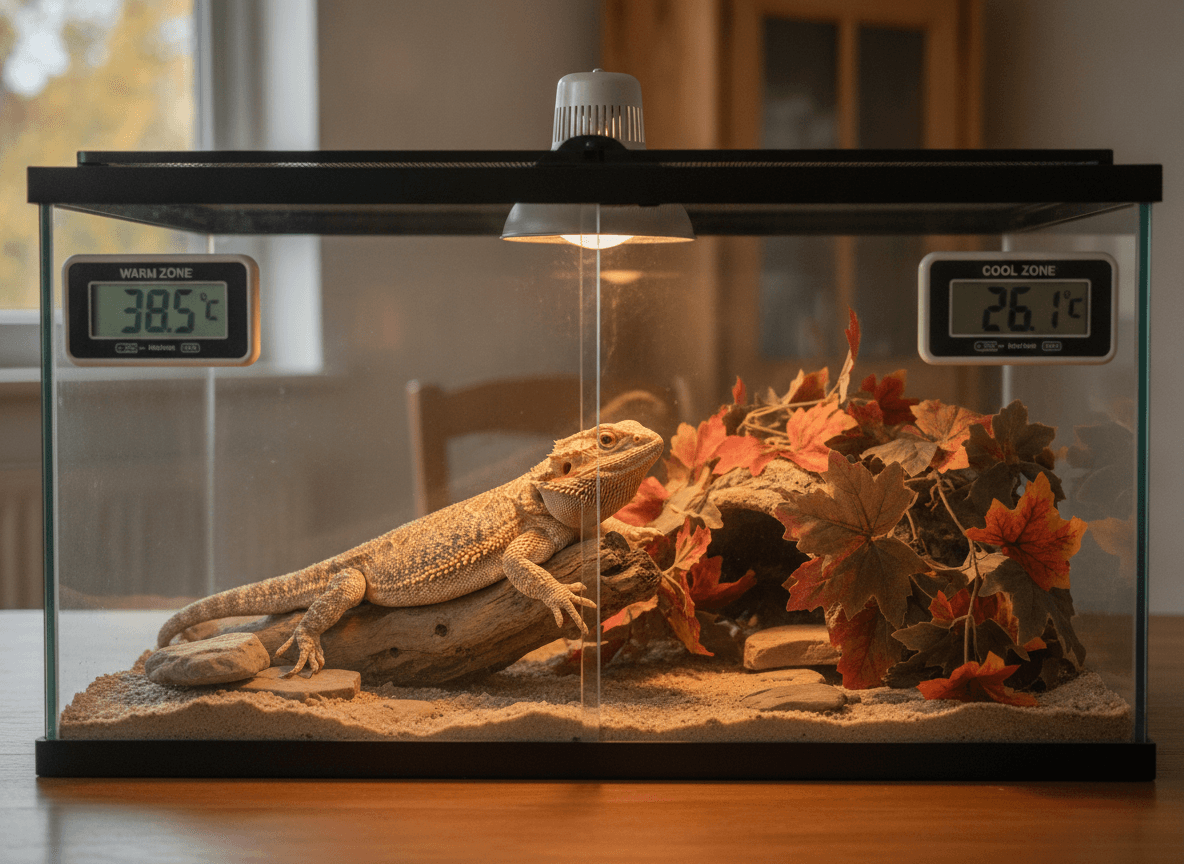
Reptiles rely on environmental temperature and behavior to regulate body temperature, so one thermometer on the opposite side of a terrarium can give false reassurance. Check the warm area, the cooler retreat, and the overnight pattern against a trusted species-specific care sheet. Keep heating equipment controlled and shielded, and inspect it after any seasonal timer change.
Humidity needs are also species-specific. Do not reduce ventilation to hold moisture: the Merck Veterinary Manual warns that reduced ventilation can contribute to skin and respiratory disease. For amphibians, the MSD Veterinary Manual emphasizes both appropriate moisture and adequate ventilation, plus thermometers in the enclosure. If you cannot maintain the required range without persistent condensation, mold, overheating, or stagnant air, contact an exotic-pet veterinarian for a habitat review.
Birds: make the room safer as windows close
As indoor time increases, scan the room for hazards before changing the cage location. Keep birds away from kitchen fumes, smoke, aerosols, scented products, and overheated nonstick cookware. Provide comfortable, indirect airflow rather than placing the cage directly beneath a vent, fan, or open window. VCA’s bird respiratory guidance specifically cautions against constant direct airflow that is too hot or too cold.
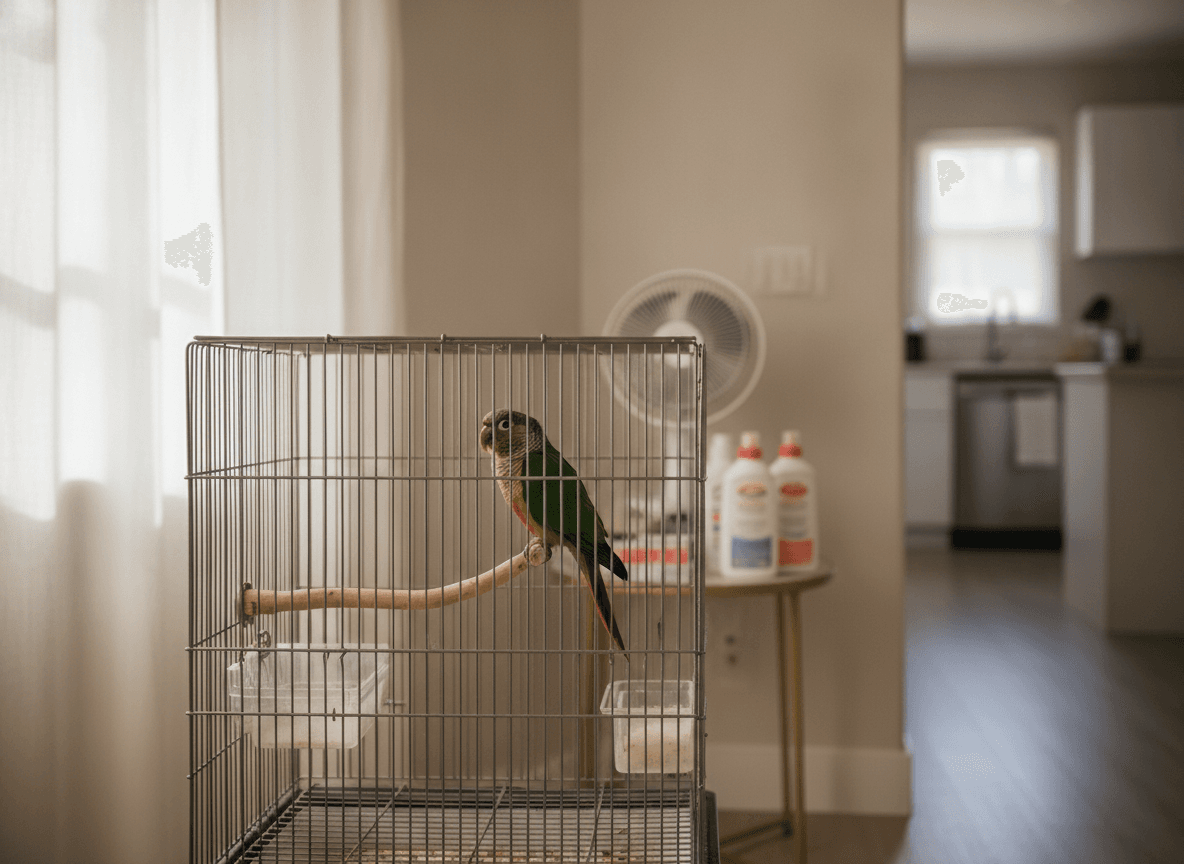
Check cage locks, perch stability, toy wear, and the distance from heaters. If your bird shows breathing difficulty, marked lethargy, a sudden appetite change, or another concerning departure from normal, move away from possible fumes and seek urgent veterinary advice rather than attempting a home treatment.
Small mammals: keep bedding dry and routines predictable
For guinea pigs, rabbits, and other small mammals, inspect bedding and floor areas daily for dampness, ammonia-like odors, or spots that stay wet. Improve cleaning and airflow without creating a direct draft. The MSD Veterinary Manual gives guinea pigs a broad general comfort range but also notes that housing, ventilation, and species needs matter; use your pet’s established care guidance instead of treating a room average as a guarantee.
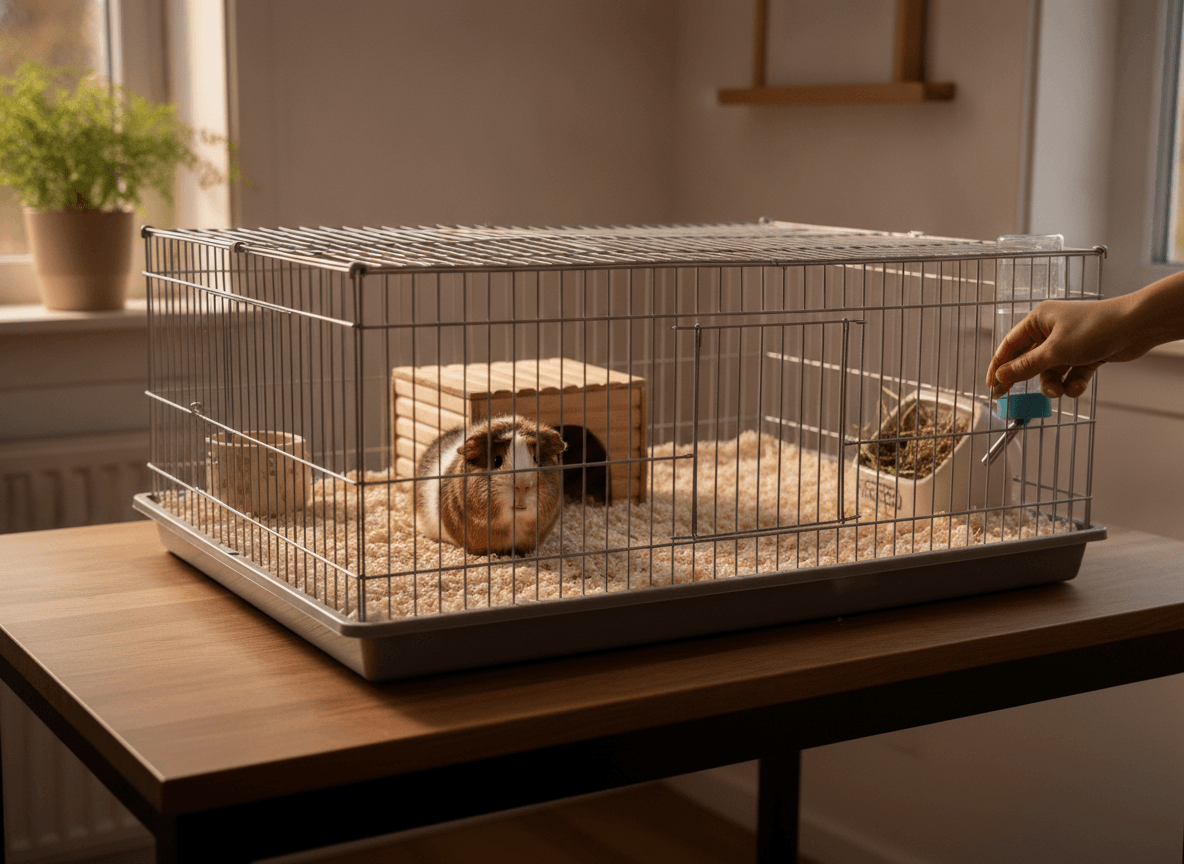
Keep feeding, exercise, and cleaning times as consistent as practical. Check water bottles or bowls for leaks and make sure the animal can reach food and water without crossing a damp or slippery area. Avoid sudden wholesale changes to familiar bedding or enrichment; gradual updates make it easier to notice a real problem.
A simple monitoring log
- Date and time
- Warm, cool, and room readings where relevant
- Humidity reading where relevant
- Food and water observations
- Activity, breathing, droppings, and behavior compared with normal
- Any equipment, cleaning, room-location, or weather change
A log turns “the room feels different” into useful information for you and your veterinarian. If readings are repeatedly outside the range recommended for your species, or your pet’s normal behavior changes, call a veterinarian experienced with that species. Seek urgent help for breathing difficulty, collapse, severe weakness, suspected poisoning, burns, or other emergencies.
Final autumn checklist
- Record species-specific temperature and humidity targets from a trusted care source.
- Test thermometers, hygrometers, thermostats, timers, guards, and cables.
- Clear vents and move habitats away from direct drafts and household fumes.
- Replace wet bedding and inspect hides, perches, doors, mesh, and water containers.
- Make one change at a time and monitor your pet’s normal baseline.
- Save the contact details for an exotic-pet veterinarian before a seasonal problem becomes urgent.
Reliable sources and further reading
For species-specific details, start with the Merck Veterinary Manual’s reptile husbandry guidance, the MSD Veterinary Manual’s amphibian housing guidance, and its guinea pig housing information. Bird owners can review VCA’s respiratory-disease guidance for birds. These resources support the general principles above, but an exotic-animal veterinarian remains the right source for an individual pet’s diagnosis and care plan.
Last reviewed September 2026. Care recommendations vary by species, age, health status, and enclosure. When in doubt, ask a qualified exotic-animal veterinarian.