
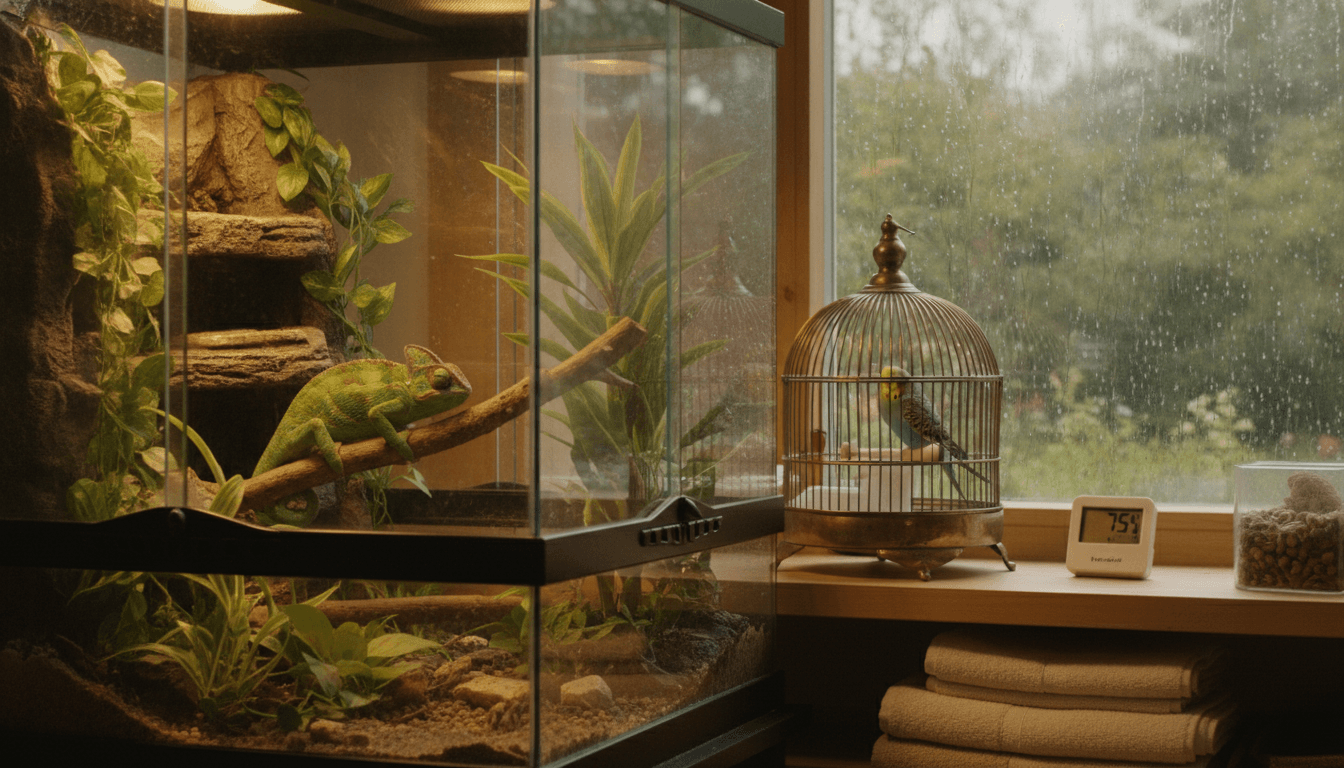
Rainy weather can change the conditions around an exotic pet’s enclosure faster than many owners expect. Damp rooms, wet bedding, condensation, muddy outdoor areas, and reduced ventilation can all make a routine feel different. The safest approach is not to chase a universal humidity number: it is to keep the habitat clean, species-appropriate, well ventilated, and stable, while watching the individual animal closely.
Why rainy weather deserves a habitat check
Rain itself is not automatically harmful, and many species have very different environmental needs. The practical concern is unwanted moisture where it does not belong. Wet substrate can spoil more quickly, a room can become stuffy, and a leak or splash can lower the safety margin of an enclosure. Birds may also be exposed to drafts when a cage is moved near a window or door.
- Look for condensation, leaks, damp corners, and musty odors.
- Check that vents are open and not blocked by covers, decorations, or bedding.
- Confirm that heating and lighting equipment are dry, secure, and used according to the manufacturer’s instructions.
- Keep a species-appropriate thermometer and, when useful for that species, a hygrometer at animal level rather than relying on the room’s feel.
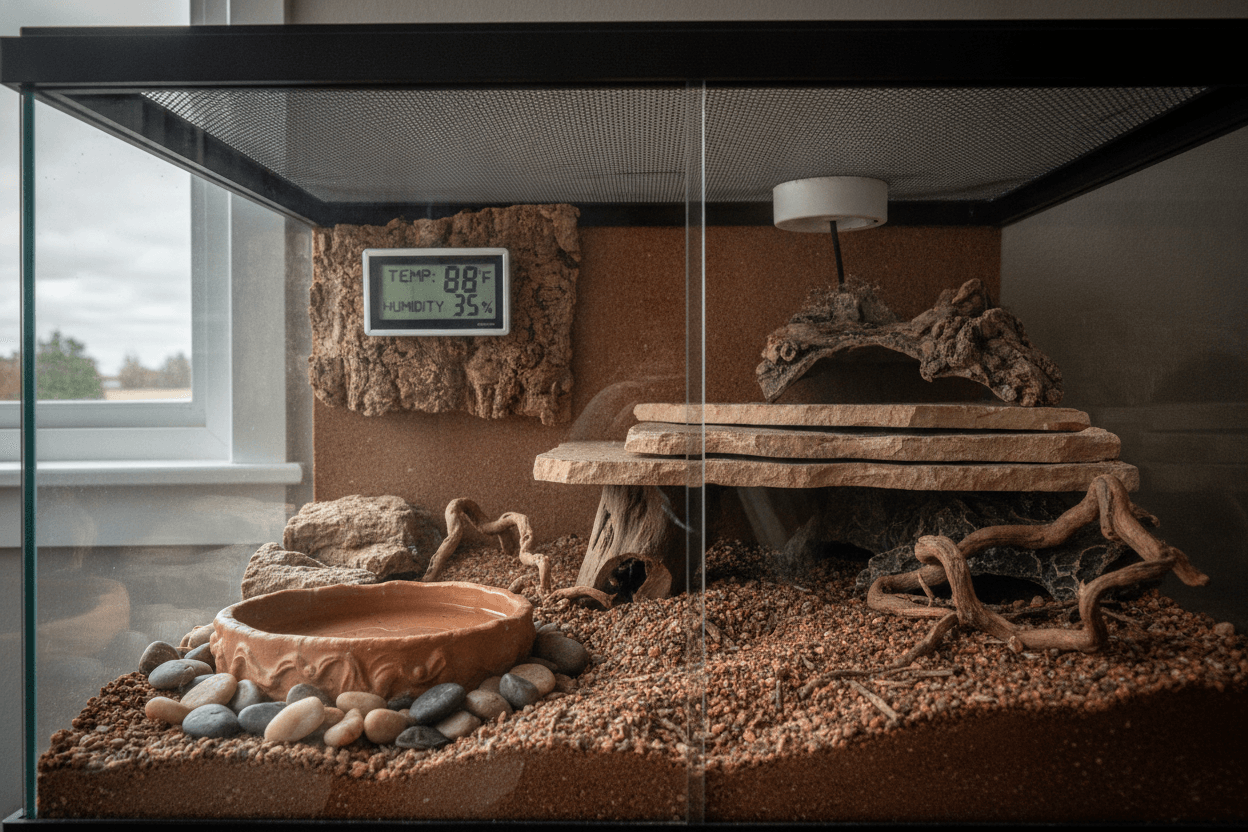
Reptiles: manage moisture without losing ventilation
Reptile care is species-specific. Some reptiles require controlled humidity, while others need a drier enclosure with a short, deliberate humid microclimate. Do not raise humidity simply because it is raining outside. Instead, compare your readings with a care sheet from a qualified veterinarian, established zoological resource, or reputable husbandry guide for the exact species.
- Remove wet or soiled substrate promptly and replace it with the substrate recommended for the species.
- Keep the basking and heating area positioned safely so the animal can thermoregulate without contacting hot equipment.
- Make sure the enclosure has a dry retreat as well as any required humid hide or moisture zone.
- Never seal ventilation to “hold humidity” unless a qualified reptile veterinarian or species-specific husbandry guidance supports that design.
Changes in appetite, activity, breathing, posture, or appearance deserve attention. These signs are not a diagnosis; contact an exotic-animal veterinarian promptly if your pet seems unwell, and seek urgent help for breathing difficulty, collapse, severe weakness, or other emergency signs.
Birds: keep the cage dry, bright, and draft-free
For a companion bird, a rainy-day setup should prioritize clean air, a dry cage, and a predictable resting area. Keep the cage away from direct drafts, open doors, and kitchen fumes. A cover can provide rest, but it should not block necessary airflow or remain damp. Replace wet paper and clean spills rather than masking odors with fragrances or aerosols.
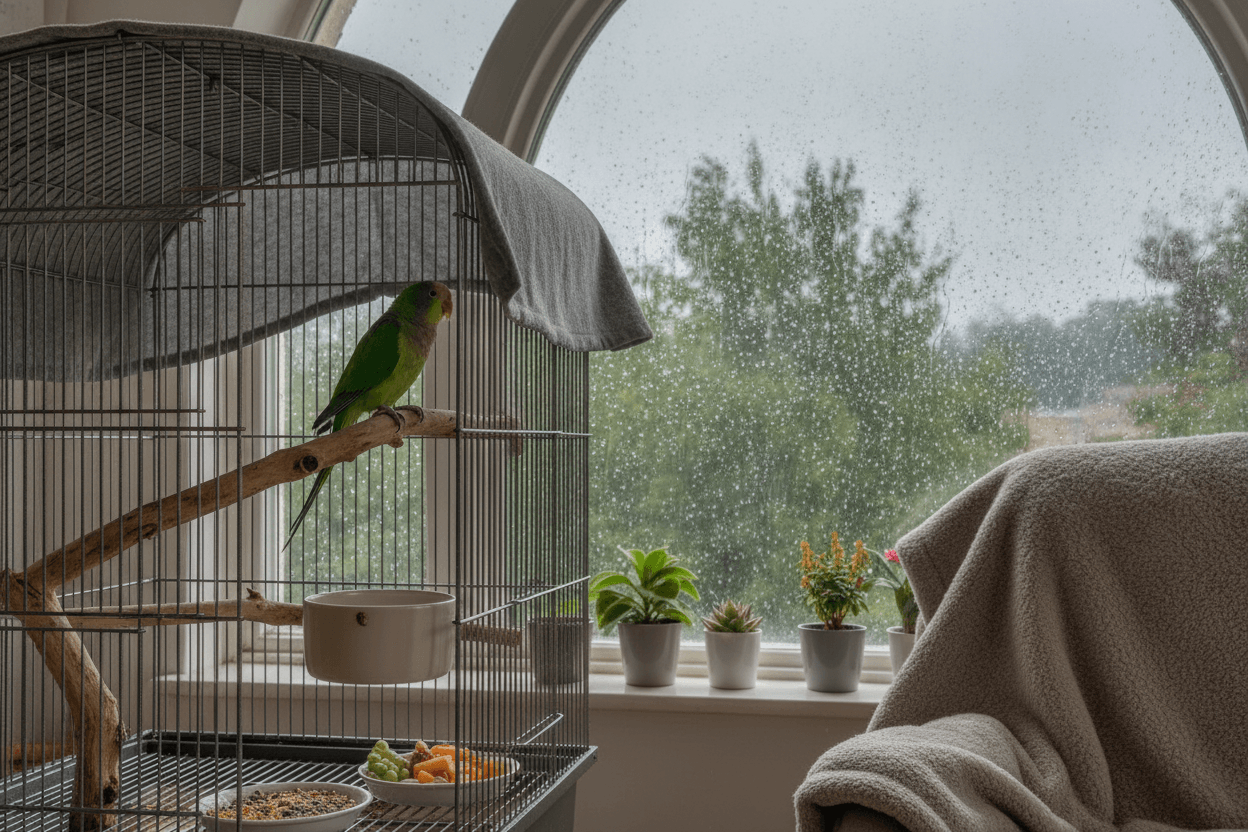
- Check that perches, food dishes, and cage liners are dry and clean.
- Keep windows closed if outdoor air quality is poor or the area is cold and drafty.
- Avoid smoke, scented candles, essential-oil diffusers, sprays, and nonstick-cookware fumes around birds.
- Offer normal species-appropriate food and water; do not introduce supplements or “immune boosters” without veterinary advice.
Small mammals: protect bedding and floor-level habitats
Guinea pigs, hamsters, rats, rabbits, and other small mammals spend much of their time close to the bedding. Keep the habitat elevated away from leaks and cold floors, provide a dry sleeping area, and remove damp bedding as soon as it is noticed. Good ventilation matters, but the enclosure should not sit in a direct draft.
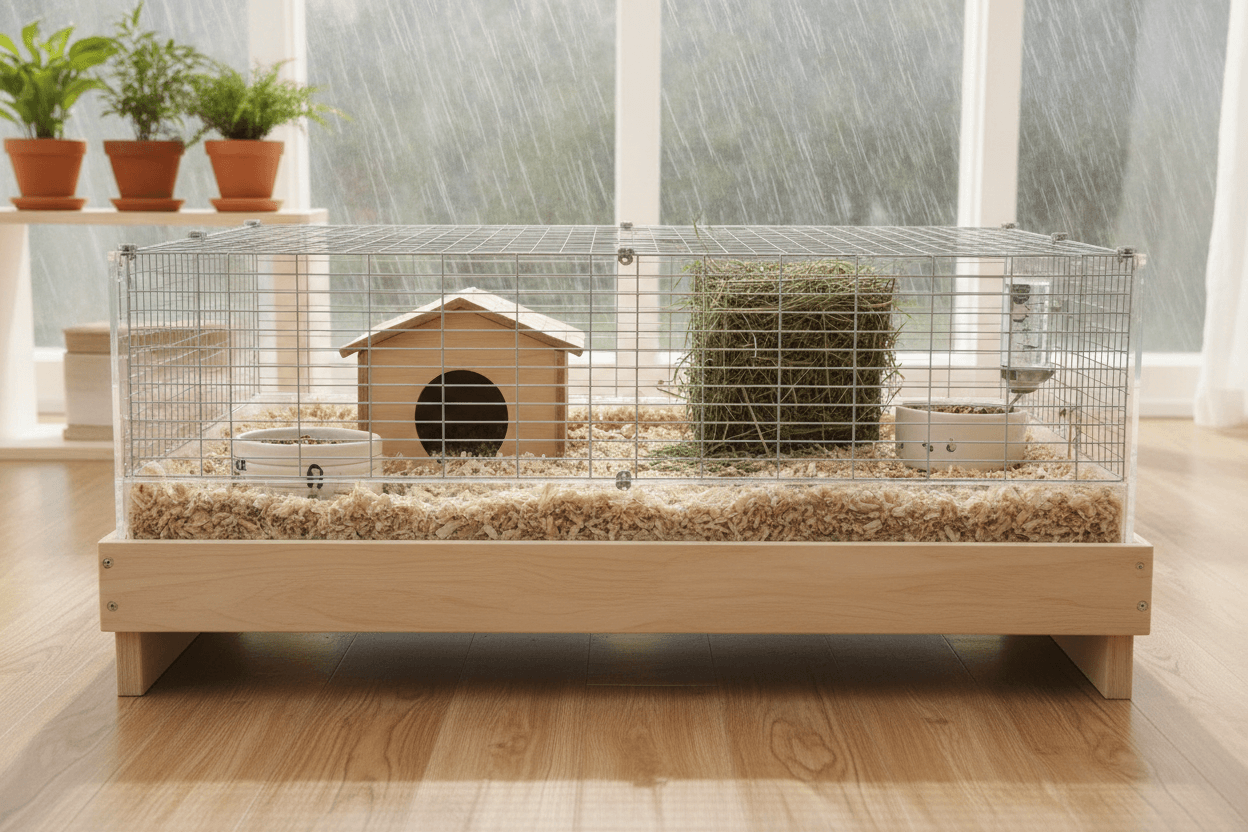
- Feel the bedding under hides and around water bottles, not just the visible surface.
- Check bottles and bowls for leaks, tipping, and contamination.
- Keep hay and food dry, and discard anything that smells musty or shows visible spoilage.
- Continue normal exercise and enrichment indoors when outdoor conditions are unsafe, muddy, or stressful.
A simple rainy-day checklist
- Measure the enclosure temperature and any relevant humidity zone.
- Inspect the lid, seams, floor, cords, and nearby wall for moisture.
- Replace wet bedding or liners and clean spills with a pet-safe routine.
- Confirm fresh water, normal food, secure enrichment, and an undisturbed retreat.
- Observe appetite, droppings, breathing, activity, and behavior without handling unnecessarily.
- Record unusual changes and call an exotic-animal veterinarian if they persist or look urgent.
When to ask for professional help
Online advice cannot replace an examination or a species-specific care plan. Contact a veterinarian familiar with your animal if you notice persistent changes in eating, drinking, droppings, breathing, weight, movement, or behavior. For reliable background reading, consult the Merck Veterinary Manual, the CDC’s reptile and amphibian safety guidance, and the Association of Avian Veterinarians’ owner resources. Always adapt general information to the species, age, health, and home environment of your individual pet.
With a quick moisture inspection, clean habitat, safe ventilation, and careful observation, rainy weather can remain a manageable change in routine rather than a source of unnecessary risk.