
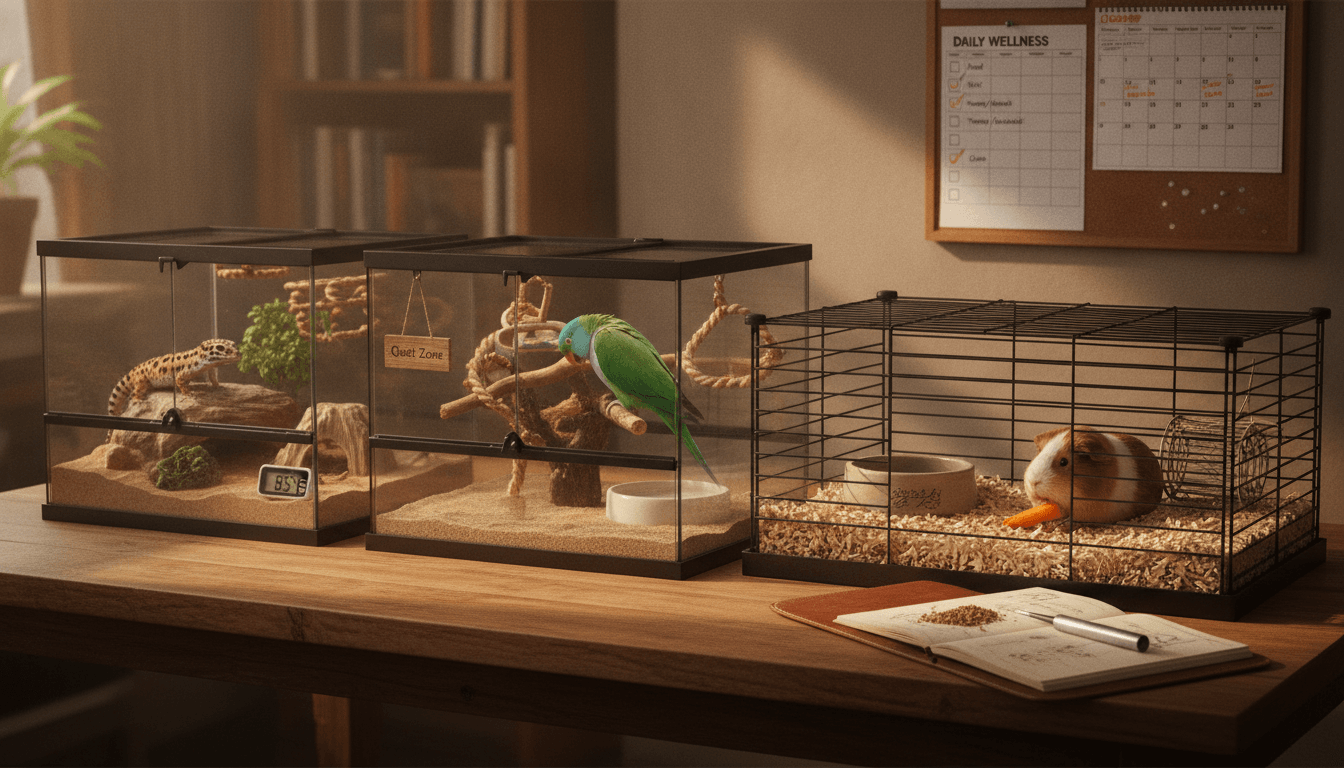
Autumn is a useful time to slow down and check the small details of exotic-pet care. Shorter days, indoor heating, and changing household routines can make it harder to notice gradual changes in appetite, activity, droppings, or enclosure conditions. A simple weekly record will not diagnose illness, but it can help you spot a trend early and give an exotic-pet veterinarian clearer information.
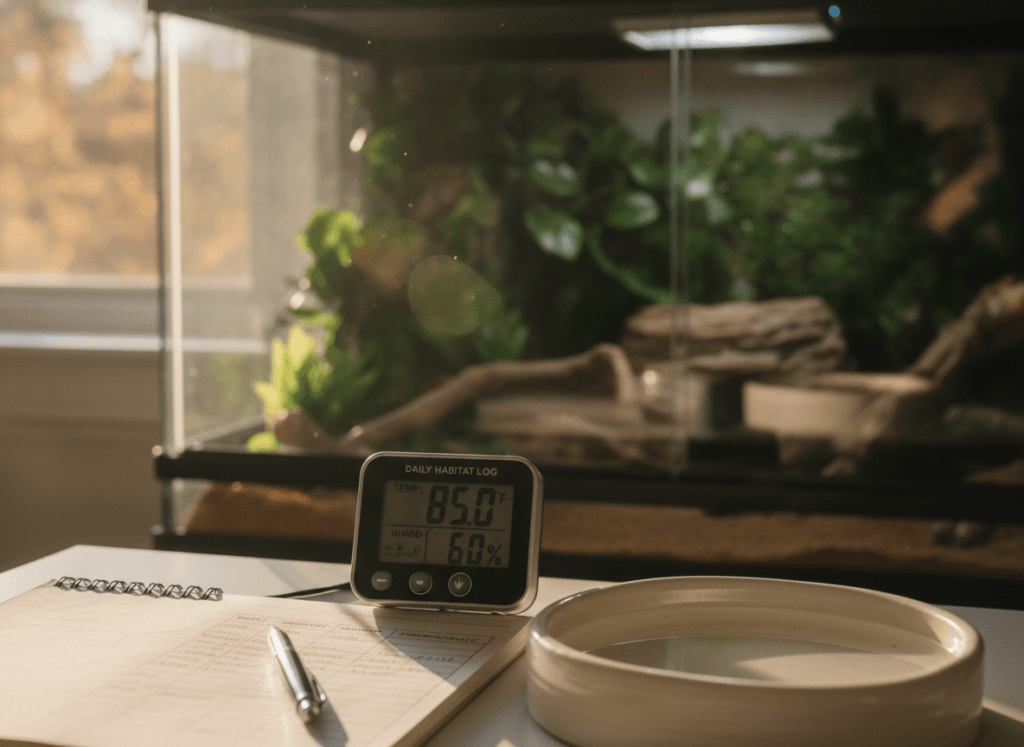
What to check once a week
- Environment: Record the enclosure’s temperature and humidity in the locations relevant to your species, and check that heating, lighting, ventilation, hides, and water are working as intended.
- Routine: Note normal feeding interest, activity, sleep or basking patterns, and interaction with enrichment. Compare your notes with your pet’s own baseline rather than a generic number.
- Physical observations: From a calm distance, look for changes in posture, breathing effort, eyes, skin, feathers, shell, coat, or body condition. Avoid repeated handling simply to inspect your pet.
- Hygiene and safety: Check for spoiled food, sharp or loose items, damp bedding, waste buildup, and escape routes. Clean according to your species-specific care plan.
Keep the record useful, not complicated
Use the same short format each time: date, food offered and accepted, water or toileting notes when relevant, observed activity, and environmental readings. Add a photo only when it can be taken without disturbing your pet. A consistent record is more useful than a detailed log kept for two days and then abandoned.

Seasonal changes deserve species-specific decisions
Do not assume that every exotic pet should hibernate, brumate, eat less, or receive a different light schedule in autumn. Some species are tropical, some respond to seasonal cues, and some should not be intentionally cooled without a carefully planned veterinary and husbandry protocol. The Merck Veterinary Manual’s reptile housing guidance explains why temperature and seasonal behavior are linked, but the correct setup still depends on the species, life stage, health history, and enclosure.
Likewise, the RSPCA’s exotic-pet welfare guidance emphasizes the specialized environmental and care needs of reptiles and other non-traditional pets. Use reputable husbandry guidance for your exact species, measure conditions rather than guessing, and ask an experienced exotic-pet veterinarian before making a major seasonal change.
When a note should become a veterinary call
A single unusual observation is not automatically an emergency, but a persistent or worsening change deserves professional advice. Contact an exotic-pet veterinarian promptly if your pet has marked breathing difficulty, collapse, repeated vomiting or regurgitation, uncontrolled bleeding, severe weakness, sudden neurologic changes, or cannot maintain normal posture. For less urgent concerns—such as a sustained appetite change, weight trend, altered droppings, or a new skin, feather, shell, or coat issue—call for guidance rather than trying to treat the symptom with a product meant for another species.
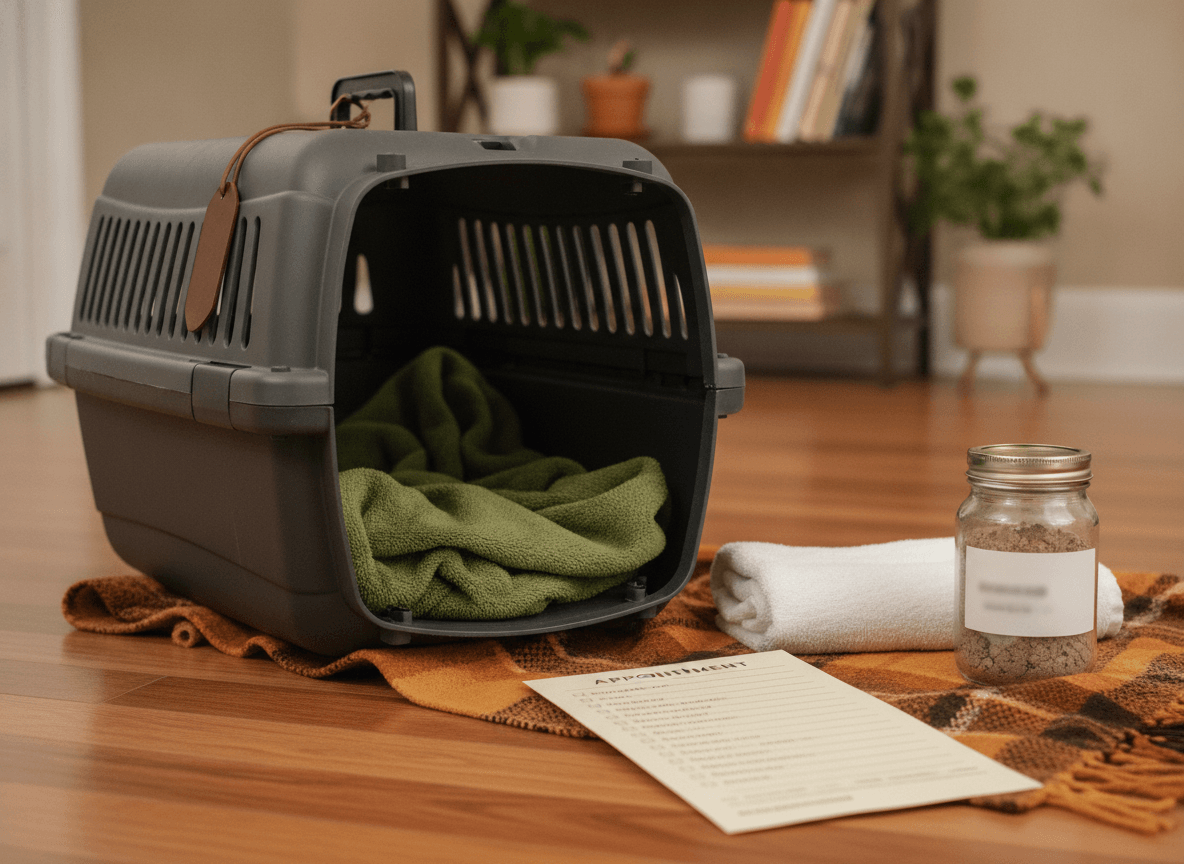
A five-minute autumn checklist
- Confirm that your pet’s enclosure is stable, secure, clean, and free from drafts or unsafe heat sources.
- Measure the relevant environmental conditions and record the readings.
- Observe normal behavior without chasing, restraining, or changing the routine.
- Review food, water, waste, and weight notes for a trend rather than one isolated day.
- Save your veterinarian’s contact details and identify an emergency plan before you need it.
The goal is an earlier, better-informed conversation
Good seasonal care is not about making dramatic changes because the calendar changed. It is about maintaining a species-appropriate environment, noticing your individual pet’s normal pattern, and seeking qualified help when that pattern shifts. A small weekly record can turn “something seems different” into useful information—without replacing an examination or veterinary diagnosis.