
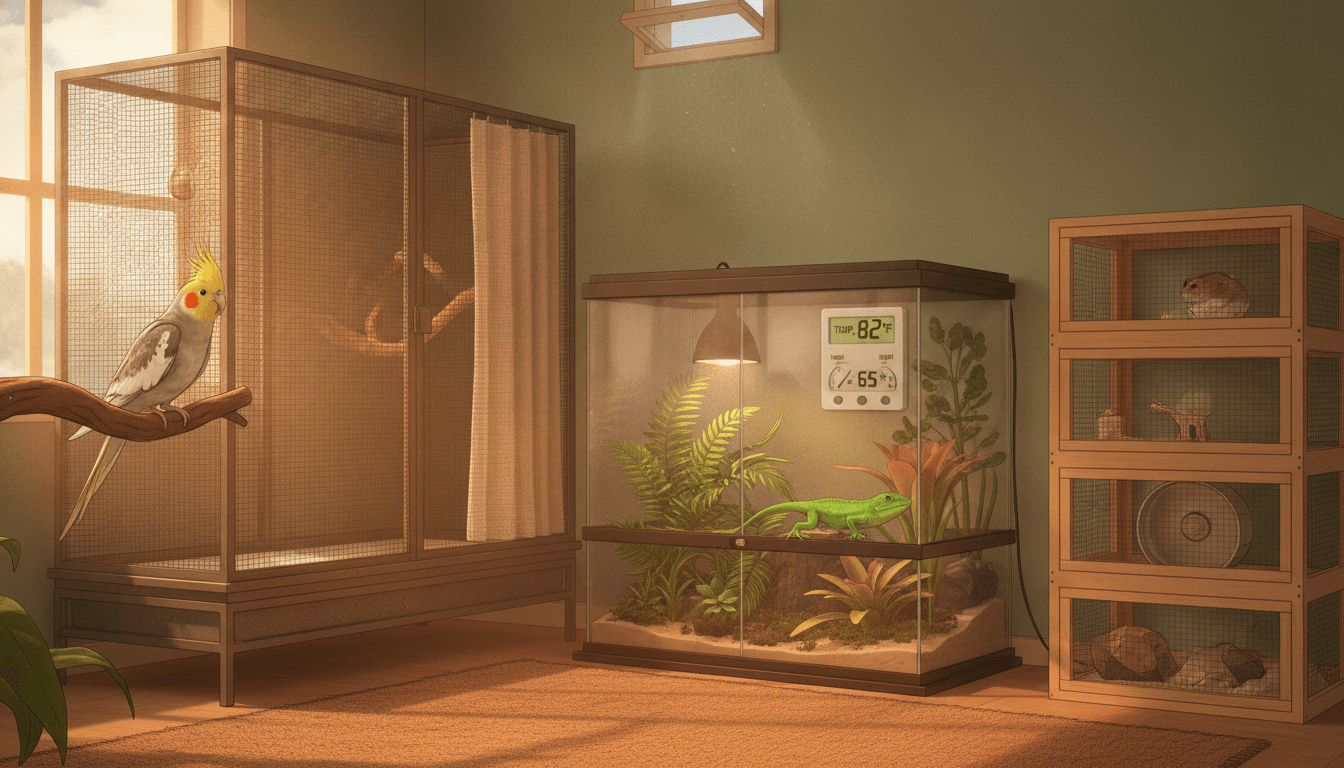
As autumn arrives, many exotic pets spend more time indoors. Closed windows, heating systems, cooking, cleaning products, and changing humidity can quietly alter the air around a bird, reptile, amphibian, or small mammal. A simple monitoring routine helps you notice environmental drift before it becomes a welfare problem.
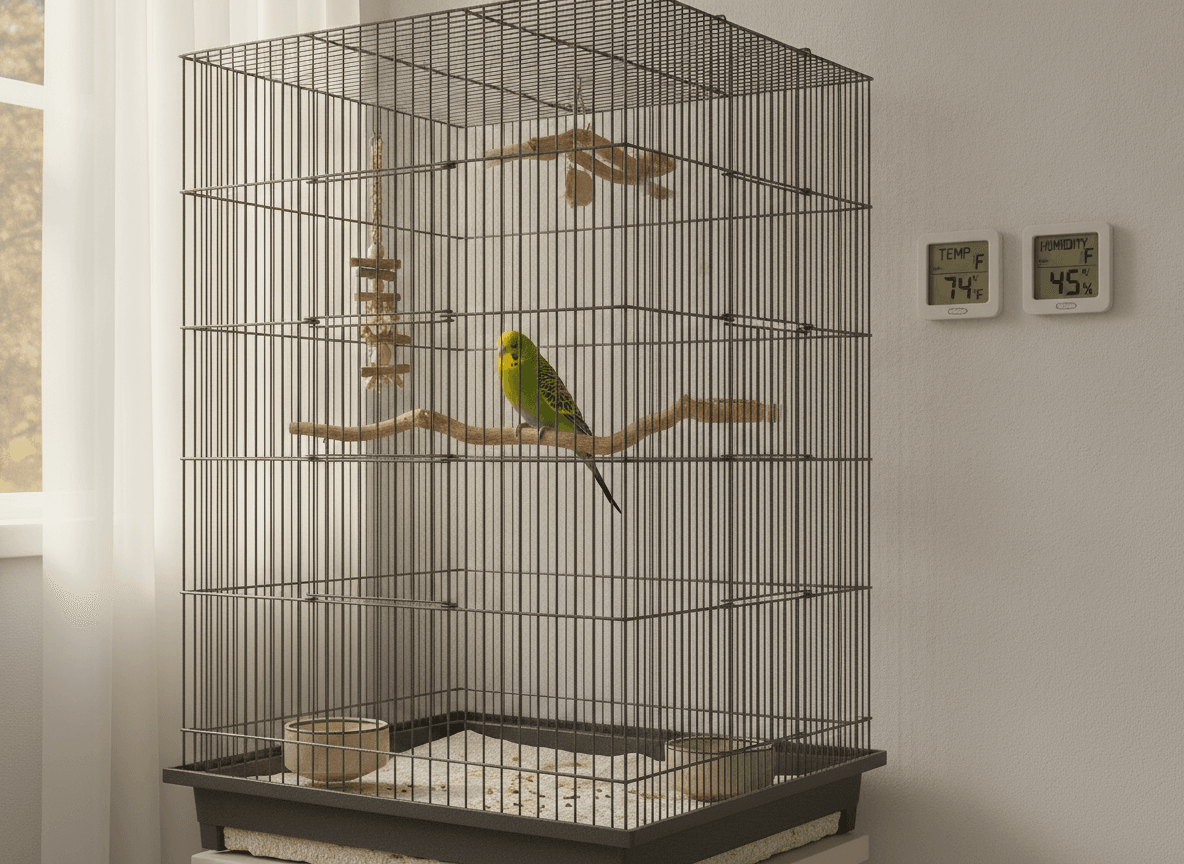
Why indoor air deserves a seasonal check
“Exotic pet” covers species with very different requirements, so there is no single safe temperature or humidity target. A tropical gecko, a desert-adapted reptile, a parrot, and a hamster do not share the same ideal environment. What they do share is a need for species-appropriate housing, clean air, and an owner who notices changes in appetite, activity, breathing, droppings, skin, feathers, or behavior.
Autumn changes can include less natural ventilation, dry heated air, condensation near cool surfaces, and more indoor exposure to fragrances or airborne particles. These are reasons to measure and observe—not reasons to make abrupt habitat changes.
Start with a species-specific baseline
Write down the normal range recommended for your individual species by an exotic-animal veterinarian, reputable husbandry reference, or experienced rescue. Measure at the animal’s level and in the places it actually uses: a warm and cool zone, a basking area, a hide, or a perch. One reading at the opposite side of an enclosure may not describe the animal’s microclimate.
- Use a reliable digital thermometer and hygrometer, and check that sensors are positioned correctly.
- Record readings at consistent times for several days before changing equipment.
- Compare measurements with your veterinarian’s or species organization’s guidance, not a generic internet chart.
- Replace or test unreliable batteries and cross-check an instrument if a reading seems surprising.
Birds: reduce airborne irritants
Bird respiratory systems are sensitive to airborne hazards. Keep birds away from smoke, aerosols, essential-oil diffusers, strong fragrances, fumes from overheated nonstick surfaces, and dusty cleaning activity. Ventilate the room without creating a cold draft directly across the cage. Never use a humidifier as a substitute for cleaning; a dirty or poorly maintained unit can add contamination to the air.
Clean droppings and food debris regularly, but move the bird away from strong cleaners and allow surfaces to dry and fumes to clear. If a bird shows open-mouth breathing, marked tail bobbing, unusual weakness, or another sudden change, contact an avian veterinarian promptly rather than trying to correct the room with a new device.
Reptiles and amphibians: measure the gradient, not just the room
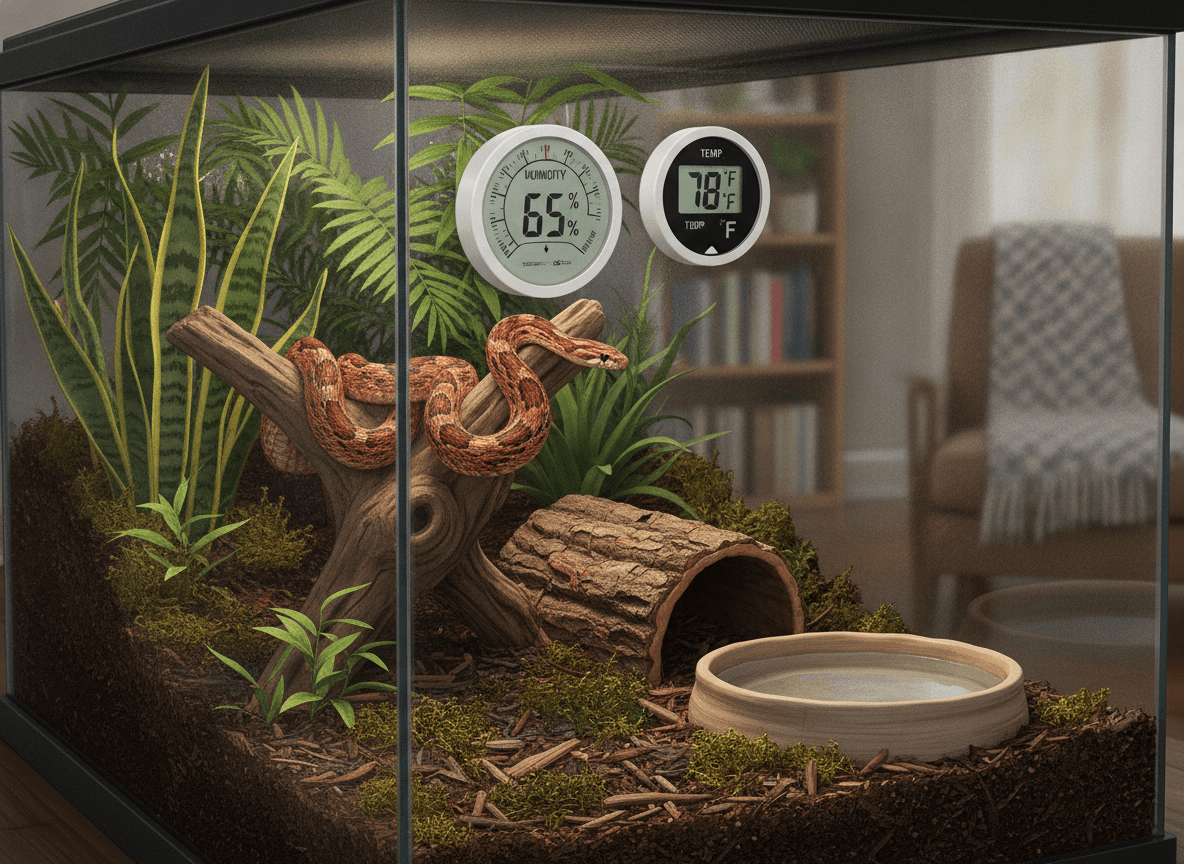
For reptiles and amphibians, humidity and temperature interact with enclosure design, ventilation, substrate, hydration, and species biology. Avoid chasing a number by spraying repeatedly or sealing every vent. Excess moisture with inadequate airflow can leave surfaces persistently wet, while excessive ventilation may dry a habitat too quickly.
- Measure both the warm and cool areas where relevant, plus the enclosure humidity zone recommended for the species.
- Check that water bowls are clean and correctly sized, and that wet hides are maintained safely.
- Look for persistent condensation, musty odors, mold, or substrate that never dries; these are prompts to review the setup.
- Do not begin brumation, change lighting schedules, or make major temperature adjustments without species-specific veterinary guidance.
Small mammals: protect bedding and airflow
Small mammals need a clean, dry, well-ventilated habitat protected from direct drafts and sudden temperature swings. Remove damp bedding promptly and check corners that may stay wet beneath a bottle or bowl. Avoid dusty materials and strong fragrances. Provide appropriate nesting material and hiding places so the animal can choose a comfortable microenvironment.
Watch for reduced appetite, persistent sneezing, discharge, labored breathing, lethargy, or a change in normal grooming. These signs can have many causes. They are not a diagnosis, and they warrant advice from a veterinarian familiar with the species.
A practical 10-minute weekly monitoring routine

- Observe the pet before handling: posture, breathing, appetite, activity, droppings, feathers, coat, or skin.
- Read every relevant thermometer and hygrometer at the animal’s usable zones.
- Check ventilation openings, heat sources, cords, guards, and thermostats for safe operation.
- Inspect bedding, substrate, hides, perches, bowls, and enclosure surfaces for dampness or buildup.
- Review the log for trends rather than reacting to one isolated number.
- Make only one modest, species-appropriate adjustment at a time, then recheck.
When to call an exotic-pet veterinarian
Seek professional advice for breathing difficulty, repeated sneezing, nasal or oral discharge, unusual weakness, refusal to eat, dehydration concerns, sudden weight change, or a significant change in behavior. Move the animal away from an obvious irritant and keep transport calm, but do not delay care while experimenting with humidity, heat, supplements, or home treatments. Bring your environmental log and photos of the enclosure to the appointment.
Responsible seasonal care is measured, gradual, and species-specific
The safest autumn adjustment is usually a better observation system, not a dramatic habitat makeover. Measure the zones your pet uses, keep air free from avoidable irritants, maintain equipment, and ask a qualified veterinarian when the animal—not just the room—changes.
Further reading
- Merck Veterinary Manual for veterinary-reviewed animal health and husbandry reference material.
- Association of Avian Veterinarians for bird health resources and veterinary guidance.
- VCA Animal Hospitals’ pet health library for general, veterinarian-reviewed care information.
This article is educational and cannot replace an examination or individualized advice from an exotic-animal veterinarian. Always follow the requirements of your species and your local veterinary team.