
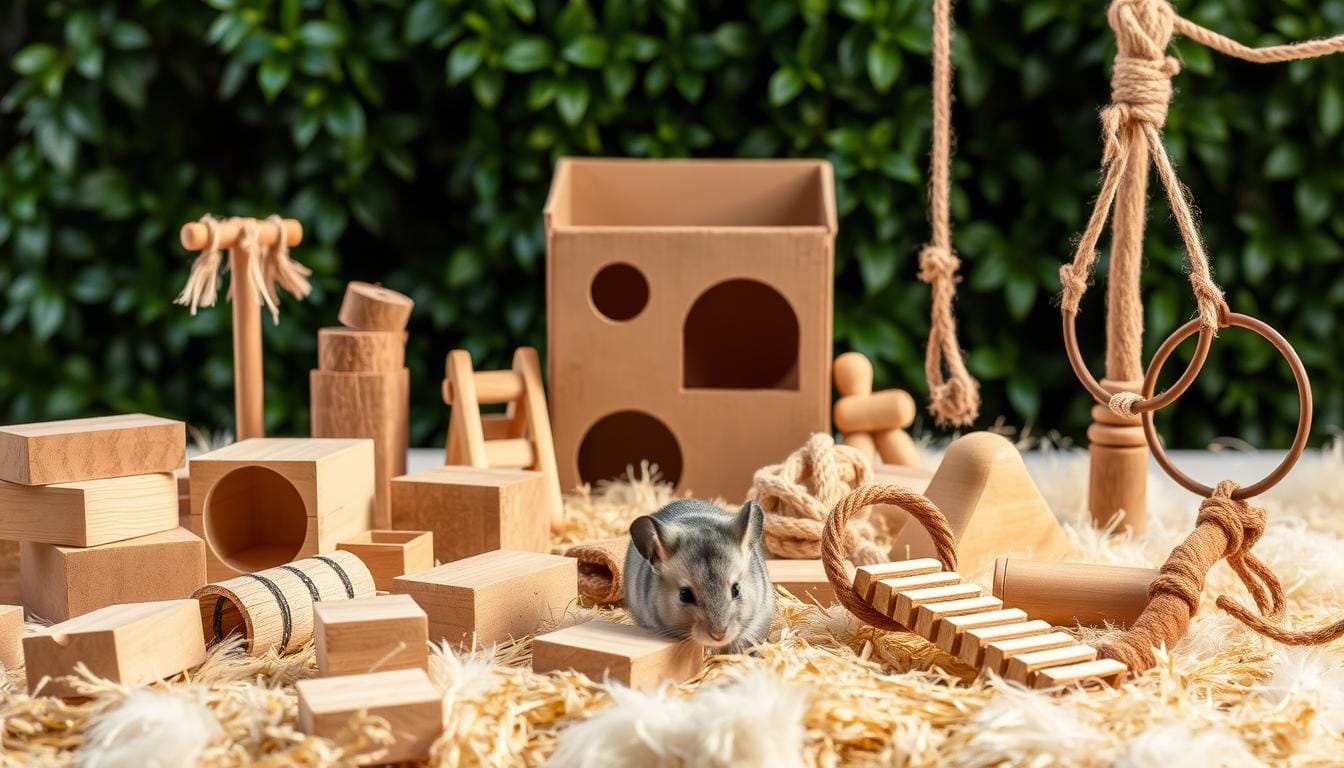
As a chinchilla owner, I’ve learned that the right toys are key for my pet’s dental health and happiness. Chinchillas’ teeth grow all the time. Without the right chewing materials, they can face serious health problems.
Did you know a chinchilla’s teeth can grow up to 12 inches per year if not worn down? This shows how important it is to pick the right chinchilla toys. In this article, I’ll look at the best chinchilla toys out there. We’ll talk about their benefits and features to help you choose wisely.
Table of Contents
Importance of Chinchilla Toys and Chews for Your Pet’s Health
Chinchillas need the right chinchilla toys and chews to stay healthy and happy. They love to chew, which is good for their teeth and overall health.
Benefits of Chewing for Chinchillas
Chewing is key for chinchillas. It helps wear down their teeth, preventing them from growing too long. It also keeps them from getting stressed or bored, making them happy and engaged.
Some of the main benefits of chewing for chinchillas include:
- Reducing stress and boredom
- Maintaining healthy teeth
- Providing mental stimulation
Preventing Dental Problems in Chinchillas
Dental issues are common in chinchillas if they don’t chew enough. Giving them safe chinchilla chew toys is crucial. It helps prevent problems like overgrown teeth and dental malocclusion. Regular chewing keeps their teeth in good shape.
For more info on chinchilla toys and treats, check out this guide on chinchilla care.
| Benefits | Description |
|---|---|
| Reduces Stress | Chewing helps to alleviate stress and boredom in chinchillas. |
| Maintains Healthy Teeth | Regular chewing on appropriate toys and chews keeps teeth trimmed. |
| Provides Mental Stimulation | Engaging in chewing activities stimulates the mind and keeps chinchillas active. |
Types of Chinchilla Toys Available
A good chinchilla play area has many toys to match their natural behaviors. Chinchillas are very active and need toys to stay happy and healthy. The right toys can really improve their life.
Chew Toys
Chew toys are key for chinchillas to keep their teeth healthy. Their teeth grow all the time, and chewing helps keep them in check. Wooden toys and untreated wicker toys are top picks. “Chinchillas love to chew,” says a breeder, “so it’s important to give them safe, durable chew toys for their teeth.”
Some favorite chew toys are:
- Wooden blocks and chew sticks
- Untreated wicker toys and baskets
- Cardboard rolls and boxes
Interactive Toys
Interactive toys keep chinchillas’ minds and bodies busy. They encourage natural behaviors like foraging and exploring. Tunnels and puzzle toys are perfect for keeping your chinchilla entertained for hours.
Some interactive toys include:
- Tunnels and tubes for hiding and playing
- Puzzle toys that dispense treats
- Toys that can be hung from the cage ceiling
Climbing Structures
Climbing structures are crucial for chinchillas as they love to climb and jump. Safe, sturdy climbing structures help exercise their limbs and keep them active. Wooden ladders and multi-level cages are great choices.
When picking climbing structures, think about:
- Sturdiness and safety
- Material – wood or safe plastics
- Space – make sure the structure fits well in the cage
Natural Chewing Materials for Chinchillas
Chinchillas love to chew, and it’s good for their teeth and happiness. In the wild, they chew on woods and plants. This helps keep their teeth healthy and fulfills their chewing instinct.
Safe Woods for Chewing
Not all woods are safe for chinchillas. Safe options include apple, willow, and aspen woods. These are non-toxic and gentle on their teeth. Make sure to avoid woods with chemicals or pesticides, as they can harm your pet.
Offering safe woods for chewing helps keep your chinchilla’s teeth in good shape. It also keeps them away from harmful materials.
Organic Chews and Treats
Organic chews and treats are also great for chinchillas. They can include dried fruit, hay-based products, and natural ingredients. These are safe for them to eat.
When picking organic chews and treats, always check the labels. Make sure they don’t have additives or preservatives. Look for products that are certified organic and made from natural ingredients.
Some favorite organic chews are hay cubes, dried apple rings, and natural fiber toys. They not only satisfy their chewing urge but also keep their minds active and engaged.
Features to Look for in Chinchilla Toys
Choosing the right toys for your chinchilla is important. They need toys that are safe and fun. Chinchillas are active and need different toys to stay happy and busy.
Non-Toxic Materials
The material of the toy is the first thing to think about. It’s key to pick toys made from non-toxic materials. Chinchillas chew a lot, so any harmful material is a big risk. Look for toys from natural wood or those with safe paints.
Size and Shape Considerations
The size and shape of the toy matter a lot. Toys that are too small can be dangerous. They should be big enough not to be swallowed but small enough for your chinchilla to play with. Toys with fun shapes also help keep your pet’s mind active.
Durability and Safety
Durability and safety are both important for chinchilla toys. Chinchillas chew a lot, so toys need to last. But, they should also be safe even when they start to break. Stay away from toys with small parts that can be swallowed. Choose toys that are safe, even when they wear out.
By looking at these features, you can pick the best toys for your chinchilla. This ensures they stay safe and happy. The right toys are key to your pet’s health and happiness.
DIY Chinchilla Toys and Chews
DIY toys for chinchillas save money and let you customize them. Making your own toys at home is fun and rewarding. It lets you tailor them to your pet’s likes and needs.
Fun Ideas for Homemade Toys
There are many creative ways to make toys for your chinchilla. You can use untreated wood blocks or branches for chew toys. Just clean and dry the wood first.
Another idea is to make tunnels or hiding places from cardboard boxes or PVC pipes. These give your chinchilla a sense of security and encourage burrowing.
You can also make interactive toys by filling a plastic bottle with hay or treats. Let your chinchilla figure out how to get them out. This entertains them and challenges their problem-solving skills.
“Chinchillas are intelligent and curious animals that thrive on stimulation and activity. Providing them with a variety of toys and activities can help prevent boredom and stress.” – Exotic Pet Haven
Choosing Safe Materials for DIY Projects
When making DIY toys, choose safe and non-toxic materials. Avoid woods like cedar or pine, as they can harm your chinchilla. Also, be careful with materials that can cause blockages if swallowed, like small plastic parts or certain fabrics.
| Material | Safety | Usage |
|---|---|---|
| Untreated Wood | Safe | Chew Toys |
| Cardboard | Safe | Tunnels, Hiding Places |
| PVC Pipes | Safe | Tunnels |
| Cedar Wood | Toxic | Avoid |
| Small Plastic Parts | Danger of Blockage | Avoid |
By choosing safe materials, you can make engaging and healthy toys for your chinchilla. Remember, happy and healthy pets need stimulation and a safe environment.
Popular Brands of Chinchilla Toys
Kaytee and Oxbow are top brands for chinchilla toys. They offer high-quality products that meet chinchillas’ needs.
Kaytee: A Leader in Small Animal Care
Kaytee is known for its safe, non-toxic toys and chews for chinchillas. Their products are durable and ensure pets’ health.
Key Features of Kaytee Products:
- Durable construction to withstand chinchilla chewing
- Variety of textures and shapes to keep chinchillas engaged
- Safe, non-toxic materials
Experts say Kaytee toys help prevent dental problems in chinchillas. They encourage natural chewing.
“The right toys can make a big difference in a chinchilla’s life, providing them with mental stimulation and helping to prevent boredom.”
Oxbow: Focused on Natural Ingredients
Oxbow creates products with natural ingredients. Their toys and chews mimic the natural environment, promoting healthy behavior.
Benefits of Oxbow Products:
| Product Feature | Benefit |
|---|---|
| Natural ingredients | Reduces the risk of chemical exposure |
| Mimics natural environment | Encourages natural chewing behavior |
| Variety of products | Keeps chinchillas engaged and stimulated |
Choosing between Kaytee and Oxbow depends on your chinchilla’s needs. Consider their preferences for textures or materials.
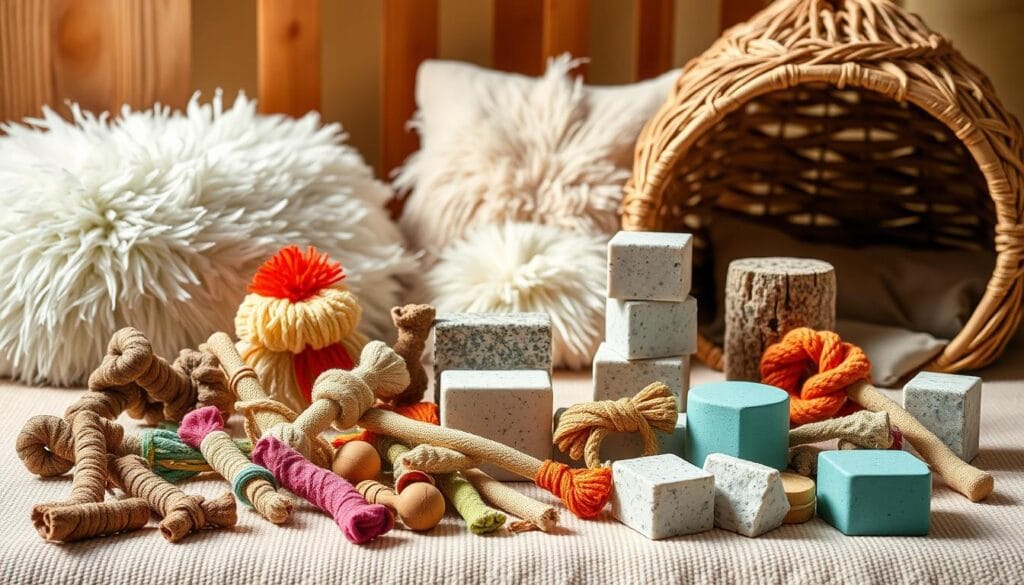
By picking toys from trusted brands, you ensure your chinchilla gets the best care. This improves their life quality.
How to Introduce New Toys to Your Chinchilla
Introducing new toys to your chinchilla needs careful thought. This helps your pet enjoy the new toys without stress. It’s a great way to keep them mentally and physically active.
Ensuring a Safe Transition
Start by placing new toys near your chinchilla’s cage or in a separate area. This lets them explore at their own pace. Always check the toys for hazards like small parts or sharp edges before giving them to your pet.
Tips for a Safe Introduction:
- Place new toys near the cage initially.
- Inspect toys for hazards before introduction.
- Monitor your chinchilla’s reaction to new toys.
Monitoring Behavior and Engagement
Watch how your chinchilla acts with the new toy. Some might be slow to try new things, while others will dive right in. Seeing how they interact can tell you a lot about their likes and dislikes.
Signs of Positive Engagement:
| Behavior | Indication |
|---|---|
| Active Play | Enjoyment and Engagement |
| Exploration | Curiosity and Interest |
| Calm Interaction | Comfort and Trust |
By introducing toys carefully and watching your chinchilla’s response, you can make a fun and safe space for them. The goal is to make sure they have a good time and stay happy and healthy.
Cleaning and Maintaining Chinchilla Toys
Keeping your chinchilla’s toys clean is key for their health and happiness. Chinchillas are clean animals and their toys can get dirty fast. Cleaning their toys regularly stops bacteria and keeps them happy and active.
Choosing the right cleaning products is important. Non-toxic and pet-safe cleaning solutions are a must. Harsh chemicals or abrasive cleaners can harm your chinchilla or damage the toys.
Recommended Cleaning Products
Mild soap and warm water are good for cleaning chinchilla toys. This gentle mix removes dirt without harming your pet. You can also use vinegar-based cleaning solutions for their antibacterial properties.
- Mild soap and warm water
- Vinegar-based cleaning solutions
- Pet-safe disinfectant sprays
Rinse the toys well after cleaning to get rid of soap. For wood toys, dry them with a cloth to avoid water damage.
Frequency of Cleaning
How often you clean chinchilla toys depends on play frequency and material. Clean toys at least once a week. But, if your chinchilla is messy or toys get droppings, clean them more often.
“Regular cleaning and maintenance of chinchilla toys are crucial for the health and well-being of your pet. By using the right cleaning products and establishing a regular cleaning schedule, you can ensure that your chinchilla remains happy and healthy.”
By following these tips, you can keep your chinchilla’s toys clean and safe. This helps keep your pet healthy and happy.
Signs Your Chinchilla Needs New Toys
Watching your chinchilla’s behavior and toy choices is key to its happiness and health. Chinchillas are smart and curious. They need many toys to stay entertained.
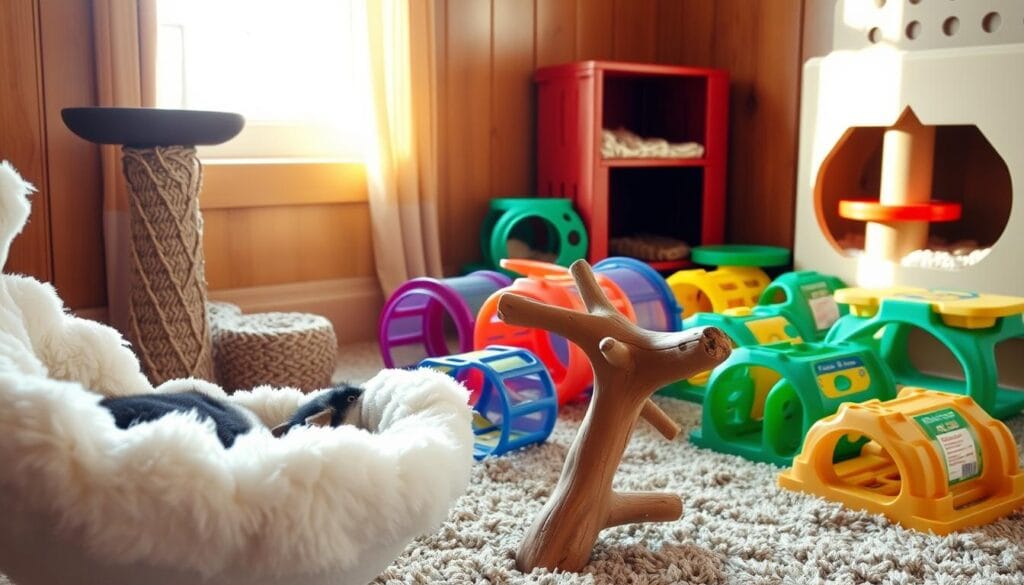
If your chinchilla stops playing with its toys, it’s time for new ones. This could be because they’re bored or the toys are too worn out.
Behavioral Changes to Watch For
Chinchillas show certain signs when they’re bored or stressed. Look out for:
- Over-grooming or too much fur chewing
- Being more aggressive or cranky
- Not caring about their usual toys or activities
- Pacing or acting restless in their cage
These behavioral changes mean your chinchilla needs something new. New toys can help fix these problems.
When to Replace Worn Toys
It’s important to replace toys that are damaged or worn out. Bad toys can be dangerous if they break into small pieces or have sharp edges.
Here’s when to swap out toys:
- Check toys often for wear
- Get rid of chew toys that are too small
- Take away toys with sharp edges or points
By watching your chinchilla’s toys and replacing them when needed, you keep them safe and happy. Also, rotating toys every now and then keeps things interesting for your chinchilla.
Chinchilla Chewing Habits Explained
Chinchillas chew a lot, which is key for their health. They have teeth that grow all the time. So, they need to chew to keep their teeth healthy.
Understanding Natural Chewing Behavior
In the wild, chinchillas chew on wood, bark, and plants. This helps them wear down their teeth. It’s also part of their foraging and exploring.
As a pet owner, it’s important to give them things to chew on. They like untreated wood and certain hays. Giving them different things to chew on keeps them happy and active. For more info, check out Oxbow’s blog on chewing.
Importance of Enrichment for Mental Health
Chinchillas need toys and things to chew on for their minds. A fun environment helps them stay calm and avoids bad behaviors. This includes chewing too much fur or being too aggressive.
Change their toys often and add new ones. This keeps things interesting and keeps their minds sharp. It’s important to give them lots of things to do to keep them well.
By understanding and meeting their chewing needs, you can make their life better. Giving them the right mix of fun and mental challenges is key to their happiness.
Recommended Chew Items for Chinchillas
To keep your chinchilla happy and healthy, mix commercial chews with fresh options. A variety of chew items is key. They help keep their teeth in good shape and keep their minds active.
Commercial Chews Worth Trying
Commercial chews are easy and safe for your chinchilla. They come in different textures and tastes. Here are some good ones:
- Wooden chews, like apple or willow wood
- Hay-based chews for dental health
- Cardboard rolls and tunnels for burrowing
Kaytee and Oxbow make top-notch chews. An expert says, “A good chew toy is essential. It keeps chinchillas busy and happy.”
Fresh Options: Fruits and Vegetables
Fresh fruits and veggies are also great for your chinchilla. They’re nutritious and fun. Here are some safe choices:
- Carrots for fiber and vitamins
- Apples, a tasty treat in small amounts
- Leafy greens like kale and spinach for nutrients
As
“Chinchillas love to chew on fresh veggies, it’s a great way to add some variety to their diet,”
an owner notes. But, introduce new foods slowly to avoid stomach problems.
By mixing commercial chews with fresh fruits and veggies, you make a fun and healthy space for your chinchilla.
Frequently Asked Questions About Chinchilla Toys
If you own a chinchilla, you might wonder about the best toys and chews for them. I’ll answer some common questions to guide you.
Rotating Toys for Chinchillas
It’s key to change your chinchilla’s toys often to keep them interested. I suggest swapping them out every 7-10 days. This stops boredom and lets them explore new things.
Safety of Chews for Chinchillas
Not all chews are good for chinchillas. Make sure to pick ones that are safe and won’t harm them if they swallow a piece. Brands like Kaytee and Oxbow have safe options. Always check what’s in them to make sure they’re right for your chinchilla.
Knowing how to rotate toys and pick safe chews is important. It helps keep your chinchilla happy and healthy.