
As daylight shifts in early autumn, an exotic pet’s home routine can change before anything looks wrong. Earlier sunsets, cooler windowsills, heating systems switching on, and busier household schedules all deserve a calm review. The safest approach is not to copy a temperature or light schedule from another species; it is to measure your pet’s enclosure, preserve a predictable routine, and use a qualified exotic-animal veterinarian for species-specific questions.
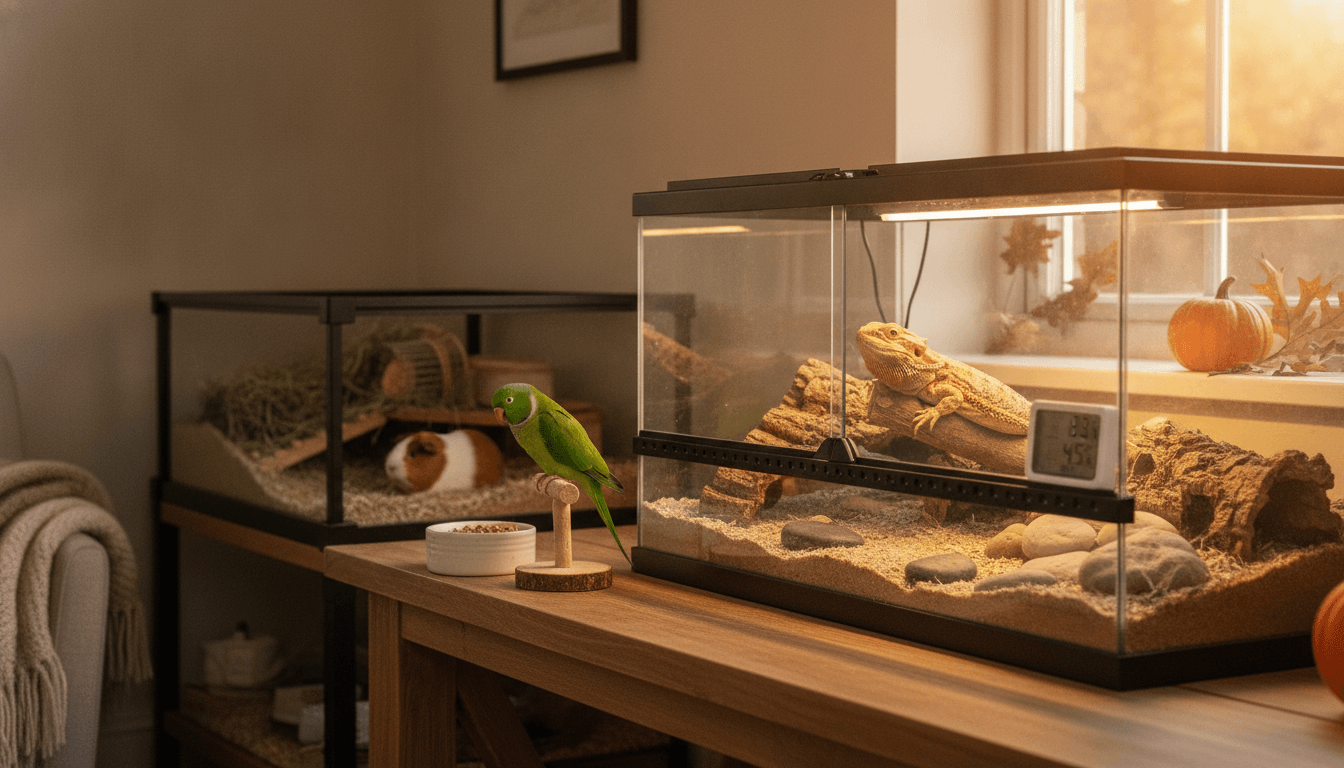
Start with a one-week baseline
- Record the enclosure’s temperature and humidity at the times your pet is normally active, using calibrated equipment where possible.
- Note appetite, activity, sleep, droppings, and normal social behavior without forcing interaction.
- Check that lamps, timers, thermostats, guards, and backup batteries work as intended.
- Look for drafts, condensation, overheating from a newly used heater, or direct sun moving across the habitat.
Keep the notes simple. A baseline is useful because it gives you something concrete to discuss with a veterinarian if your pet’s behavior or environment changes. It is not a diagnosis tool.
Reptiles: measure the habitat, not the room
Many reptiles depend on an environmental gradient so they can move between warmer and cooler areas. As room temperatures fall, do not automatically raise every setting. Confirm the species’ care sheet or veterinary guidance, then measure the basking surface, the cooler area, and overnight conditions with suitable instruments. A thermostat and a secure lamp guard can reduce common equipment risks, but they do not replace daily observation.
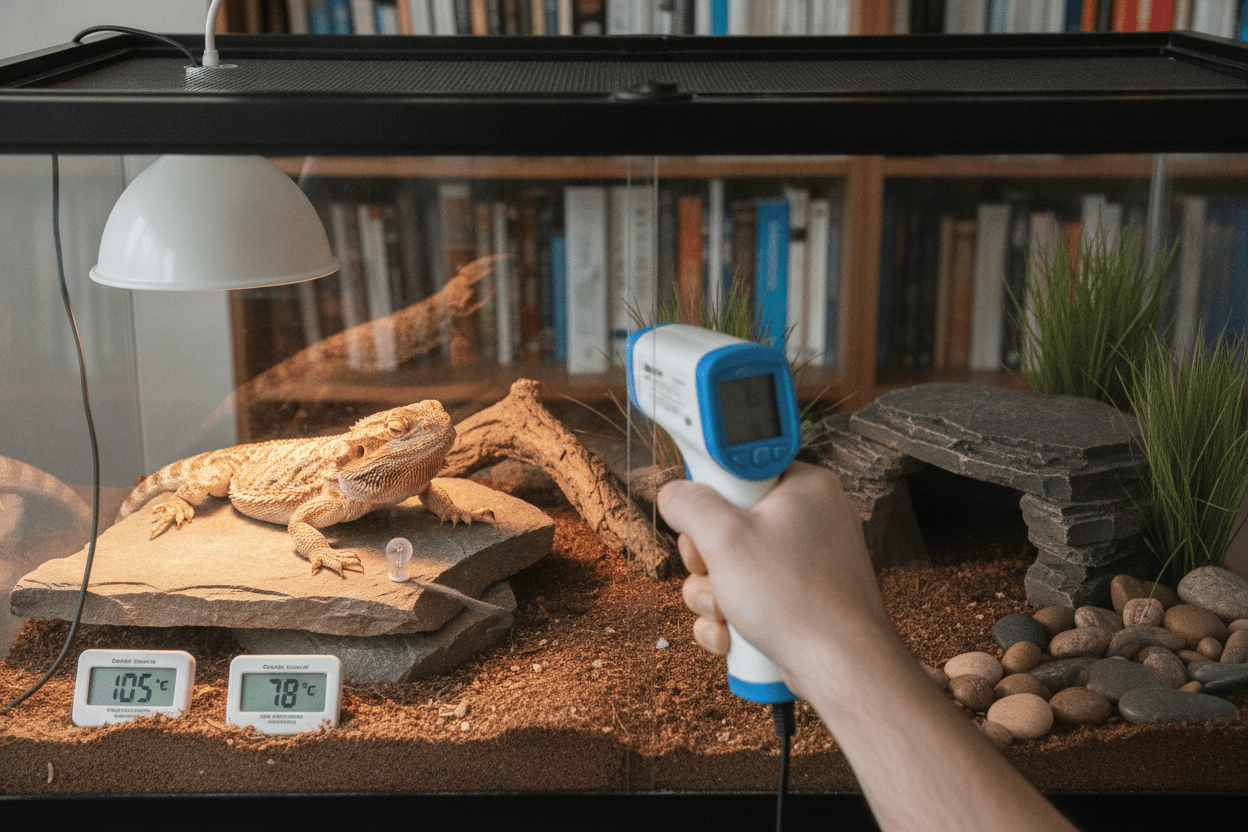
Lighting deserves the same review. Confirm that the fixture, replacement schedule, distance, and daily timer match your species’ husbandry plan. Merck Veterinary Manual notes that photoperiod, temperature, humidity, substrate, stress, and enclosure furniture can affect feeding behavior in reptiles: read the reptile nutrition overview. Never use seasonal fasting or hibernation guidance unless it is specifically appropriate for your species and supervised by an experienced professional.
Birds: make evenings quiet and predictable
Earlier darkness can make a bird’s household schedule feel inconsistent. Keep lights, meals, enrichment, and social time as predictable as practical. Provide a quiet, adequately dark sleeping area that still allows ventilation; avoid sudden changes, drafts, and covering arrangements that could restrict airflow or create a hazard. Inspect perches and toys while you are checking the cage, and remove damaged items.
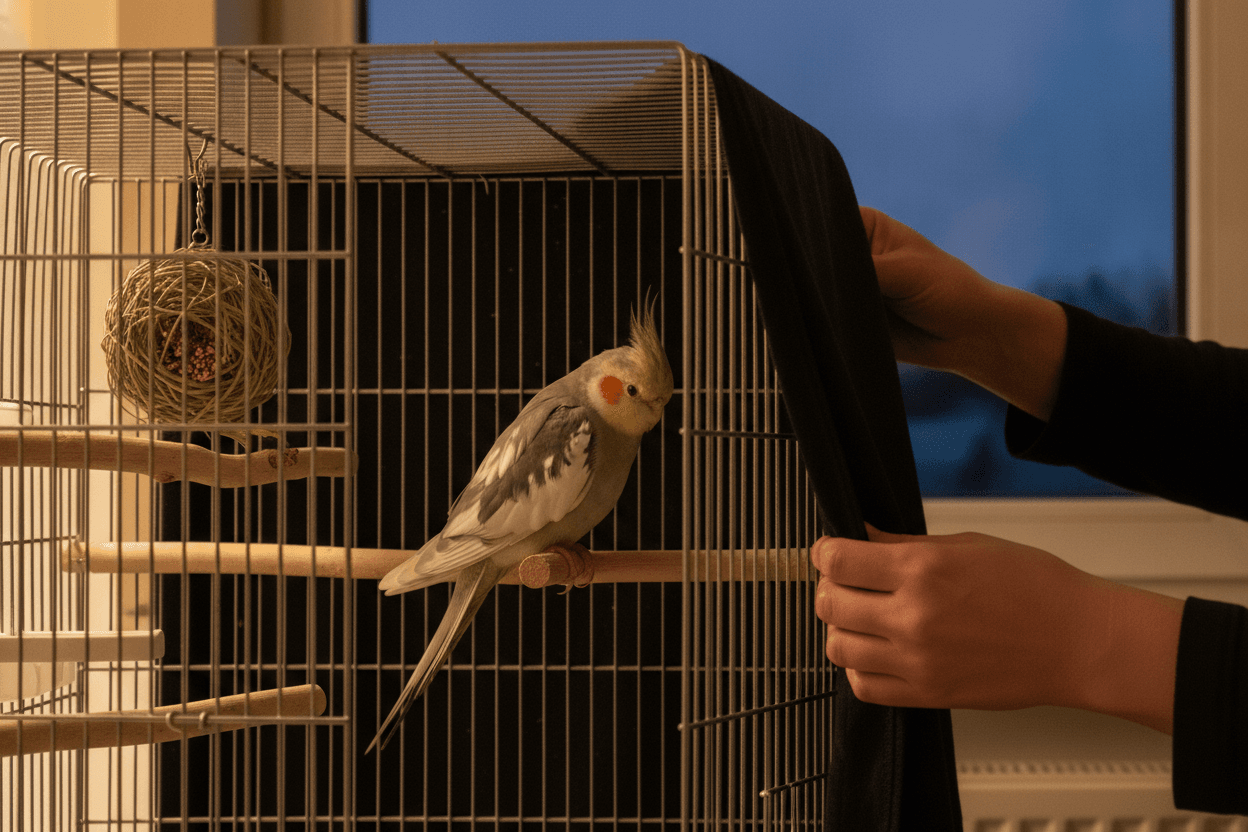
Do not extend daylight with bright lights simply to keep a bird awake, and do not interpret a change in vocalizing, sleep, appetite, or feather condition as a seasonal issue without checking in with an avian veterinarian. Household fumes, smoke, and overheated nonstick cookware remain important hazards in every season.
Small mammals: protect stable, well-ventilated spaces
Hamsters, guinea pigs, rabbits, ferrets, and other small mammals can be sensitive to abrupt environmental changes. Move habitats away from cold drafts and direct heat, but do not seal them up or reduce ventilation. Keep bedding dry, maintain clean food and water areas, and offer familiar hides and enrichment. Check doors, exercise equipment, and barriers after rearranging the room.
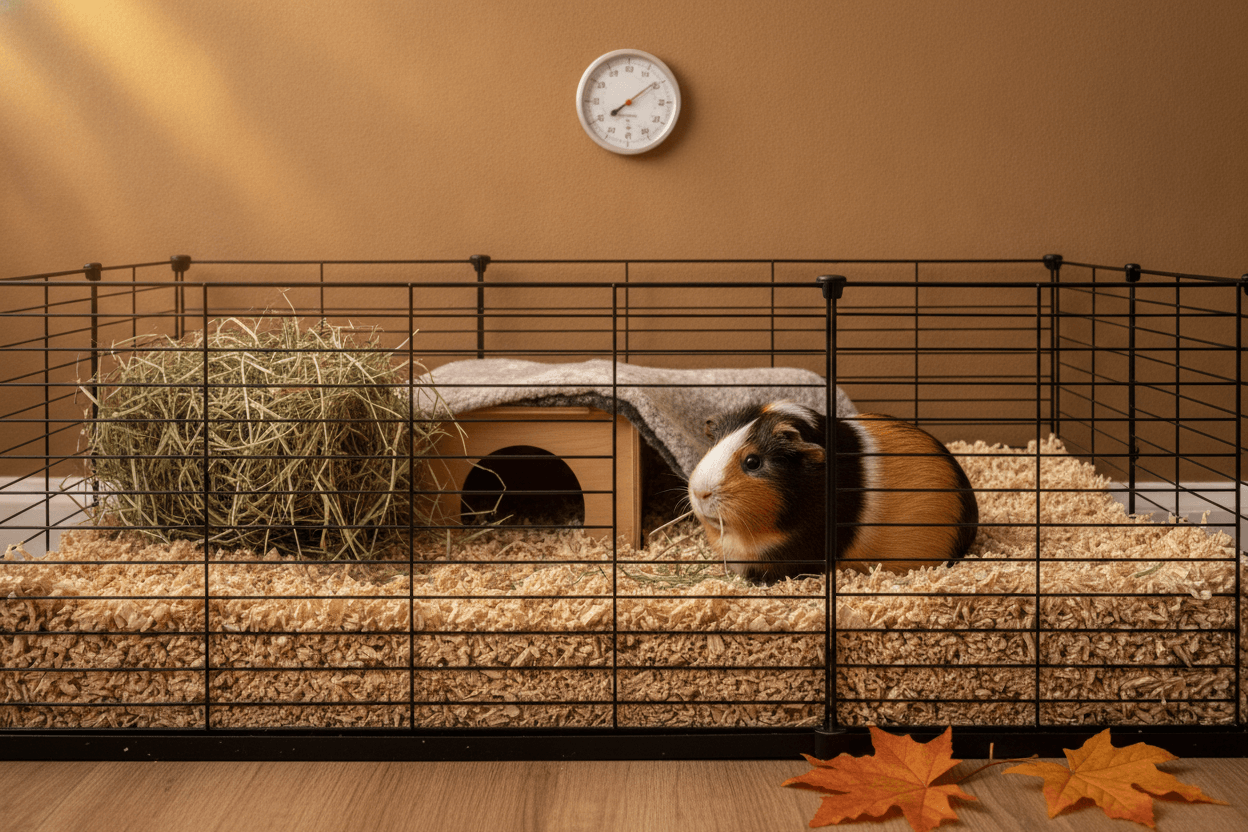
For species-specific environmental ranges, use a reputable veterinary reference and your pet’s care plan. Merck’s hamster guidance specifically identifies sudden environmental temperature changes as a potential stressor, which is a good reason to make adjustments gradually and monitor closely: review the hamster veterinary reference.
A safe seasonal checklist
- Measure and record the habitat’s actual conditions for several days.
- Test timers, thermostats, bulbs, guards, and power connections.
- Remove drafts and direct heat while preserving ventilation.
- Keep meals, sleep, handling, and enrichment predictable.
- Check your emergency carrier, contact details, and exotic-pet veterinary plan.
- Call a veterinarian promptly for persistent appetite loss, unusual breathing, marked lethargy, repeated abnormal droppings, injury, or any other concerning change.
Bottom line
Shorter days are a reminder to observe, measure, and prepare—not a reason to make broad changes to an exotic pet’s care. Keep the habitat species-appropriate, transition household routines gently, and treat concerning changes as a veterinary question rather than a seasonal diagnosis. For general animal-health and handling information, the Merck Veterinary Manual is a useful starting point, but your own veterinarian remains the right source for an individual care plan.