
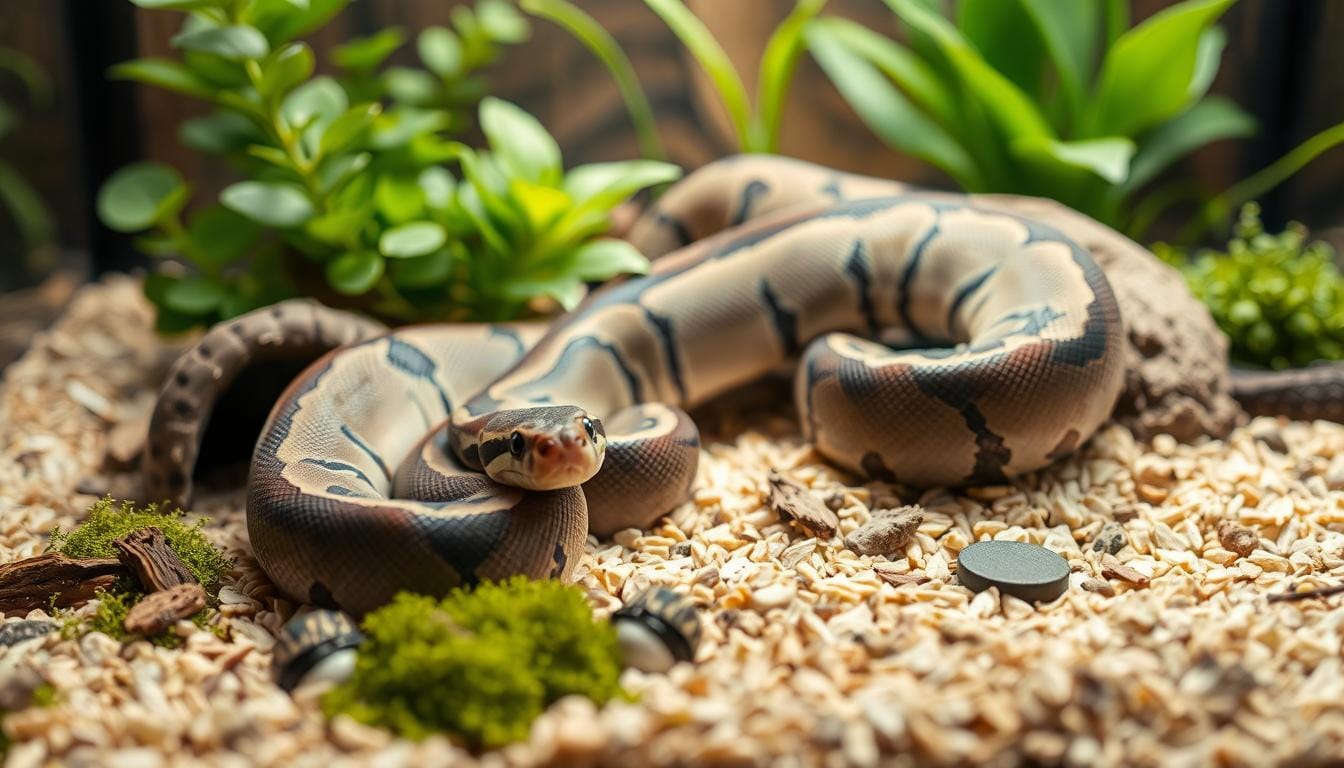
Ever thought about the ground under your pet’s scales causing stress? Many owners focus on lighting and heat but forget about the foundation of a healthy home for their snake.
Choosing the best substrate for ball python care is key. It affects your snake’s breathing and comfort. The right material keeps humidity right and lets your reptile explore naturally.
Good bedding does more than keep things clean. It makes a safe, clean, and secure home for your pet. Pairing quality flooring with trending reptile tank decor ideas makes a wild-like sanctuary. Your pet deserves a place that feels safe, clean, and secure. Let us help you find the best options to keep your pet happy and healthy for years.
Table of Contents
Why Substrate Matters for Ball Pythons
Creating a great home for your reptile starts with the right floor material. Many owners focus on lighting or decor, but the floor is key. Finding the ideal bedding for Ball Python care is crucial for your snake’s health and happiness.
Importance of Proper Habitat
A clean, proper habitat is key for pet care. The right material makes a safe, natural surface. This makes your snake feel secure and encourages natural behaviors.
Setting up your tank? Remember, the setup’s quality is as important as the substrate. Learn about the best enclosures for reptiles to give your pet space to thrive. A good habitat keeps your snake happy and active by preventing harmful bacteria.
Impact on Moisture and Temperature
Choosing the right substrate affects your enclosure’s climate. Ball pythons need specific humidity levels for skin shedding. Your bedding must hold moisture well without getting too wet.
This helps prevent respiratory problems and ensures proper shedding. The material also insulates the thermal gradient. A good ideal bedding for Ball Python setup keeps heat levels stable. This supports your snake’s metabolic needs all year.
Types of Substrates for Ball Pythons
Finding the right bedding for reptiles can seem hard, but it’s easier when you group options. When looking at Ball Python substrate options, you’ll see three main types. Each type has its own benefits for keeping the area moist and easy to clean.
Natural Substrates
Many people like organic materials because they remind them of the wild. Natural substrates for Ball Python homes include cypress mulch, coconut husk, or sphagnum moss. They are excellent at keeping moisture, which helps your snake when it sheds.
When picking the top substrates for Ball Python enclosures, many choose these organic options. They are porous, which helps control humidity in the tank. Make sure these materials are chemical-free before adding them to your snake’s home.
Artificial Substrates
For those who value ease and cleanliness, synthetic materials are a good choice. Options like reptile carpet, paper towels, or cage liners are incredibly easy to clean and replace. They’re great for quarantine or for young snakes.
They don’t hold moisture as well as natural materials but offer a clean surface. This prevents your snake from eating loose particles. You can easily see your snake’s waste, which is a significant advantage for health checks. These materials are consistent and don’t grow mold or bacteria if kept clean.
Hybrid Substrates
Hybrid options mix the best of both worlds. They combine coconut fiber with other additives for a balanced environment. They have the moisture-retaining properties of natural materials but are easier to manage.
Using a hybrid mix helps create a stable environment that supports your snake’s health. These blends are designed to be both functional and visually appealing. They offer a natural look without the upkeep of pure organic bedding.
Pros and Cons of Pine Shavings
Setting up an enclosure can make you wonder if pine shavings are safe for Ball Python habitats. This material is cheap and easy to find, making it a favorite among pet owners. But, it’s a topic of much debate in the reptile world because of its chemical makeup.
Benefits of Using Pine Shavings
Pine shavings are appealing because they’re affordable and easy to get. You can find them at most pet stores or farm supply centers. They have some good points for your snake’s home:
- High absorbency: Pine shavings soak up liquid waste well, keeping the surface dry.
- Odor control: The wood’s natural scent can hide bad smells in the enclosure.
- Cost-effectiveness: They’re cheap, so you can change the whole substrate often without spending a lot.
Potential Issues to Consider
But, there are risks to think about before choosing pine shavings for your Ball Python. The biggest worry is the aromatic oils in softwoods like pine. These oils can irritate your snake’s sensitive breathing system over time.
If you still want to use pine shavings, make sure they’re kiln-dried. This process removes many harmful oils. Also, watch for signs of breathing problems, like wheezing or too much mucus. If you see these signs, switch to a different bedding right away to keep your pet safe.
Cypress Mulch: A Leading Choice
Cypress mulch is a top pick for reptile lovers. It’s known for keeping moisture in. It’s clean, looks good, and works well for your pet.
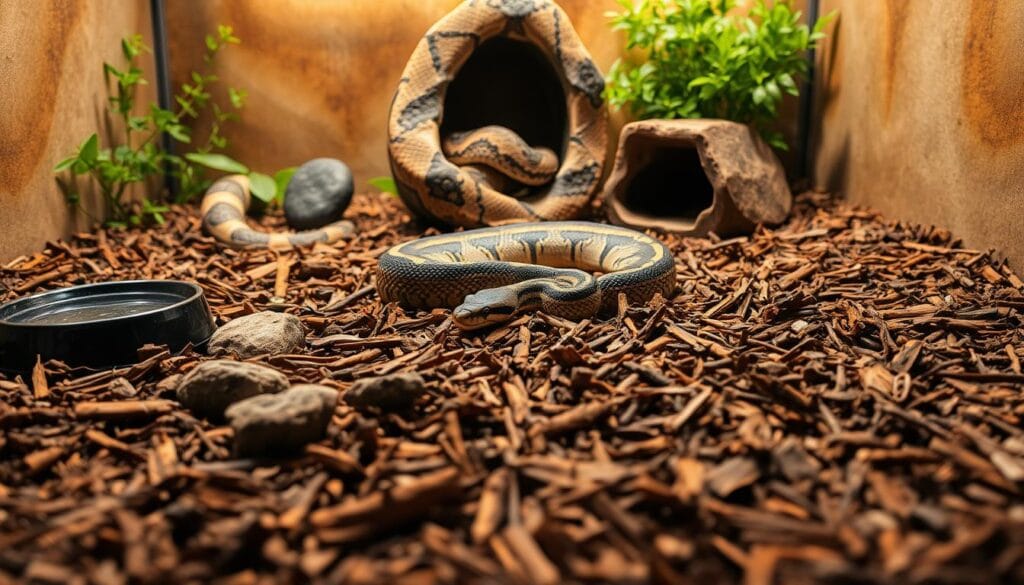
Advantages of Cypress Mulch
This mulch is great at keeping humidity up. It’s made from wood, so it slowly takes in and releases water. This helps keep your snake’s environment stable.
It also controls odors well. The wood’s natural oils help get rid of bad smells. Plus, it’s soft and lets your snake burrow like it would in the wild.
“The key to a healthy reptile is a habitat that mirrors the natural world, and choosing the right substrate is the first step in that process.”
How to Use Cypress Effectively
Make sure the mulch is clean and free of sharp bits. Many people bake it first to kill pests or mold. This makes it safe for your snake.
Put about two to three inches of mulch in your enclosure. This keeps moisture right but doesn’t let it get too wet. If it gets too damp, just mix it up to keep air flowing and stop mold.
Cypress mulch is a top choice for natural substrates for Ball Python care. Here’s how it stacks up against others:
| Substrate Type | Moisture Retention | Odor Control | Ease of Cleaning |
|---|---|---|---|
| Cypress Mulch | High | Excellent | Moderate |
| Coconut Fiber | Very High | Good | Easy |
| Paper Towels | Low | Poor | Very Easy |
Coconut Fiber as a Popular Option
Coconut fiber is a top pick for recommended substrates for Ball Python owners. It’s made from coconut husks, making it eco-friendly and great at keeping moisture. It’s loved for its ability to control humidity, a must for reptile lovers in the U.S.
Benefits of Coconut Fiber
This material is known for its incredibly soft texture. It’s better than rougher options because it lets your snake burrow safely. This natural behavior helps reduce stress and keeps your pet happy.
It’s also a top-rated substrate for Ball Python habitats. It keeps heat well, keeping your snake warm at night. Plus, it fights mold, making it a clean, safe space for your reptile.
Optimal Maintenance Practices
To get your substrate ready, soak the compressed bricks in warm water. Let it expand fully, then air dry it a bit. It should feel damp but not wet.
Keeping the right moisture is key for your snake’s health. If it’s too dry, mist it with water. If it’s too wet, add dry fiber or better ventilation to stop mold.
| Feature | Benefit | Maintenance Level |
|---|---|---|
| Moisture Retention | High | Moderate |
| Texture | Soft/Natural | Low |
| Sustainability | Excellent | N/A |
Reptile Carpet: A Unique Alternative
When looking at substrate reviews for Ball Python enclosures, you’ll see synthetic options like reptile carpet. It offers a flat, uniform surface. This is different from the loose, organic bedding found in naturalistic setups.
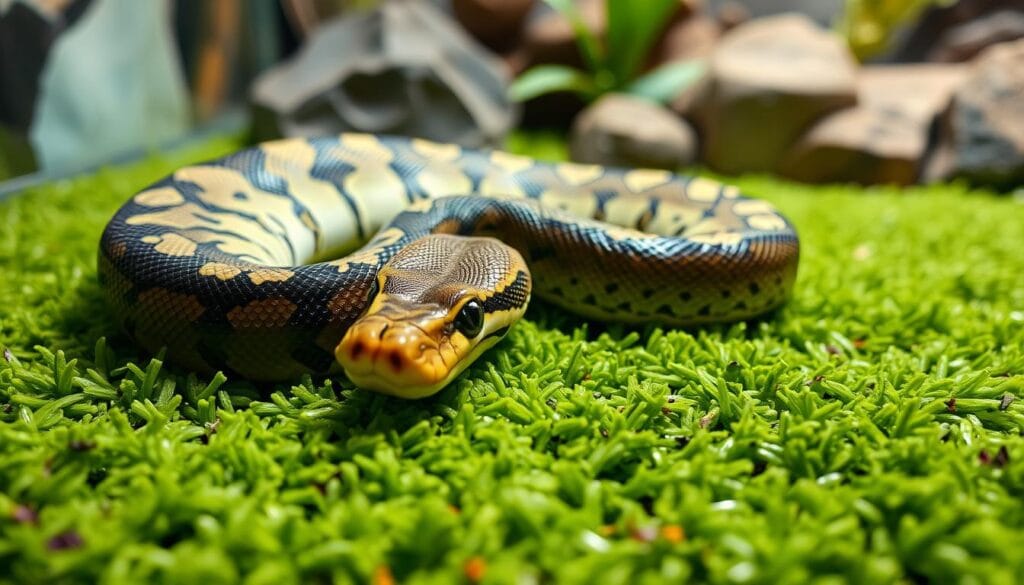
Advantages of Reptile Carpet
The main benefit of this material is its convenience and reusability. It’s a solid sheet, so you don’t have to worry about your snake eating loose particles during feeding.
Cleaning is easy. Just remove the carpet, wash it with a reptile-safe disinfectant, and dry it before putting it back. This makes it a highly efficient choice for those who value a quick cleaning routine.
Disadvantages to Consider
Despite its ease of use, there are some downsides. Reptile carpet can harbor bacteria if not cleaned well and often. This may cause hygiene issues over time.
Also, the fibers can snag on your snake’s claws or teeth, possibly causing injury. It doesn’t offer the depth needed for natural burrowing behaviors. This can be a drawback for some owners who want to enrich their pet’s environment.
| Feature | Reptile Carpet | Loose Substrate |
|---|---|---|
| Maintenance | Easy/Washable | Labor Intensive |
| Ingestion Risk | Very Low | Moderate |
| Burrowing | Not Possible | Excellent |
| Cost | Reusable/Low | Recurring Expense |
Paper Towels: The Simplest Solution
Paper towels are a top pick for those who value cleanliness and simplicity. Many experts use them for safe bedding for Ball Python setups. This is true for the first few weeks or when a snake needs close watch.
Advantages of Using Paper Towels
Paper towels are known for their clinical cleanliness. They are easy to throw away, keeping your snake’s home clean from bacteria or parasites.
They are also easy to replace. Just swap them out when they get dirty. This makes it simple to keep an eye on your snake’s health and spot any issues early.
Limitations of Paper Towels
Even though paper towels are great for keeping things clean, they don’t feel like home. They can’t hold moisture well, which is bad for snakes that need it to shed.
Also, paper towels don’t let snakes burrow, which is a natural behavior. If you want your snake to feel secure and happy, you might need something more than just paper towels. Think about what you want for your snake’s home before choosing.
Choosing the Right Substrate for Your Setup
When picking the right substrate for your Ball Python, several important factors come into play. Every enclosure is different, and your local climate affects how well a material works. Look for materials that support your snake’s natural behaviors and are easy to maintain.
Factors to Consider Before Deciding
Before choosing a product, consider these key criteria. For more detailed advice on the best substrate for Ball Python enclosures, check out professional care standards.
- Humidity Retention: Does your home have dry air? You may need a material that holds moisture well.
- Ease of Cleaning: Think about how quickly you can spot-clean or replace the material during your weekly maintenance.
- Cost and Availability: Consider the long-term cost of replacing the bedding regularly.
- Safety: Make sure the material is dust-free and doesn’t have chemicals that could harm your snake’s respiratory system.
How to Test Your Substrate Choice
It’s smart to test your substrate choice before introducing your snake. This simple testing method checks if the material works well under your specific conditions. You want to make sure it doesn’t mold or dry out too fast.
Begin by setting up the enclosure with your chosen material and running the heating equipment for 48 hours. Use a digital hygrometer to check humidity levels throughout the day and night. If the levels stay steady, you’ve found the best substrate for Ball Python comfort. If the humidity changes a lot, you might need to adjust your ventilation or try a different material.
Tips for Maintaining Your Substrate
Having a regular schedule for your snake’s home stops harmful bacteria from growing. This consistent care is the foundation of a healthy habitat for your pet. By being proactive, you keep your chosen material safe and working well over time.
Cleaning and Replacement Schedule
Spot cleaning daily is key to remove waste and dirty spots right away. This simple habit keeps the enclosure fresh and lowers the chance of respiratory problems. Choosing the ideal bedding for Ball Python setups often depends on how well you can keep up with this daily cleaning.
Every four to six weeks, you need to replace the substrate completely. During this time, scrub the tank with a reptile-safe disinfectant. Consistency is key to stop mold and parasites from growing in your snake’s home.
Monitoring Humidity and Temperature
Your substrate is crucial for the microclimate of the enclosure. Use a digital hygrometer and thermometer to check these levels every day. If the bedding gets too dry or too wet, it can harm your snake’s health.
Many owners look at substrate reviews for Ball Python care to see how different materials handle moisture. If the humidity drops, a light misting of the substrate can help. Always make sure the bottom layer stays dry to avoid belly rot, a common issue with poor maintenance.
Regular checks let you adjust your setup before problems start. By watching your equipment closely, you give your snake the best possible environment to grow. Remember, even the best materials need your active care to stay effective.
How to Avoid Common Mistakes
Your choice of substrate is key to your reptile’s health. Many people unknowingly stress their pets by picking the wrong material. By choosing the right substrate for Ball Python enclosures, you can avoid many health issues.
Misjudging Substrate Comfort
Choosing the wrong bedding is a common mistake. Bedding that’s too rough can irritate your snake’s skin. It can even cause impaction if your snake swallows it during feeding. Always pick materials that feel like their natural habitat.
Watch how your snake acts after you change the bedding. If it hides in the water bowl or climbs the walls, the bedding might be uncomfortable. Finding a top-rated substrate for Ball Python care means finding a balance between looks and comfort.
Ignoring Hydration Needs
Many owners struggle with keeping the right humidity. Using a substrate that can’t hold moisture can cause dry skin and hard sheds. On the other hand, a substrate that stays too wet can lead to respiratory infections, which are serious for snakes.
Use a hygrometer to keep an eye on humidity levels. A top-rated substrate for Ball Python health should hold moisture well without growing mold or bacteria. Keeping the habitat clean is crucial for your snake’s health.
| Common Mistake | Potential Risk | Recommended Fix |
|---|---|---|
| Using dusty shavings | Respiratory distress | Switch to dust-free mulch |
| Overly dry bedding | Stuck shed | Mist regularly or add moss |
| Loose, small particles | Impaction | Use larger, safer chips |
| Poor cleaning habits | Bacterial growth | Follow a strict schedule |
Conclusion: Finding the Best Substrate
Choosing the right habitat flooring is key to your snake’s health. It’s all about keeping things clean, humid, and comfy. Now, you know how to pick the best substrate for your Ball Python.
Reviewing Your Best Choices
Products like Zoo Med Forest Floor or Eco Earth are great for keeping moisture in. They look natural and meet your snake’s needs. Look for substrates that fight mold and keep humidity steady.
Commitment to Ongoing Care
Watching your snake is the best way to know it’s happy. You might need to tweak your care routine based on your climate. Always look for new ways to improve your snake’s life.