
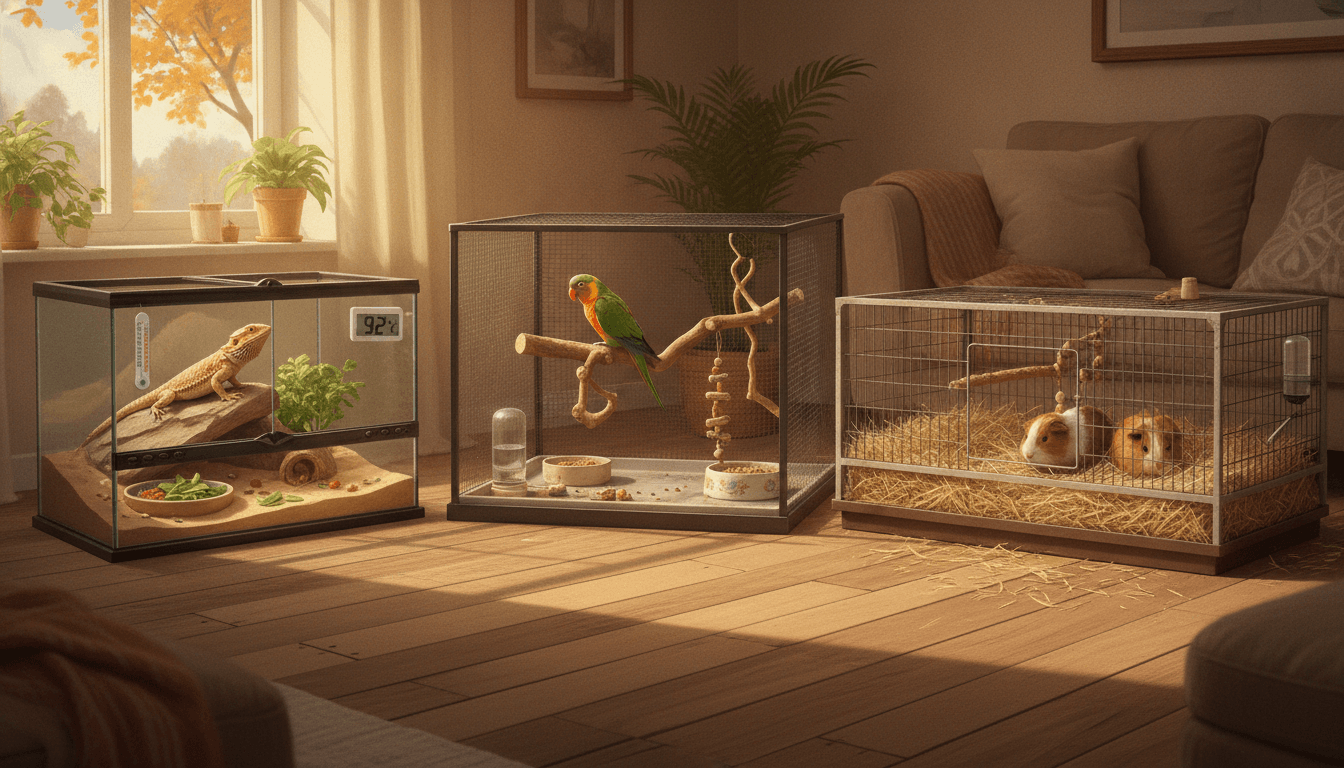
Early autumn fall exotic pet care is a useful time to audit an exotic pet’s environment. Shorter days, cooler evenings, open windows, household decorations, and changes to family routines can affect a habitat even when the room feels comfortable to people. A calm seasonal reset is not a reason to change every setting at once—it is a chance to measure, inspect, and make species-appropriate adjustments.
Important: This checklist is general education, not a diagnosis or a substitute for an exotic-animal veterinarian. Temperature, humidity, lighting, diet, and handling needs vary by species, age, health, and enclosure. Use your veterinarian’s care plan and a reputable species-specific guide before changing equipment or routines.
Table of Contents
Start with a measured habitat audit
- Check temperature and humidity with reliable instruments placed where your pet actually spends time; compare readings at different times of day.
- Inspect heaters, thermostats, lighting, guards, cords, clips, and timers for damage or drift. Replace equipment that is cracked, frayed, unstable, or no longer holding its setting.
- Look for drafts and sudden heat sources. Keep habitats away from direct sun, radiators, fireplaces, and frequently opened exterior doors unless your species-specific plan says otherwise.
- Confirm that hides, perches, bedding, climbing items, and food or water stations are clean, secure, and appropriate for the species.
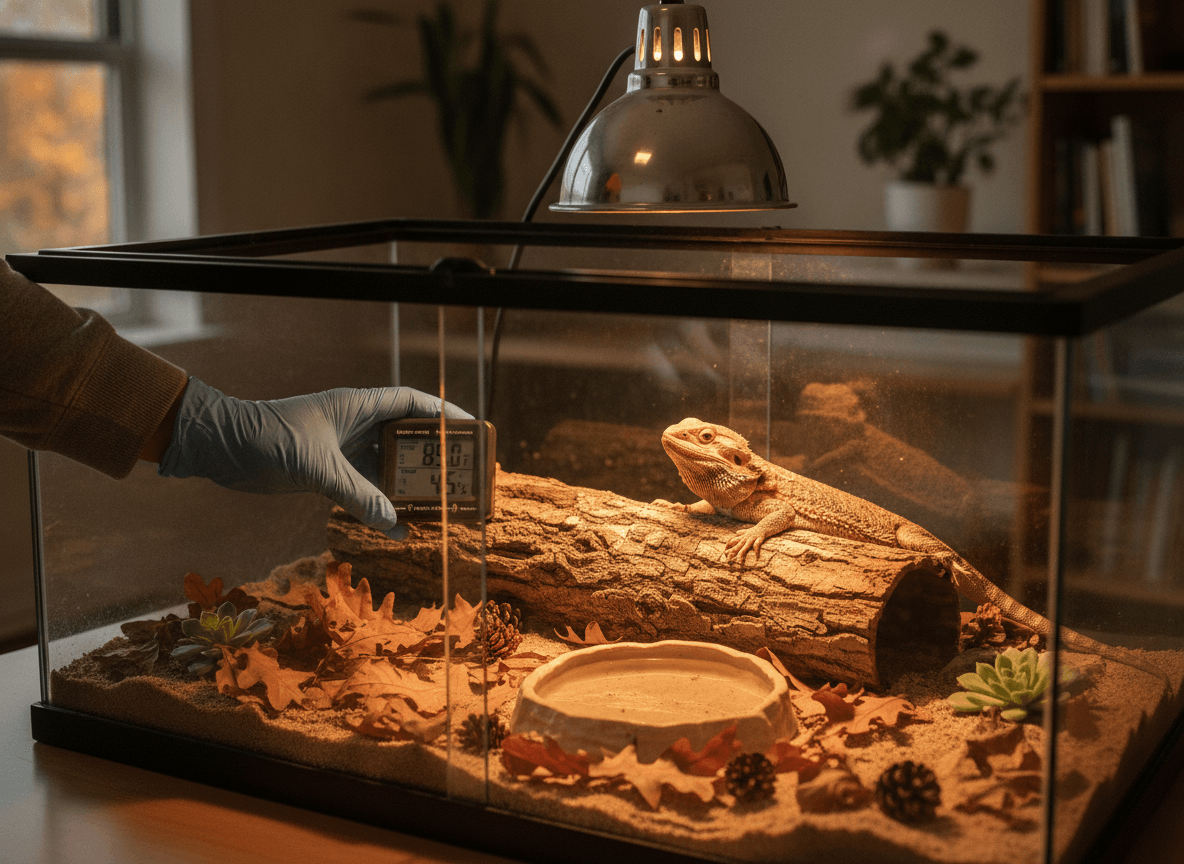
Reptiles: preserve the gradient, not a single number
Reptiles rely on access to suitable microclimates so they can move between warmer and cooler areas. When the room changes, verify the warm and cool zones, the overnight pattern, and the humidity range recommended for your species. Do not respond to one surprising reading by moving a heat source closer or adding a new bulb without checking the thermostat and asking a qualified reptile veterinarian or trusted species-specific husbandry source.
Review the light schedule as daylight changes, but keep the schedule consistent rather than chasing the window’s changing brightness. Replace lamps according to the manufacturer’s guidance and your species plan. A thermometer or hygrometer is a monitoring tool—not proof that every husbandry need is met.
Birds: make the room safe as routines change
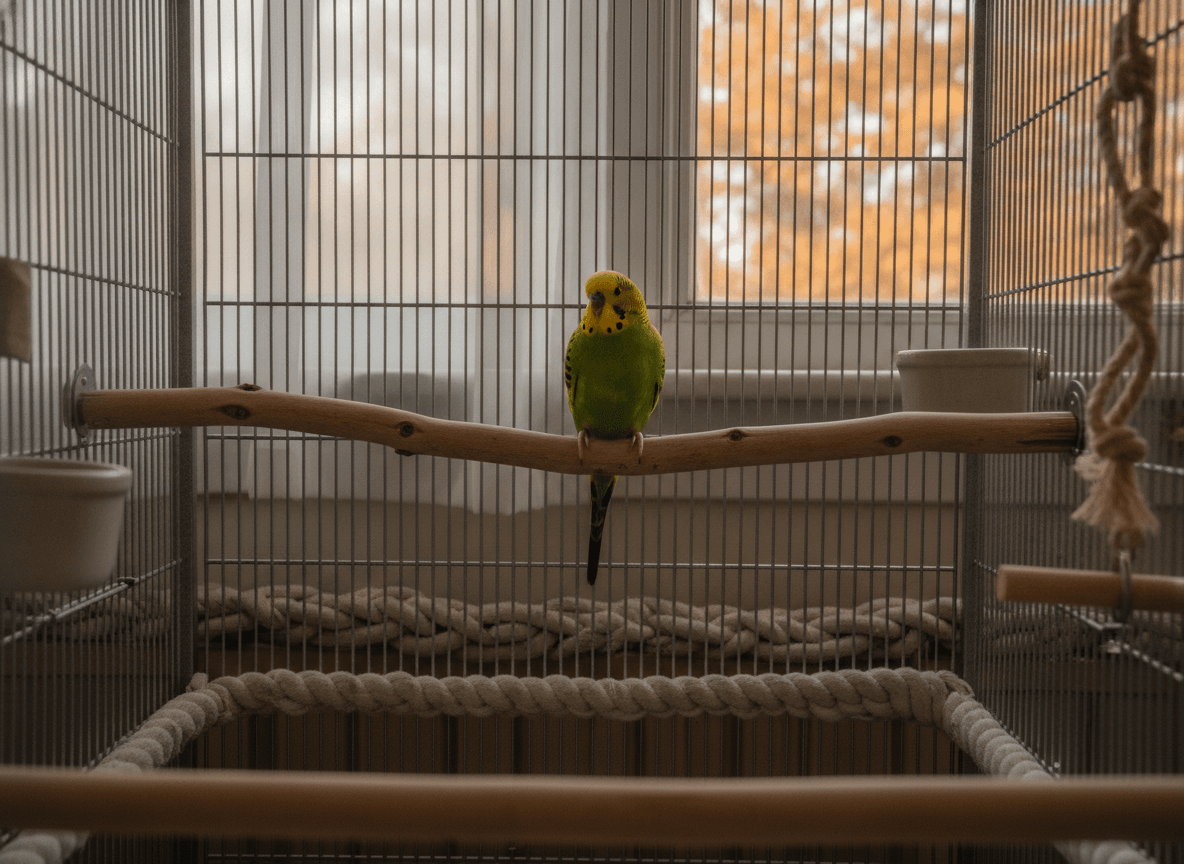
As windows open less often and indoor heating returns, check airflow, drafts, and the distance between the cage and cooking areas. Keep birds away from smoke, aerosols, fumes, and overheated non-stick cookware. Secure loose cords and inspect toys and perches for fraying, sharp points, or swallowed-size pieces. Maintain a predictable sleep period and provide species-appropriate opportunities for movement and foraging.
Autumn decorations are not automatically bird-safe. Avoid giving access to unknown plants, scented products, candles, and decorations that can be chewed or shed small parts. When in doubt, leave it out and ask an avian veterinarian.
Small mammals: protect consistency and ventilation
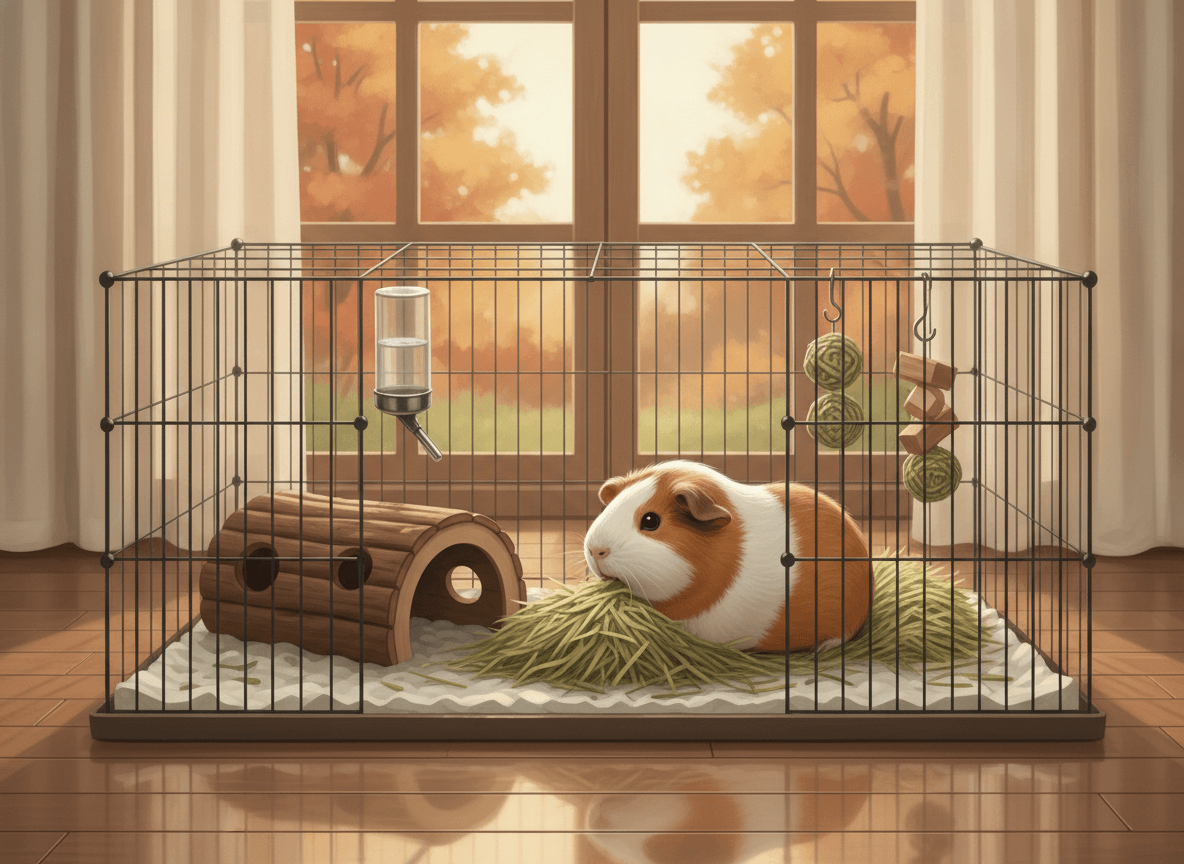
For guinea pigs, rabbits, hamsters, and other small mammals, prevent sudden temperature swings and keep the enclosure well ventilated without creating a cold draft. Check water bottles or bowls for leaks and blocked valves, refresh appropriate forage or hay, and inspect bedding and hides during cleaning. Avoid using strongly scented cleaners or adding unfamiliar foods as part of a seasonal “reset.”
Observe normal behavior, appetite, drinking, droppings, breathing, and activity for your individual pet. A noticeable change, breathing difficulty, collapse, persistent not-eating, or another urgent concern warrants prompt veterinary advice; do not wait for a seasonal checklist to solve a health problem.
A simple 20-minute autumn reset
- Record current readings and the equipment settings.
- Walk around the habitat to find drafts, direct sun, unstable fixtures, chew hazards, and escape gaps.
- Clean and refill the habitat using the routine products your pet already tolerates.
- Test timers, thermostats, locks, and backup supplies.
- Write down one question for your exotic-animal veterinarian or species-specific care guide before making a major change.
Reliable references and next steps
For broad seasonal safety reminders, see the American Veterinary Medical Association’s warm-weather pet safety guidance and the ASPCA autumn safety tips. For reptile owners, use a species-specific resource such as the ReptiFiles bearded dragon care guide only as a starting point, and confirm individual needs with an appropriately qualified veterinarian. If you are building a habitat from scratch, our bearded dragon care guide and hermit crab beginner guide offer additional reading.
Bottom line: The safest autumn upgrade is usually better observation: measure the habitat, remove obvious hazards, keep routines steady, and seek species-specific veterinary guidance before making consequential changes.
1 thought on “Fall Reset for Exotic Pets: A Safe Seasonal Checklist for Reptiles, Birds, and Small Mammals”
Comments are closed.