
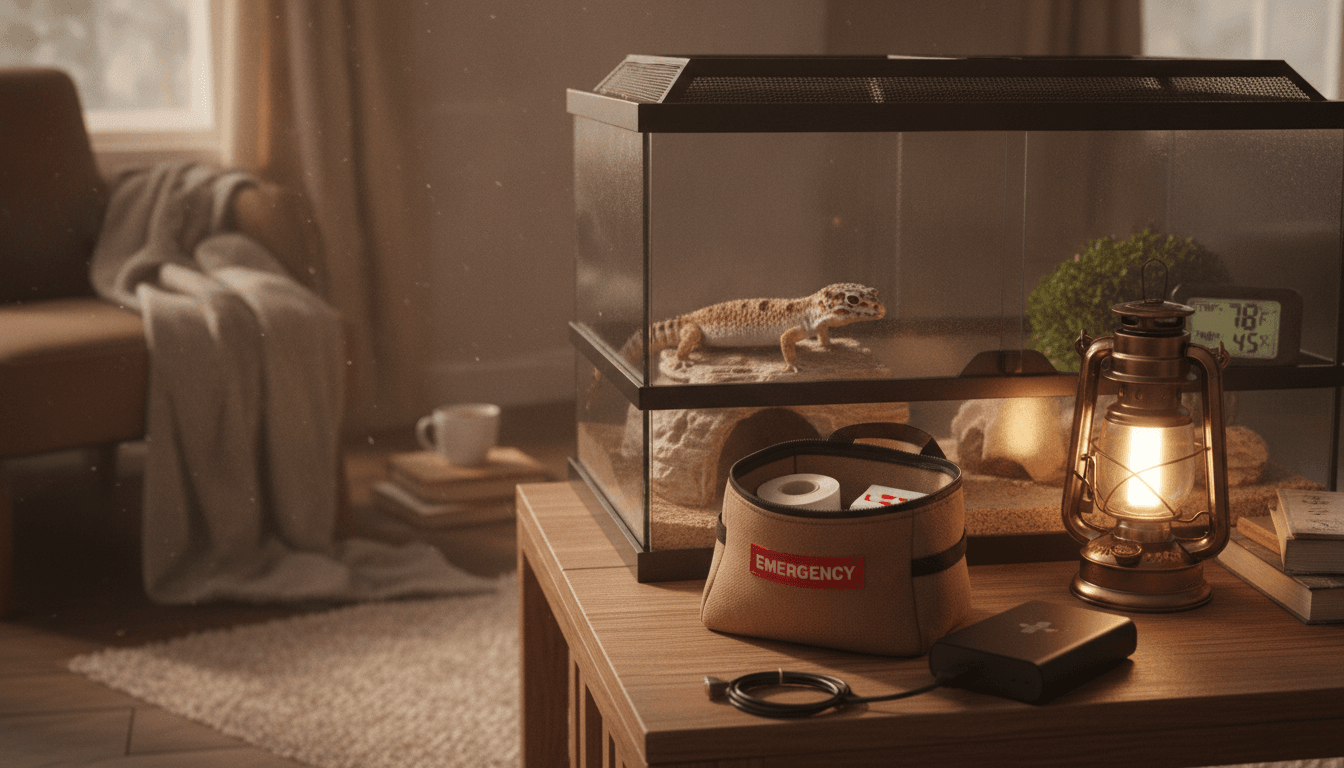
A power outage can change the temperature, airflow, lighting, filtration, and daily routine your exotic pet depends on. A little preparation before the lights go out makes it easier to protect birds, reptiles, small mammals, and aquarium fish without improvising unsafe heat or electrical solutions.
Why an outage plan matters for exotic pets
Different species tolerate environmental changes differently. Reptiles may rely on equipment to create a warm basking area, birds and small mammals need a stable, draft-free room, and aquariums can lose circulation and oxygenation when pumps stop. The safest plan starts with your species’ normal temperature and humidity ranges, the equipment that maintains them, and the contact details for a veterinarian experienced with your pet.
Build a power-outage kit before storm season
- A digital thermometer and, when appropriate for your species, a hygrometer with spare batteries.
- Species-appropriate carriers, towels or fleece, water containers, feeding supplies, and several days of the food your pet already eats.
- Battery lanterns or flashlights. Avoid candles, open flames, and placing hot equipment where a pet can reach it.
- A charged power bank and a battery-operated air pump with spare batteries if you keep aquarium fish.
- Printed care notes with normal ranges, medication instructions from your veterinarian, feeding details, and emergency contacts.
- A written list of nearby boarding facilities, evacuation sites, and an exotic-pet veterinarian. Ready.gov recommends keeping both a stay-at-home kit and a lightweight evacuation kit; adapt that approach to your animals and household.
If the power goes out: a calm first-hour checklist
- Check people and animals first, then record the room temperature and each enclosure’s temperature and humidity.
- Move enclosures away from direct drafts, windows, and exterior doors. Close curtains if the room is losing heat, while maintaining safe ventilation.
- Do not add untested heat sources directly into an enclosure. Hot-water bottles, hand warmers, generators, and heating devices can cause burns, fumes, or dangerous temperature spikes if used incorrectly.
- Reduce handling and keep the environment quiet. Stress and repeated transfers can be harder on an animal than a brief, measured change.
- Call an experienced veterinarian for species-specific advice if conditions move outside your pet’s normal range, the outage is prolonged, or the animal shows concerning changes in breathing, responsiveness, balance, appetite, or behavior.
Reptiles and amphibians
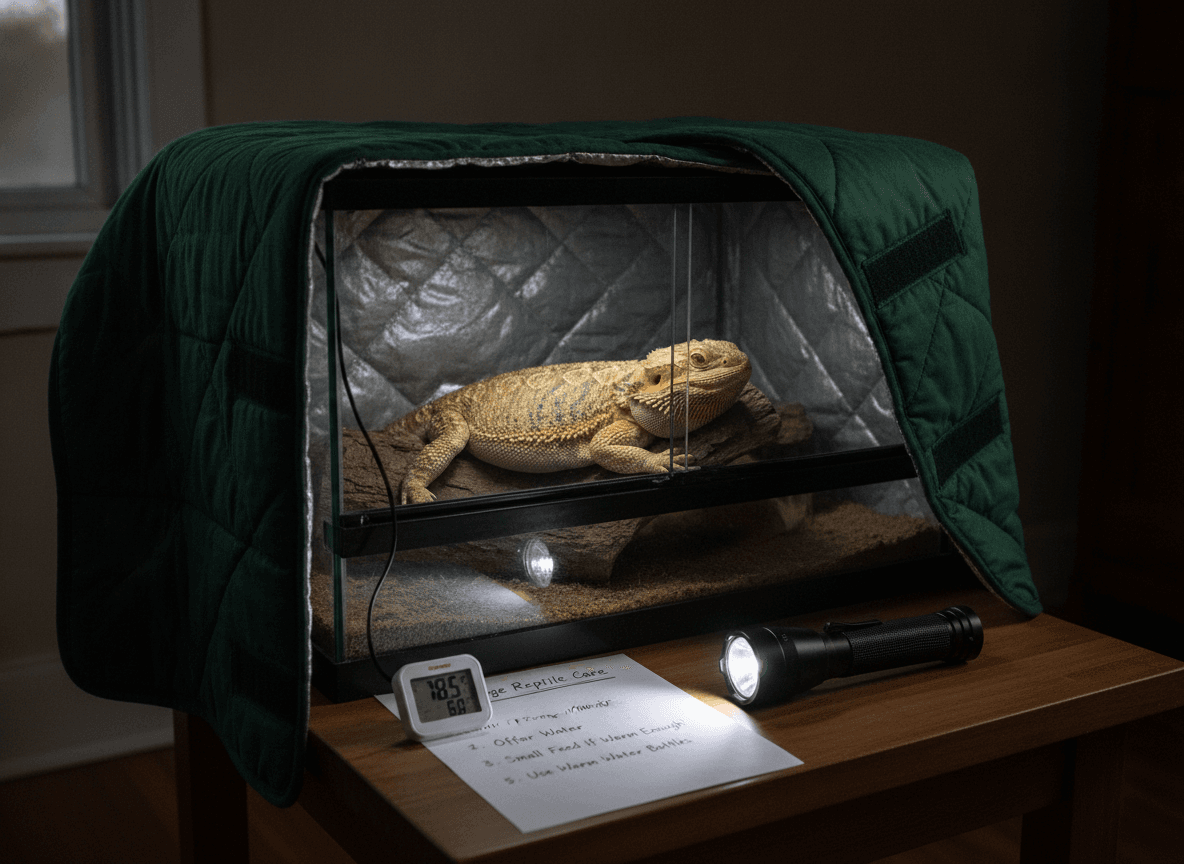
Record the warm and cool zones separately if your enclosure normally has a gradient. A temporary insulated cover around the outside of a glass enclosure may slow heat loss, but it must not block ventilation or create a sealed container. Check temperatures frequently with a reliable instrument, keep the enclosure out of direct sunlight, and ask your veterinarian when to pause feeding during a prolonged interruption. Never place a hand warmer or heating pad inside the habitat unless a qualified professional has specifically directed a safe, monitored setup for that species.
Birds and small mammals
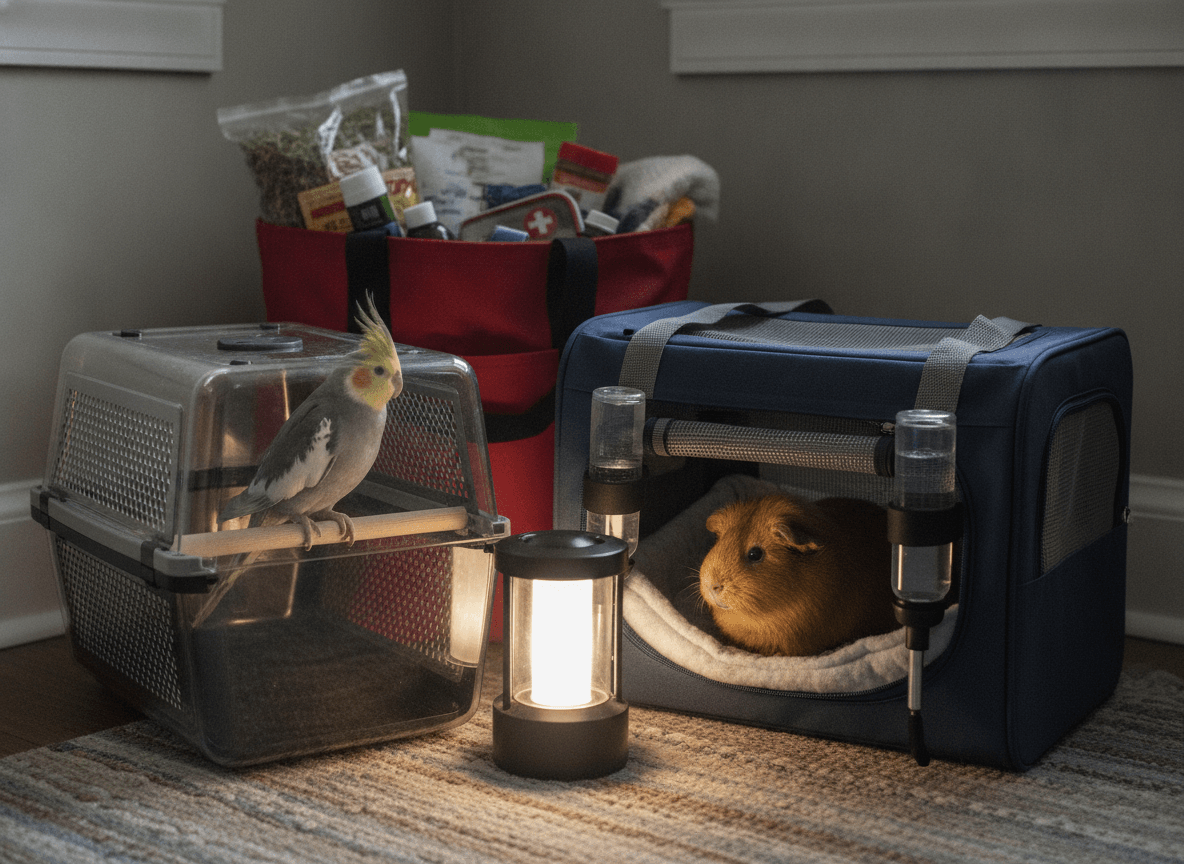
Keep birds and small mammals in a quiet, draft-free room and monitor the temperature at their level, not only at the thermostat. If evacuation is needed, use a secure carrier with familiar bedding or a perch and enough ventilation. Bring normal food and water rather than introducing a new diet during the outage. For birds, avoid smoke, fumes, and nonstick cookware heated without ventilation; for all species, never run a generator, propane heater, or vehicle in an enclosed space.
Aquariums and fish
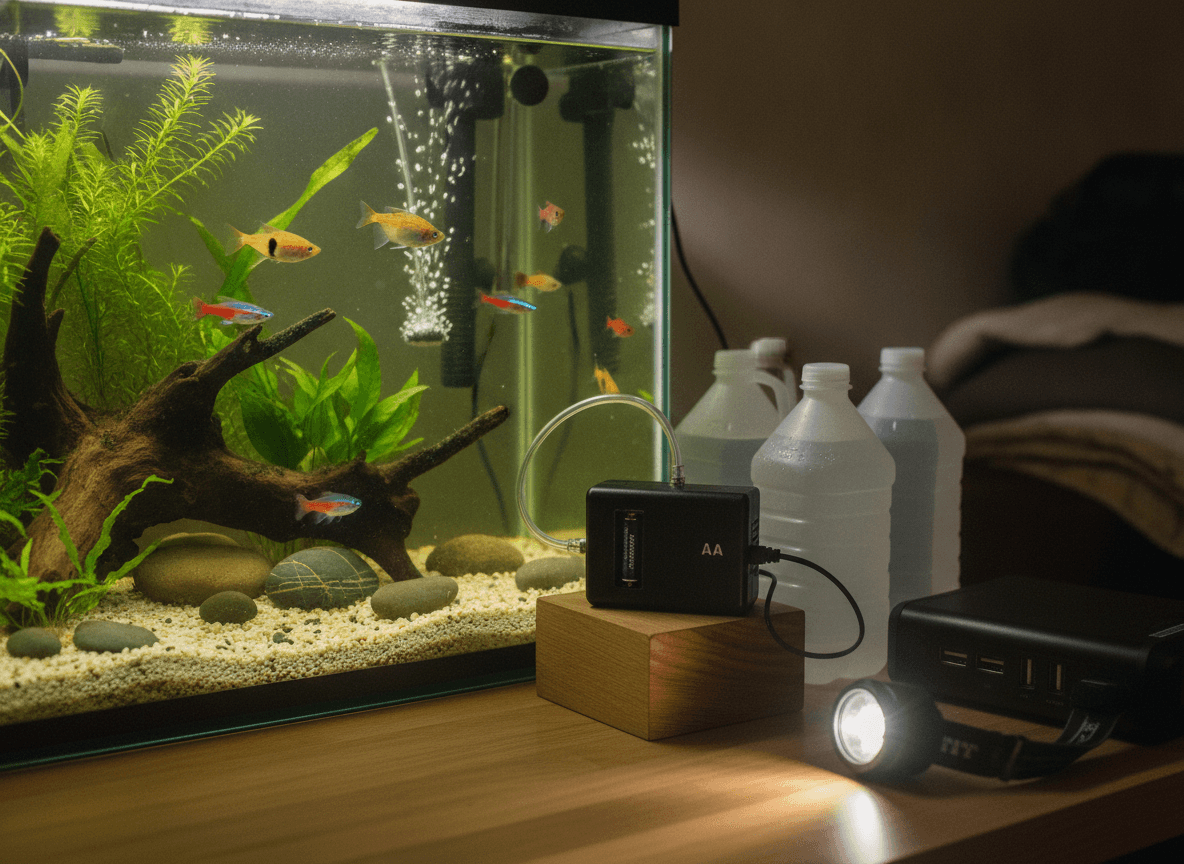
Keep the aquarium covered as usual, but do not seal it airtight. A battery-powered air pump can help maintain gas exchange; follow the pump instructions and keep batteries and electrical connections dry. Avoid feeding more than usual during a short outage, because uneaten food can worsen water quality. Check temperature and water condition, and ask an aquarium professional or veterinarian about your species and tank size if the interruption continues. Never use an indoor generator or fuel-burning device to power equipment.
When to seek help
Contact an exotic-pet veterinarian promptly if your animal is unusually weak, unresponsive, struggling to breathe, repeatedly falling, showing neurological changes, or has been exposed to smoke, fumes, a burn, or an unsafe temperature. Do not give medication or attempt to correct a suspected illness using online dosing advice. A veterinarian who knows the species can help you decide whether the animal needs transport, a temporary facility, or hands-on care.
Make the plan easy to use
Store the kit where every adult in the household can find it, label carriers, and test battery devices twice a year. Photograph enclosure settings and write down normal readings so you have a baseline. Ready.gov’s pet disaster-preparedness guidance recommends reviewing kits regularly, and its power-outage guidance is a useful starting point for household planning. For aquarium-specific considerations, review North Carolina State University’s aquarium outage guidance. These resources do not replace advice from a veterinarian familiar with your pet.
Bottom line: measure first, reduce stress, avoid improvised heat and fumes, and contact qualified help when conditions or behavior are concerning. A simple written plan can give your exotic pet a safer path through the next outage.